
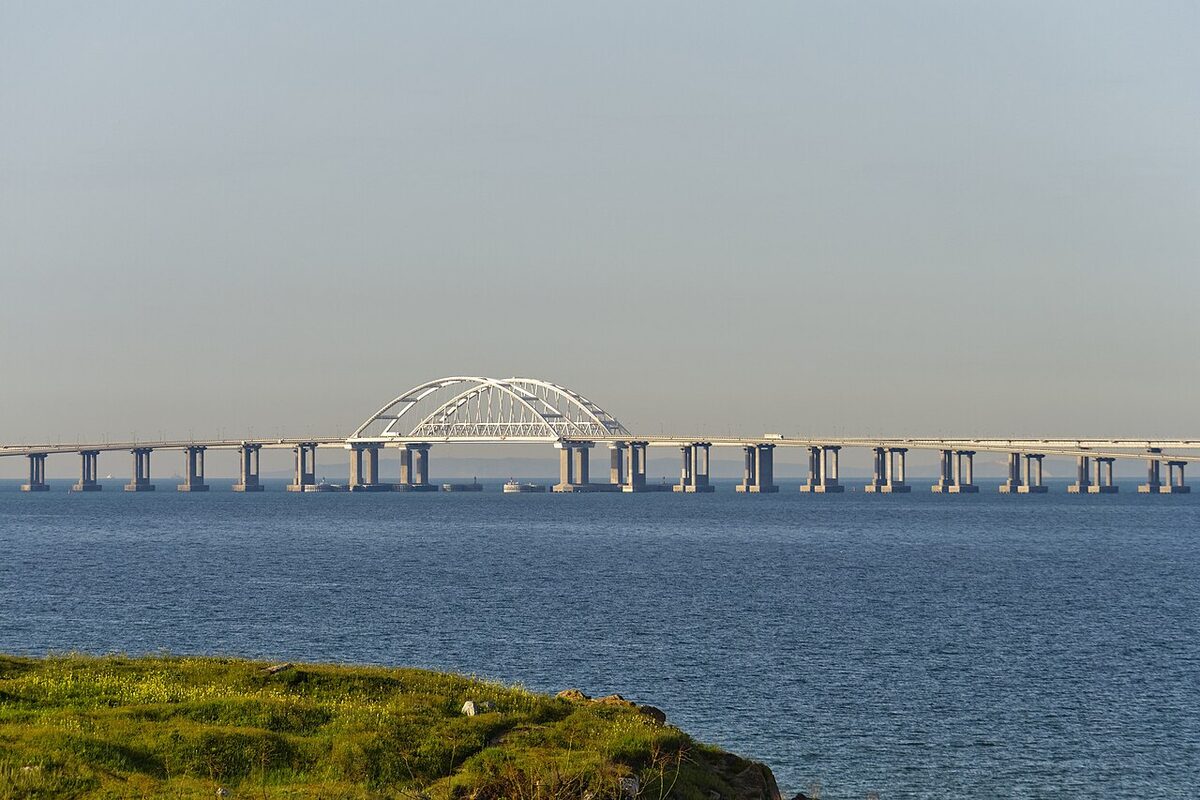
For most of the war, the Crimean Bridge has been the target Ukraine hit and Russia repaired. The 19-kilometer (12-mile) crossing over the Kerch Strait links occupied Crimea to the Russian mainland. Its road section opened in 2018 and its rail section in 2019. It has been damaged before and put back into service each time. On Nov. 17, 2026, Ukrainian President Volodymyr Zelensky said things went differently: Ukrainian forces had destroyed part of the bridge, and the strike was "the seventh stage of an operation carried out over several weeks."
He also took the unusual step of listing the weapons involved. He named eleven systems, a mix of long-range one-way attack drones, shorter-range drones and cruise missiles. The list reads like an inventory of Ukraine's domestic deep-strike industry, with a couple of foreign-supplied systems among them.
Two Nights, Two Strikes
The attack came in two parts. On Nov. 16, a Ukrainian strike hit the bridge during what The Moscow Times described as a record overnight drone attack. Sergei Aksyonov, the Russian-installed head of Crimea, said road traffic was restricted. Kremlin spokesman Dmitry Peskov played the damage down: "Minor damage is being assessed. Traffic across the bridge continues." Russia's Transportation Ministry said passenger trains were running normally.
Ukraine struck again overnight Nov. 16-17. According to The War Zone, this final assault combined long-range attack drones, cruise missiles and shorter-range drones. The Kyiv Independent reported that a section of the bridge collapsed after a Flamingo missile strike that night. A video released by Ukraine's Security Service (SBU), as described by Janes, appeared to show at least two explosions on or near the bridge's metal arches.
Russia's response moved past "minor damage" within a day. Citing Tass, Janes reported that Russia's Investigative Committee had opened an investigation into two attacks, on the nights of Nov. 16 and Nov. 17. According to that report, the attacks used UAVs and caused structural damage to the bridge.
A Campaign, Not a Raid
The most important part of Zelensky's account may not be the last strike. It is his description of what came before it. "Our warriors gradually destroyed air defense systems, radars, electronic warfare equipment, and other designated targets on the way to the final objective," he said, as quoted by Janes.
The War Zone reports the operation was coordinated by the SBU and the General Staff and ran in seven stages over several weeks, according to Zelensky. Ukraine has not said publicly which assets were destroyed in each stage or when. On its own account, though, the operation was a deliberate sequence: wear down the sensors and shooters protecting the bridge, then strike the bridge itself.
The War Zone argues that each weapon class suits a particular target set, and that the wide spread of performance and flight profiles makes the drones and missiles harder for Russian air defenses to hunt down. It also notes that the Flamingo reached its target only thanks to a wide-ranging effort by many other systems. According to The War Zone, unconfirmed reports say the Da Vinci, a one-way attack drone made by Destinus, was used to suppress air defenses.
The Eleven Systems
Zelensky listed these systems:
- Dovbush
- Vendetta
- Da Vinci, a Destinus one-way attack drone
- Sichen
- Mich-2000
- Ruta, a cruise missile
- Palianytsia, used against the road section, per the SBU and Zelensky
- An-197
- FP-1
- FP-5 Flamingo, a cruise missile
- R-360 Neptune, a cruise missile
The list leaves a lot out. Zelensky did not say what the Sichen or the An-197 were used against. The War Zone notes that Ukraine has not disclosed which variants of several of these systems were used. For most of the list, the public record shows only that a system took part, not where or how many times.
Who Dropped the Span?
Ukrainian sources give different answers to the obvious question of which weapon brought the span down.
The SBU said its Alpha special forces unit struck the road section with Palianytsia UAVs, after which the section collapsed into the water, Janes reported. Zelensky, as summarized by The War Zone, split the work by target: Palianytsia drones on the road section, and FP-5 Flamingo, Neptune and Ruta cruise missiles on the railway section. The Kyiv Independent reported that the section collapsed after a Flamingo strike overnight on Nov. 17.
Destinus, which makes both the Da Vinci and the Ruta, posted its own account on LinkedIn, as quoted by The War Zone. It said Ruta missiles struck the bridge on two consecutive days and that "seven Ruta missiles hit the bridge, causing one span to collapse."
These accounts can partly be reconciled. A bridge with separate road and rail sections, hit over two nights by several kinds of weapons, could take damage from more than one of them. But they cannot all be the single cause of the same collapse. Each claim comes from a Ukrainian government body or from a manufacturer with an obvious commercial interest in the result, and none has been independently verified in the sources reviewed here. Any single attribution should be treated as provisional until there is better imagery or a fuller official account.
The Wider Night
The bridge strikes came during heavy fighting on both sides. The Moscow Times reported that during the Nov. 16 attack a 59-year-old man was killed in Russia's Bryansk region when a drone dropped an explosive device on his vehicle. At least six people were injured in Krasnodar region, and fires broke out at four industrial sites in Azov.
On Nov. 17, Russian ballistic missiles struck Kyiv's Northern and Southern bridges over the Dnipro, according to the Kyiv Independent, citing Mayor Vitali Klitschko. Zelensky said four missiles targeted the Southern Bridge and three the Northern. Ukraine's State Emergency Service reported two people killed in the Obolonskyi district, though it was not clear whether they died in the overnight missile strike or later that morning.
Why It Matters
The Kerch Bridge is a critical road and rail link between Russia and occupied Crimea, and losing any part of it can be expected to complicate logistics for Russian forces on the peninsula. Previous attacks damaged the bridge and Russia restored it; an October 2022 truck bombing, for example, caused months of disruption, according to The Moscow Times. This time Russia's own Investigative Committee, per Tass, describes structural damage, and the SBU says part of the road section collapsed into the water.
For the drone and missile community, the method matters more than the target. Ukraine's account describes a combined campaign: weeks of preparatory strikes on air defenses, radars and electronic warfare, followed by a final salvo of drones and cruise missiles. Most of the eleven systems Zelensky named are Ukrainian-developed, though The War Zone notes at least two are foreign-supplied, and two of them, the Da Vinci and the Ruta, come from Destinus. If Zelensky's description holds up, Ukraine has shown it can combine a wide mix of one-way attack drones and cruise missiles against one of Russia's most heavily defended and symbolically important infrastructure targets.
Publishing the full roster was also a message to Russia, to Ukraine's partners and to buyers. Destinus, for one, has publicly claimed credit for the Ruta's role in the strike. That makes it more important to separate what is documented, a collapsed span and a Russian investigation into structural damage, from what is claimed: which weapon did what, how many hit, and what each earlier phase destroyed.
What We Still Don't Know
Ukraine has not said which air defense, radar or EW assets were destroyed in the six earlier phases, or when. The War Zone notes that it is not known how many Ukrainian drones and missiles were launched or what share reached their targets. The specific variants used, and the roles of the Sichen and An-197, are still undisclosed. None of the sources reviewed gives a repair estimate. Those answers will decide whether this strike is remembered as the one that finally closed the Kerch crossing or as another expensive repair job.
Sources
- Ukraine lists 11 UAVs and missiles used in Crimea bridge strike, Russia admits it is part destroyed (Janes)
- These Are The Weapons Ukraine Used To Drop The Kerch Bridge (The War Zone)
- Ukraine war latest: Entire section of Crimean Bridge collapses after 'seven-phase operation,' Zelensky reveals (Kyiv Independent)
- Ukraine hits Crimean Bridge amid record overnight drone attack (The Moscow Times)
