
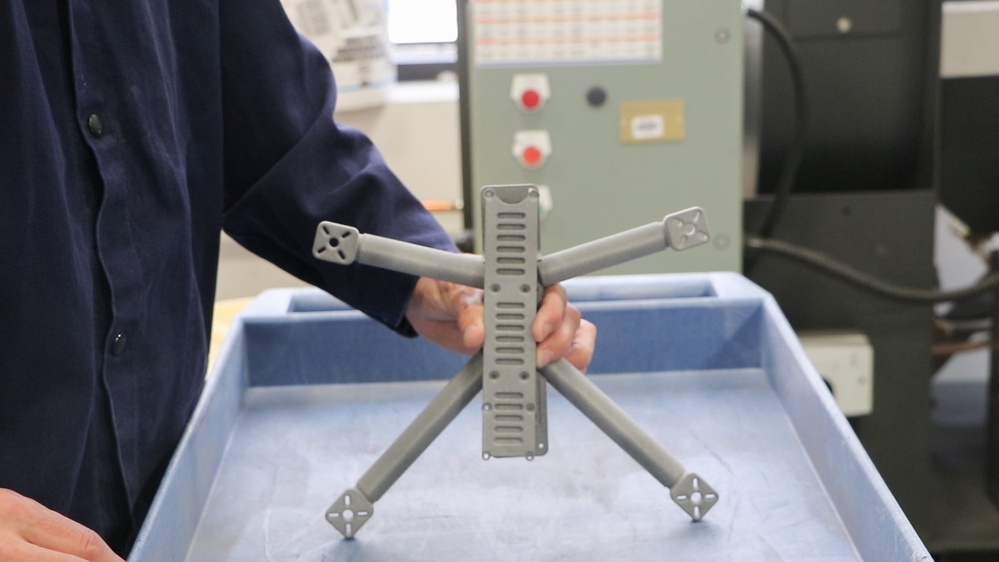
The Pentagon wants America's car industry to help build its drone fleet. It does not want the automakers to build the drones themselves. It wants them to make the parts inside.
The Wall Street Journal reported on Nov. 24 that defense officials are in preliminary talks with General Motors, Ford, Magna International and other manufacturers. The companies would supply components such as motors, actuators, engines, sensors and lidar to drone companies, and the drone companies would still design and assemble the aircraft. DroneXL, Fox Business and AeroTime all followed the report. Each one stressed the same point: nobody has signed anything.
The companies' own accounts also differ. GM appears interested. Ford says its talks with the Pentagon are about something else.
What is actually on the table?
The plan covers components, not complete aircraft. According to the reporting, the automakers and large suppliers would make motors, actuators, engines, sensors and lidar, and existing drone makers would integrate those parts into airframes. CBT News described the possible work in the same terms: motors, actuators, engines, sensors, lidar and other components supplied to drone companies.
That split matters. The Pentagon is not asking Detroit to become a drone company. It is asking Detroit to become a supplier to drone companies.
Where does each company stand?
GM is reported as the most interested of the automakers in military projects. Per DroneXL, the company is considering drone motors closer in size to a riding-lawn-mower motor than to a car engine. DroneXL also reported that GM is talking to RTX and L3Harris. GM declined to comment on the specifics. It told Reuters that GM Defense has the manufacturing capabilities and scale for this kind of work, according to DroneXL and AeroTime.
Ford gave a different account. The company told Reuters that its discussions with the Pentagon focus on military vehicles and satellites. The day before the Journal report, Ford announced a minority investment in spacecraft maker Revolution Space. CBT News noted that Ford has historically stayed away from weapons manufacturing and kept its Pentagon business close to its commercial lineup. On the record, then, Ford is not a drone-parts supplier in waiting.
Magna International, one of the largest auto suppliers, also met with officials, according to AeroTime. The sources I read carry no statement from Magna. Fox Business said it sought comment from the Department of War, GM, Ford, Magna and Lacks Enterprises.
Has an automaker done this before?
Yes, recently, and the Pentagon is likely to cite it. GM Defense and Lockheed Martin signed a contract on Aug. 6 for housing components for the PAC-3 MSE interceptor. In September, Lockheed said GM Defense delivered the first components 22 days after the agreement, per Fox Business and DroneXL.
Twenty-two days from contract to delivered parts is the kind of speed that draws defense officials to automotive manufacturing. It is also a single, narrowly defined component program. It does not show that the auto industry will commit to drone parts as an ongoing line of business.
Why motors are the right ask
Of all the parts on the list, motors are where the pressure on the supply chain is most immediate. China began requiring export licenses for heavy-lift drone motors on Nov. 18, according to DroneXL. Separately, the Pentagon's Drone Dominance Program has barred Chinese motors and batteries since its second phase. Drone makers selling into that program therefore need non-Chinese motors, and the main foreign source is now adding licensing requirements of its own.
The domestic motor base is thin and young. DroneXL pointed to Westmag's $11 million seed round in June. That is a startup-scale figure, far from industrial scale. DroneXL's own view is that automakers build electric motors at a volume no drone company comes close to, which is the logic behind the ask.
Why the margins are the sticking point
Fox Business reported that executives have raised questions about profit margins and about the business case for entering the weapons supply chain. That caution is understandable. An automaker that retools a line for drone motors is betting that military demand will last long enough to repay the investment. The reporting cites choppy Pentagon demand and funding that depends on annual congressional approvals, which is a hard fit for a retooling investment.
There is also political and reputational risk. CBT News reported that the political risk of signing a deal with the administration has increased since the midterm elections. Ford's history of avoiding weapons work, and its framing of its talks as vehicles and satellites, suggest it is weighing that risk carefully.
What the Pentagon would have to offer
No terms have been reported, so this part is analysis, not reporting. The obvious lever is demand certainty. Manufacturers that build to volume decide on capacity based on multi-year orders, not one-off prototype buys. If the Pentagon wants Detroit to put production lines and engineering staff on drone motors, it will probably need to offer multi-year purchase commitments, or a similarly durable demand signal, that make the margins acceptable over the life of the tooling.
The PAC-3 MSE housing deal shows an automaker will move quickly when the work is defined and the customer is committed. The current talks are still at the stage of exploring whether such a commitment exists.
Why It Matters
The US drone industrial base has a component problem more than an airframe problem. China is the primary or sole supplier of many drone components, and Drone Dominance bars Chinese motors and batteries, which leaves a gap in domestic supply. China's new export licensing for heavy-lift drone motors makes that shortage worse. The Pentagon plans to buy millions of drones in the coming years and has concluded that many small drone makers lack the factory capacity to deliver them, which is why it is turning to automakers.
For now, the reporting supports a cautious reading. GM looks willing, Ford says its talks are about other things, no Magna position appears in the reporting, and no agreement exists. Whether the talks produce a supply base or just a news cycle probably depends less on factory capability than on whether the Pentagon will make the kind of long-term purchase commitments that volume manufacturers need before they invest.
Sources
- Pentagon Courts GM, Ford for Drone Parts. Ford Points to Vehicles (DroneXL)
- Pentagon reportedly in talks with GM, Ford to scale US military drone production (Fox Business)
- Pentagon seeks US automakers' help to build military drones (AeroTime)
- Pentagon looks to GM, Ford and suppliers to scale up drone production (CBT News)
