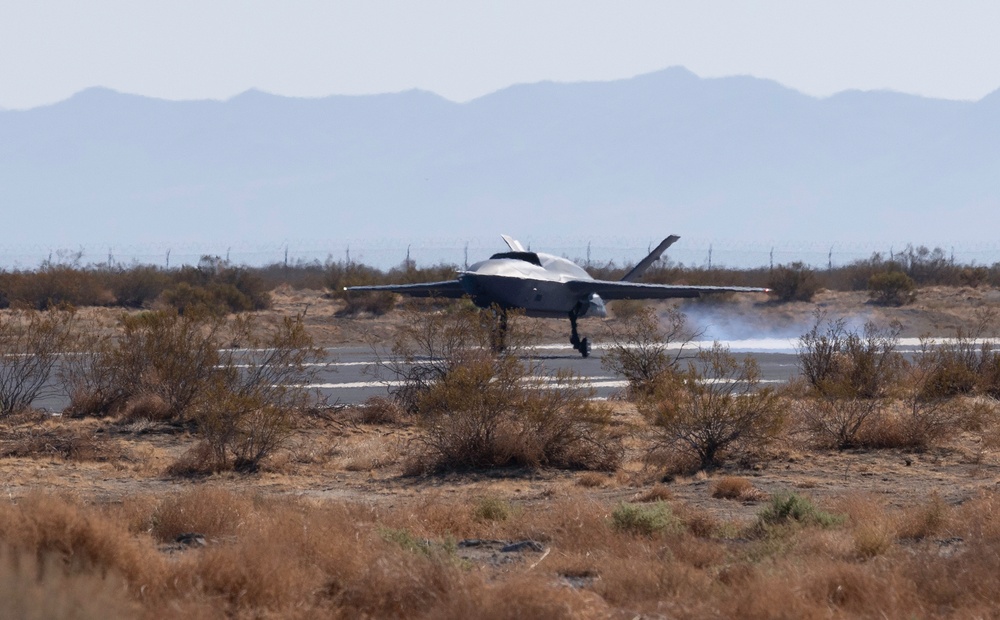
Canada's home-grown attempt at an uncrewed fighter wingman now has an engine and an industrial team. On Nov. 20, Ottawa-based Dominion Dynamics announced a consortium of 12 Canadian companies to build Scout, a jet-powered aircraft the company calls an Autonomous Collaborative Platform (ACP). Three days earlier it had named Pratt & Whitney Canada's PW300-series turbofan as the powerplant and said the airframe is being designed around that engine.
The announcements set out an industrial plan. They do not describe a program of record. Army Recognition reports that no Canadian military order or unit price has been confirmed, and the claims about the aircraft's role, funding and schedule come from the company and its partners.
What Dominion says Scout is for
According to the Nov. 20 statement reported by Janes, Scout is designed for long range, extreme cold and limited infrastructure. Those three requirements describe Canada's northern operating problem. The aircraft is meant to operate alongside crewed fighter jets and receive tasking from airborne or ground-based command systems.
Army Recognition gives a more specific mission: Scout would accompany F-35s in the Canadian Arctic for surveillance, electronic warfare and strike support. Dominion's Nov. 17 release, carried by DroneXL, calls Scout Canada's first Autonomous Collaborative Platform.
That is the same broad category as the "loyal wingman" and collaborative combat aircraft efforts in other air forces: uncrewed jets that extend a crewed fighter's sensors and weapons. Dominion's angle is geography. It is building around Arctic distances and cold, where runways, hangars and maintenance support are scarce.
The engine choice comes first
Dominion's choice of a commercial business-jet engine family is the most concrete technical detail released so far. Per Army Recognition, the PW300 family spans 13 models in four series, with the listed ratings running from 4,700 lbf (20.9 kN) for the PW305 to 7,000 lbf (31.1 kN) for the PW308. Army Recognition says the airframe, dorsal intakes and fuel systems are being engineered around the engine. Dominion's own release also says the airframe is being designed around the engine.
Using an existing engine family removes one of the slowest, riskiest and costliest parts of developing a new military aircraft. Defence Industry Europe reports that the PW300 family has more than 6,000 engines produced and 33 million flight hours, according to the announcement. Scott McElvaine of Pratt & Whitney Canada said a commercial off-the-shelf engine would make development more efficient.
Nationality matters too. Pratt & Whitney Canada is a subsidiary of RTX, but it is headquartered in Longueuil, Quebec, and Dominion repeatedly calls the PW300 a Canadian-built engine. For a company selling a sovereign Canadian capability, a domestically built engine is part of the pitch.
Who is on the team
The 12 members named in the Nov. 20 statement are:
- Pratt & Whitney Canada (RTX)
- Telesat
- Thales Canada
- Top Aces
- ITPS Canada
- PV Labs
- SRC Can
- Altitude Aerospace
- Groupe DCM
- HSB Solutions
- North Aircraft Industries
- RAMPF Composite Solutions
Janes describes the group's combined expertise in aircraft structures and composites, landing gear, avionics and flight controls, engines, sensors and secure communications, plus flight testing, training, maintenance and long-term fleet management, rather than assigning specific work to each member. Specialised suppliers from NATO countries will also complement the Canadian industrial base, according to the statement. Janes quotes Benoit Breault, Dominion's senior vice-president of aerospace engineering, on the engine's role in the aircraft. Dominion says its own engineering teams work in Ontario, Quebec and Nova Scotia, and CEO Eliot Pence is quoted in the Nov. 17 release.
Ottawa has voiced support for the domestic supply-chain argument. In comments reported by Defence Industry Europe, Industry Minister Mélanie Joly spoke about strengthening Canadian supply chains. Political support for domestic sourcing is not the same as a funded requirement, though, and none of the material released so far points to one.
What has not been announced
Several things are still missing from the public record:
- A customer. Army Recognition says no Canadian military order has been confirmed. Nothing in the sources shows a contract, a statement of requirement or a competition that Scout has entered.
- Independent performance data. Apart from the engine family's published thrust ratings, the sources give no range, endurance, payload, speed or weight figures for Scout.
- A verified schedule or budget. Army Recognition reports a first-flight target between August 2028 and February 2029 and C$169 million raised by Dominion since 2025. Those figures come from the company's side, and none of the reporting cites a government source for them.
- Integration details. Saying Scout will take tasking from airborne and ground command systems, and fly with F-35s, is a statement of intent. The announcements do not say how Scout would connect to the F-35's mission systems or to Canadian and allied command networks, or whether that has been tested.
None of this is unusual this early. Companies often announce teams and engines before a first flight or a contract to show that the industrial base exists and to influence requirements before they are written. Readers should still treat this week's news as a proposal.
Why It Matters
Canada's Arctic has long distances, few airfields and harsh cold, and a small fighter fleet has to cover it. An uncrewed jet that can fly long distances from sparse bases and carry sensors, jammers or weapons ahead of crewed F-35s would address that problem directly. That explains Dominion's design goals: range, cold-weather operation and minimal infrastructure.
The consortium is also an argument for sovereignty. Dominion has built a team of Canadian firms around a Canadian-built engine, aiming to give Ottawa a domestic option as allies field their own collaborative aircraft. A commercial engine family with more than 6,000 units and 33 million flight hours behind it lowers one category of technical risk. It does nothing to answer the bigger questions of autonomy, mission-system integration, certification and whether the Canadian military wants this aircraft.
For the drone industry, Scout tests whether a mid-sized national team can field a credible collaborative platform without a large prime contractor in the lead. The next useful signals will be a first flight, published performance figures, or any formal Canadian requirement for uncrewed teaming aircraft.
Sources
- Dominion Dynamics unveils Canadian consortium to build Scout ACP (Janes)
- Canada's Dominion Scout Drone to Fly on a Pratt & Whitney Engine (DroneXL Wire, Dominion press release)
- Dominion Dynamics and Pratt & Whitney Canada collaborate on Scout (Defence Industry Europe)
- Dominion Dynamics taps Pratt & Whitney Canada to power Scout (Army Recognition)