
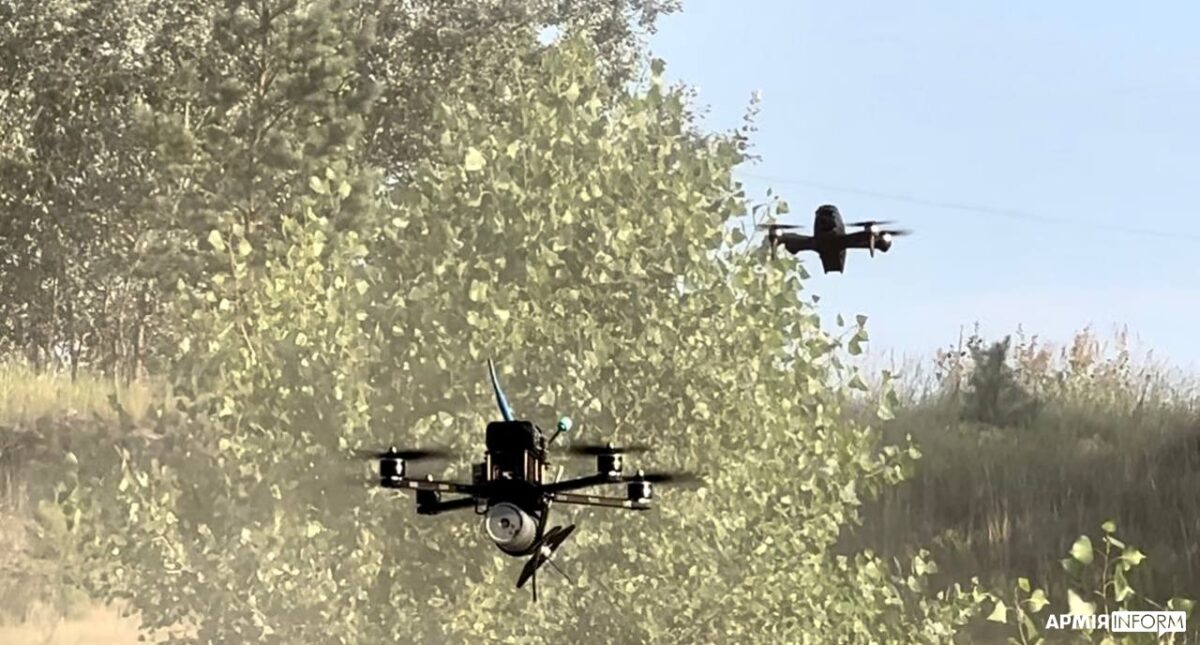
Ukraine's drone makers have spent the war working under the threat of Russian attack. A deal announced in Berlin this month points to another option: build some of that capacity in Germany, outside the range of air strikes.
US-based drone software company Auterion and Ukrainian manufacturer SkyFall have signed an agreement to form a joint venture called Skyfall x Auterion. The venture would build drones in a new factory in Germany. It would start with the Shrike FPV strike drone and later add interceptors and middle- and deep-strike systems. According to the companies, the factory would also give Germany's government a long-term domestic option for drones proven in combat in Ukraine.
What was actually signed
The wording matters here. Auterion's own announcement says the two companies intend to form the joint venture. The headline of Defence Network's German-language report says the companies are founding a joint venture ("gruenden Joint-Venture"), but the body text repeats the company line: an intent to form the venture for a new factory. Neither the company release nor Defence Network says the entity has been incorporated, that a site has been chosen or that production has begun.
What exists is a signed agreement with strong political backing. It was signed at the ninth German-Ukrainian Economic Forum in Berlin, in the presence of German Economy Minister Katherina Reiche, according to Auterion. Chancellor Friedrich Merz and Ukrainian Prime Minister Serhii Koretskyi also attended the forum. The venture is being established under the "Build with Ukraine" defense cooperation framework and is welcomed by the German and Ukrainian governments, per the company release.
The money is less certain. The Kyiv Independent, which is Jakub Laichter's byline on the story, relays a Reuters report that, citing an industry source, said Germany would provide hundreds of millions of euros. That money would help establish the factory and pay for drone orders for Ukraine, with funding for German purchases expected later. No official figure appears in any of the three sources. Until Berlin confirms a number, treat it as an industry account rather than a budget line.
The product line: Shrike first, then interceptors and deep strike
The partnership already has a track record. Auterion and SkyFall say they have delivered more than 50,000 Shrike strike drones to Ukrainian forces together. That gives the German plant a design already in use at the front to start with.
The first product will be the Shrike FPV. Auterion says the plan builds on the Shrike's frontline track record and on the success of a Shrike variant that ranked first among manufacturers in the Pentagon's Drone Dominance Program. That ranking is the company's claim; none of the other two sources independently confirms it.
After the Shrike, the companies plan to add SkyFall's interceptors and what they call "middle and deep strike" systems. The Kyiv Independent describes the same plan as medium- and long-range strike. None of the sources gives specifications for those later systems, and the companies have not published a timeline for when each product line would come online.
How a software company ends up in a hardware factory
Auterion describes itself as a defense software company whose autonomy stack powers air, land and sea platforms. Its announcement says every drone in the venture combines a SkyFall airframe with Auterion avionics and AuterionOS.
That split helps explain the deal. SkyFall, which develops and manufactures drones in Ukraine, brings the airframe designs and production lines. Auterion brings the avionics and software. If the joint venture is formed as planned, the US company would no longer be just a supplier selling into a Ukrainian product; it would be a partner in the venture that builds the whole drone.
The incentives for each side are an inference rather than something the sources spell out. For Auterion, a German factory could mean a steady outlet for its avionics inside a European supply chain. For SkyFall, it means access to German funding and production capacity outside the range of air strikes, plus a potential route to German forces. For Berlin, it is a domestic drone production base built around a design already used in combat.
Out of range, but still close to the front
Both the company release and Defence Network stress the factory's location. The German factory adds production capacity outside the range of air strikes, and the Kyiv Independent likewise says it adds capacity away from Russia's attacks on Ukraine.
The risk of moving production away from the war is that a drone factory loses touch with it. The company release addresses this directly: it says the plant maintains a knowledge link and short innovation cycle for SkyFall's engineers, and that feedback from units at the front reaches those engineers every week and goes straight into the German line. Defence Network repeats the same claim. Whether that feedback loop holds up over the distance and at the pace of a German industrial site is one of the main things to watch once production starts.
A path to the Bundeswehr
The plant's initial customer is Ukraine. The company release says the venture will manufacture drones for Ukraine at high volume, and the Kyiv Independent says the factory would supply drones to Ukraine first. But the companies are clear about the longer-term goal. Auterion CEO Lorenz Meier said a factory in Germany gives German forces a domestic source for the same drones Ukrainian units rely on every week, and the release describes a path to supplying them.
The Kyiv Independent's reporting puts the same idea in funding terms. Per the Reuters report it relays, Germany would pay first for setting up the factory and for drones for Ukraine, and money for German purchases would come later. In practice, Germany would be helping fund a production line that its own military could later buy from, with Ukraine's battlefield use serving as the proving ground.
Why It Matters
This deal is a possible model for how Ukraine's defense industry could add capacity without carrying all of its risk at home. Moving production of a combat-used drone outside the range of air strikes adds capacity that sits away from Russia's attacks. It also would give Germany a domestic production option for drones proven in combat in Ukraine, rather than ones developed in peacetime.
The ownership structure matters too. A US software company and a Ukrainian drone maker would jointly run a factory backed, according to an industry source, by German government money. That is a three-country supply chain for a single drone, and it shows how much of a modern drone's value sits in the avionics and software as well as the airframe.
Several things are still open. The joint venture is a stated intent, not an operating company. The reported funding comes from an industry source, not the German government. No factory site, start date or production rate has been announced in the sources reviewed. The real tests are whether Berlin confirms the money, whether the venture is formally set up, and whether the first German-built Shrikes reach Ukrainian units while the design is still current.
