
Most counter-drone systems are built to answer one question: is there a drone overhead right now? Pai Defence, a British-Ukrainian startup founded in 2025, wants to answer a second one: what will the next drone do? According to a report in Unmanned Airspace, the company has closed a USD 5 million pre-seed round to work on that question. Nordic defence-tech fund Gardar led the round, and several Ukrainian companies took part.
The company says the money will go to two things. One is extending its detection coverage along the front line. The other is building machine-learning models that learn from recorded combat flights and try to predict enemy drone tactics.
What Pai Says It Builds
Pai describes its approach in three stages: detect, record, predict. The site presents the first two as current capabilities. On its own website, the third is presented as the "next step."
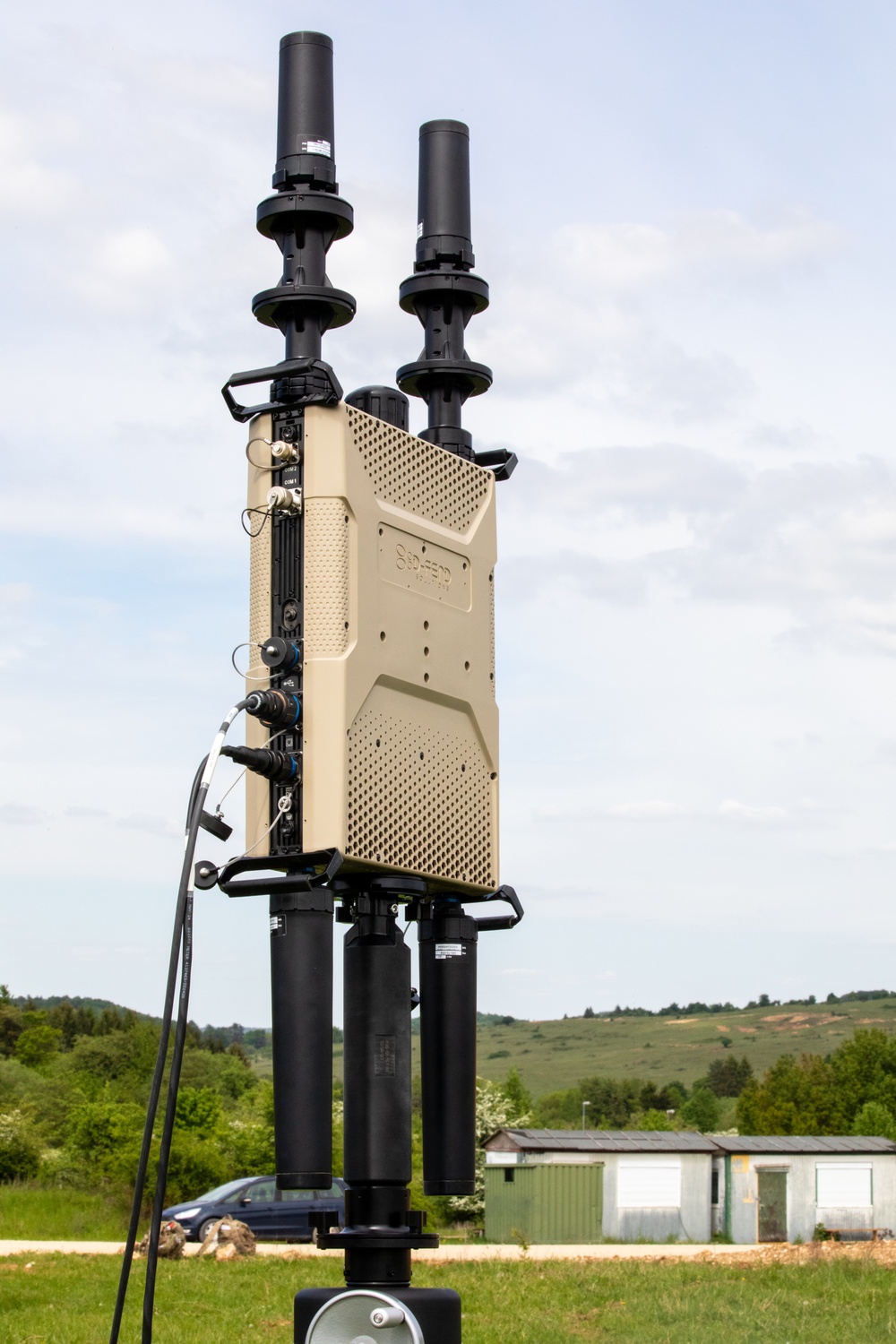
Detect. At the centre of the system is what Pai calls a passive, full-spectrum sensor. Unmanned Airspace reports that the sensor "hears" the frequencies drones use without giving away its own location. The company's site says it emits nothing. That matters on a battlefield where any emitting sensor can become a target. A sensor that only listens is far harder to find and strike than one that sends out a radar signal.
Record. Pai says each detected flight is logged with its launch point, flight path and surroundings. Over time this builds an archive of how drones are actually flown in a given sector: where operators launch from, which routes they use, and how those patterns sit against the terrain. The company's site shows an analytics demo with a one-day view of 1,234 tracks and 8,638 detections, but it labels the playback an illustration with counts scaled from the rate near Pokrovsk. Those figures are a demonstration, not reported deployment results.
Predict. The last stage is the one the funding round is built around. According to Unmanned Airspace, Pai's AI is meant to learn from real combat flights and predict enemy tactics. The website puts this forward as the next step, not as a feature already in service, and the round's stated purpose of developing machine learning fits that reading. Pai is raising money to build prediction. It is not selling a finished prediction product.
The Operator Angle
Pai's website names co-founder Dmytro Pulmanovsky and describes him as first deputy commander and chief of staff of an unmanned systems battalion. A founder with that background fits the company's pitch, which is built on frontline drone use rather than lab conditions. It also fits Gardar's stated focus. On its website, the fund says it invests from Seed to Series B in early-stage defence technology companies rooted in the Ukrainian innovation ecosystem and proven under real operational conditions. The fund takes its name from Gardariki, the Old Norse term for the Kyivan realm.
Pai's site also explains why it thinks this market needs a new kind of product. It claims there are about ten times more tactical drones in Ukraine than in 2024, and roughly 300 counter-drone products in Ukraine alone. If those figures are close to right, a new entrant cannot get by on being one more detector. Pai's pitch is that recorded flight data, and models trained on it, will set it apart from the many systems that only raise an alert when a drone appears.
What the Announcement Does Not Say
Like most early-stage defence funding news, this one leaves out a lot. Readers should note the gaps.
- The funding rests on one report. The USD 5 million figure and Gardar's lead role come from Unmanned Airspace. Gardar's public website describes the fund and its focus but does not mention Pai Defence.
- Most investors are unnamed. The "several Ukrainian companies" in the round are not identified.
- No deployment numbers. Neither the trade report nor the company site says how many sensors are in the field, where they are, or how long they have been running.
- No customers named. No military unit, ministry or other buyer is identified as a user.
- No performance data. There are no published figures for detection range, frequency coverage, false-alarm rates or location accuracy. There is no evidence yet that prediction works, which makes sense for a capability the company itself calls the next step.
- Company-sourced market claims. The tenfold increase in tactical drones and the roughly 300 counter-drone products are Pai's own figures, and the company does not cite a source for them.
None of this is unusual for a pre-seed company working in a war zone, where publishing deployment details would itself be a security risk. But it means the current case for Pai rests on its concept and its team. Field results have not been published.
Why It Matters
The interesting part of Pai's pitch is the shift from detection to data. A passive sensor network that logs every flight's launch point, route and surroundings builds up a record of how drone operators behave. Software can then look for patterns in that record: preferred launch areas, common approach routes, and how activity changes over time. If that kind of analysis works, defenders could place interceptors, jammers or troops ahead of time instead of only reacting when a drone shows up on a screen.
There are hard problems ahead. A prediction model is only as good as the data behind it, and Pai has not published anything showing how large or representative its flight archive is. Drone tactics in Ukraine also change quickly, so a model trained on last season's patterns could lose accuracy as operators adapt. And in a market the company itself says has hundreds of counter-drone products, investors and buyers will want proof that prediction beats the alternatives, not just a promise.
The round also shows how defence-tech money is moving. Gardar's stated thesis is to back companies proven in Ukrainian operational conditions, and Pai's site says co-founder Dmytro Pulmanovsky serves in an unmanned systems battalion. Five million dollars is a small sum by defence-procurement standards. What it buys is the chance to show whether a listen-only sensor network can do more than detect drones and start to anticipate them. Until Pai publishes deployment figures, names customers or shows a working prediction capability, the idea remains unproven.
