
At 02:00 on June 1, 2025 — Russia's Military Transport Aviation Day — ordinary cargo trucks were parked near five of Russia's most strategically significant airfields. Then the rooftops opened.
One hundred seventeen first-person-view drones launched simultaneously from modified wooden structures bolted to the truck beds, targeting bomber bases spread across multiple time zones — some nearly 4,500 kilometers from the Ukrainian border. The operation was called Spiderweb. It had taken Ukraine's Security Service eighteen months to build.
Eighteen Months in the Dark
The delivery mechanism was engineered for invisibility. SBU operators concealed drones inside modular wooden cabin structures mounted on commercial cargo trucks — vehicles unremarkable enough to move through Russia without scrutiny. Each cabin roof was designed to open remotely via 3G/4G mobile control, enabling synchronized launch without any personnel near the airfields. More than 150 drones and 300 explosive payloads were smuggled into Russia in total; 117 were ultimately launched.
After launch, embedded explosive charges destroyed the trucks, eliminating forensic evidence of the delivery hardware. Ukrainian operators controlled the FPV systems remotely from outside Russian territory using ArduPilot open-source autopilot software and 4G/LTE connectivity. When signal dropped, onboard AI assumed autonomous flight along pre-planned routes. That AI had been trained on a specific data set: decommissioned Soviet aircraft at Ukrainian aviation museums to identify structural weak points on the exact airframe types parked at the target bases.
The timing was deliberate. Launching on Russia's Military Transport Aviation Day was assessed as calculated symbolic messaging. "Following the laws and customs of war, we targeted entirely legitimate objectives—military airfields and aircraft bombing our peaceful cities," said SBU Chief Vasyl Malyuk.
Five Bases, Three Time Zones
The geographic scope of the operation was its most audacious feature. Dyagilevo/Ryazan sits roughly 470–520 kilometers from Ukraine — already deep inside Russian territory. Ivanovo-Severny is 700–800 kilometers out. Olenya, in Murmansk Oblast on the Kola Peninsula, is approximately 1,800 kilometers from Ukrainian-controlled territory. Belaya, in Irkutsk Oblast near Lake Baikal, lies between 4,000 and 4,500 kilometers away — roughly the overland distance from New York to Los Angeles. Ukrainka, in Amur Oblast near the Chinese border, is farther still. The SBU confirmed the Ukrainka strike failed; it was the operation's only unsuccessful attempt.
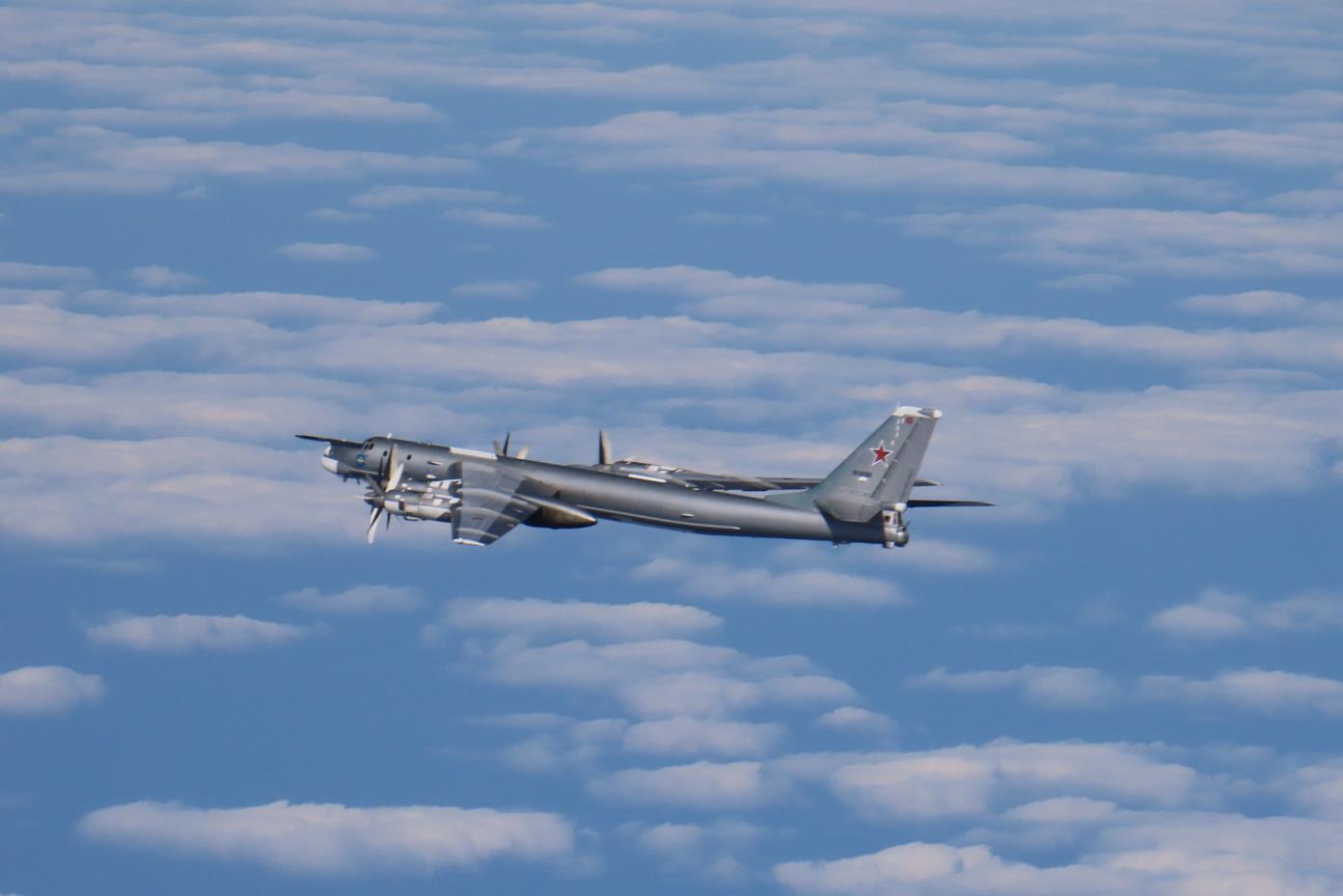
The aircraft at these bases were chosen deliberately. Tu-95MS Bear-H strategic bombers are Russia's primary air-launched cruise missile delivery platforms — the aircraft that have systematically struck Ukrainian infrastructure throughout the war. Tu-22M3 Backfire-C supersonic bombers perform both conventional and nuclear roles. The A-50 Mainstay airborne early-warning aircraft provides battlefield radar coverage; Russia operated approximately thirteen in 2025, with two already lost before Spiderweb. Neither the Tu-95MS nor the Tu-22M3 is in production. The Soviet-era manufacturing infrastructure required to build replacements no longer exists in functional form.
Claimed Destruction vs. Confirmed Losses
Ukraine's stated damage figures are aggressive. The SBU and Ukrainian government claimed 41 aircraft struck — representing 34 percent of Russia's strategic cruise missile carrier fleet at main air bases — with total damage exceeding $7 billion. Russia's Ministry of Defence claimed to have repelled the attacks while conceding fires at Olenya and Belaya, a position contradicted by SBU-released video showing successful strikes at four of the five targeted sites.
Independent assessment is considerably more conservative. Janes, drawing on satellite imagery and OSINT analysis, confirmed 12 aircraft destroyed: 7 Tu-95MS bombers, 4 Tu-22M3s, and 1 An-12 transport, with 2 confirmed damaged and 8 possibly damaged. Satellite imagery confirmed at least seven destroyed bombers at Belaya — at minimum 3 Tu-95s and 4 Tu-22M3s — while losses at Olenya included 4 Tu-95MS bombers and 1 An-12. The Moscow Times independently analyzed SBU drone footage, confirming burning aircraft at Olenya and Belaya, scorched terrain at Dyagilevo, and impact footage at Ivanovo-Severny. At Dyagilevo, however, no obvious structural damage was visible in satellite imagery reviewed as of June 4; analysts noted that internal damage would be difficult to confirm via satellite even where strikes occurred.
At Ivanovo-Severny, SBU footage showed strikes on two A-50 aircraft, but the extent of damage to those platforms remains unverified from open sources. Each A-50 is estimated at $350 million. The FPV drones that struck them cost between $600 and $1,000 apiece.
Why It Matters
Operation Spiderweb's most durable lesson is geographic. Russia's bomber bases were positioned away from the front by design — cruise missiles have the range; the aircraft don't need to be close. That basing logic did not account for a threat that uses commercial logistics as the delivery mechanism. None of the five targeted bases had perimeter counter-UAS defenses adequate to detect coordinated FPV launch from adjacent roads. The attack did not penetrate radar coverage or challenge air defenses. It arrived as ordinary cargo.
The transferable lesson is not lost on Western defense planners. Caitlin Lee of the RAND Corporation described high-value platforms as "big, juicy targets for both state and non-state actors." Fabian Hinz of IISS assessed that drones "dramatically increase" hostile sabotage capacity. "You can see the billions of dollars mounting up," noted Thomas Withington of RUSI, on the downstream cost of repairs and hardened base defense now required.
Air bases in the United States, United Kingdom, Germany, and Norway host the same categories of high-value assets: irreplaceable aircraft on open tarmacs, secured against conventional threats but not necessarily against commercial FPV systems smuggled to the perimeter inside civilian vehicles. Operation Spiderweb demonstrated, with verified damage at four of five targets, that this attack surface is real, accessible at intercontinental range, and achievable at a total hardware cost that fits inside a modest budget. The aircraft it destroyed cannot be rebuilt.
Sources
- Janes — Operation Spiderweb: Ukraine covert drone strike inside Russia
- CSIS — How Ukraine's Spider Web Operation Redefines Asymmetric Warfare
- Council on Foreign Relations — Ukraine's Operation Spider's Web Shows the Future of Drone Warfare
- PBS NewsHour — Ukrainian drone attack on Russian air bases is lesson for West on vulnerabilities
- Aerotime Hub — Operation Spider Web damage assessment: Ukraine drone strikes
- RBC Ukraine — How Ukraine's SBU took out Russian bombers
- The Moscow Times — We Analyzed New Drone Footage of Ukraine's Operation Spider's Web
