
Amazon's planned drone delivery site in North Myrtle Beach was voted down about five weeks ago. It is not finished yet. On Nov. 19, the owner of the land under the proposed pad filed an appeal in the Horry County Court of Common Pleas. The filing argues that the city's Planning Commission ruled on "general opposition" rather than land-use policy. It also asks for pre-litigation mediation, and under South Carolina law the city cannot refuse that request.
The appeal did not come from Amazon. According to The Post and Courier, the filer is a Delaware statutory trust that owns the 19.76-acre parcel in the Palmetto Coast Industrial Park. Myrtle Beach News identifies the trust as ExchangeRight Essential Income 11 DST. The trust is asking a judge either to reverse the commission's decision or to send it back to the commission for another look.
What Was Denied
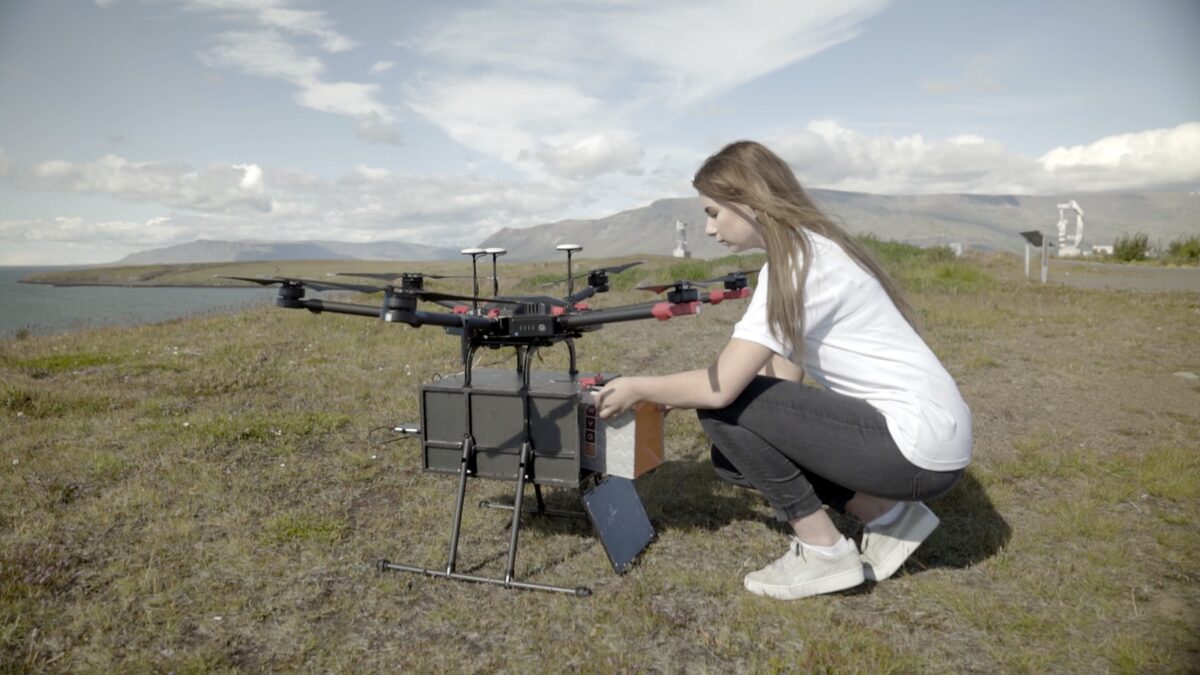
The project is small. DroneXL reports that it is a 13,627-square-foot drone "paddock" at 8651 Water Tower Road. It needed a Minor Planned Development District Amendment, filed as Z-26-22. The pad would have been Amazon's first drone delivery site in South Carolina.
The Planning Commission rejected the amendment on Oct. 20. The vote was unanimous, but the reported count is not consistent. DroneXL, citing the official minutes, says the vote was 6-0 with commissioner Ed Horton absent. Myrtle Beach News reports it as 7-0. The minutes are the stronger record, but the gap is worth noting. Vote counts in a quasi-judicial land-use decision can matter if a court examines how the decision was reached.
The commission's written findings leaned on experience in Texas rather than on measured conditions in North Myrtle Beach. DroneXL reports that one finding cites resident complaints from Richardson, Texas, logged in March and September 2026, along with a June 2024 meeting summary from College Station. DroneXL says that finding calls the two cities evidence of potential impacts, not proof of what would happen here. The findings also give distances: the pad sits about 1,200 feet from the nearest planned homes and 2,200 feet from existing ones, which the commission called favorable.
Both Texas cities are now case studies for Amazon's drone program. Myrtle Beach News reports that Richardson approved Amazon's operation 4-3 in June 2025, limited to the hours of 7 a.m. to 8 p.m. College Station, where residents complained publicly about noise, saw its last Amazon drone deliveries on Aug. 31, 2025.
The Landowner's Argument
The appeal's main claim is about evidence. The Post and Courier quotes the 12-page filing as saying the denial was supported by "no site-specific study, expert testimony or measured data." In other words, the trust argues that the commission relied on accounts from Texas cities to deny a pad in an industrial park, without any site-specific measurement. The commission's own findings, per DroneXL, describe those cities as evidence of potential impacts.
That is a familiar line of attack in zoning appeals. Land-use boards usually have to ground their decisions in the record and in the applicable standards, not in how many people oppose a project. Whether general opposition plus out-of-state complaints amounts to substantial evidence is the question a judge would eventually decide, if the case gets that far.
DroneXL says plainly that it has not read the petition and that its quotes are the newspaper's. The case is listed as ExchangeRight Essential Income 11 DST v. City of North Myrtle Beach Planning Commission, Case No. 2026-CP-26-09337.
Why Mediation Changes the Picture
The most important part of the filing may be the mediation request. Myrtle Beach News explains that under South Carolina Code Section 6-29-1155, a request for pre-litigation mediation in a zoning appeal must be granted. That means the city has to come to the table.
Any deal that comes out of mediation would be public. The statute requires City Council to approve a settlement in a public session, and the agreement then goes to the circuit court. A settlement would apply only to the property at issue. It would not set a citywide rule for drone operations.
The city has already started handling the dispute. DroneXL reports that the case was on the agenda for City Council's Nov. 23 workshop, to be discussed in executive session, the closed-door format councils use for legal matters. If a settlement is reached, possibly with conditions such as limited operating hours like Richardson's, residents would see it before it takes effect.
A City Without Drone Rules
The case is harder because North Myrtle Beach has no commercial drone ordinance. The Post and Courier reports that Planning Commission Chair Silvio Cutuli said the commission needs time to review and discuss the technicalities before taking an educated action on drone operations. Councilwoman Melissa Wober has asked the FAA and U.S. Rep. Russell Fry to make room for resident input.
The state is about to set some limits on what the city can do. Myrtle Beach News reports that the South Carolina Drone Regulation and Public Safety Act was signed May 15, 2026, and takes effect Jan. 1, 2027. It bars local rules that conflict with state law or FAA regulations. It still lets local governments set reasonable limits on takeoffs and landings on public property. Amazon's pad would sit on private industrial land, so how the new law applies to it is an open question.
Federal rules are still unsettled too. Myrtle Beach News, citing UAV Coach, reports that the FAA's Part 108 final rule for beyond-visual-line-of-sight operations has been under White House review since July 10, 2026, with a congressional deadline of Dec. 7, 2026. A final Part 108 would set the national framework for exactly the kind of routine drone delivery Amazon wants to run here.
Why It Matters
Amazon is moving quickly. The Post and Courier reports that the company plans to serve nearly 500 cities and towns by the end of the year. Tareq Wafaie, a company economic development official, said that more than 60 percent of the company's inventory can be delivered by drone in eligible markets. Myrtle Beach News reports that each hub serves a radius of about 7.5 miles. At that scale, each pad needs a parcel, and each parcel needs local land-use approval, so zoning fights like this one are likely to recur.
North Myrtle Beach shows how that obstacle can be challenged. The commission denied the pad by citing other cities' problems. The landowner, not the drone operator, is now challenging that reasoning, and a state statute forces the two sides into mediation, with any settlement requiring a public vote by City Council. If the case settles with conditions, it could become a model for other towns that have no drone ordinance. If it goes to a judge, the ruling could test how much weight a land-use board can give to complaints from other jurisdictions.
Several things are still unresolved. They include whether mediation is scheduled before the state law takes effect on Jan. 1, whether Part 108 is finalized by its December deadline, and whether the commission's vote was 6-0 or 7-0.
