
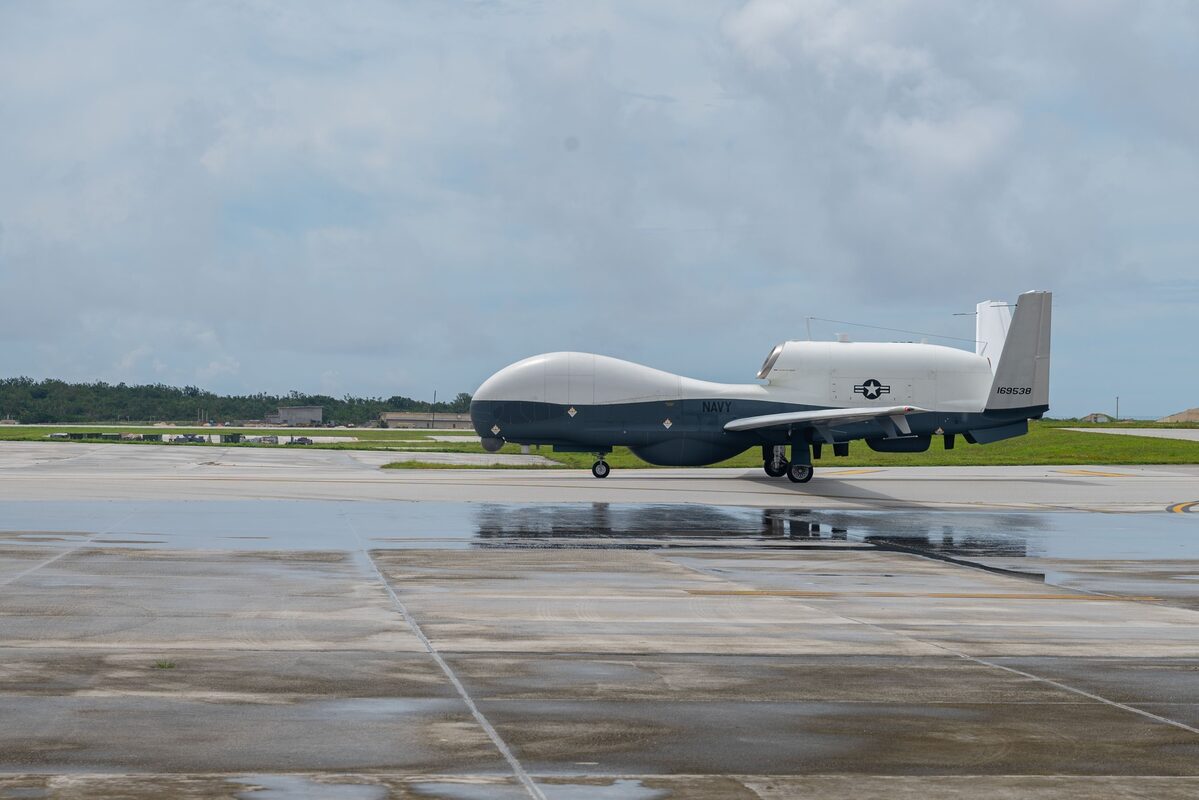
NATO is adding a new high-altitude surveillance asset to its own fleet. At the NATO Summit Defence Industry Forum in Ankara on July 7, 2026, Denmark, Finland, Germany and Norway announced they will jointly procure up to five Northrop Grumman MQ-4C Triton uncrewed aircraft, expanding the alliance's collectively owned intelligence, surveillance and reconnaissance capacity over the Atlantic, Baltic and Arctic.
The announcement was framed not as a simple arms purchase but as an industrial partnership. NATO Secretary-General Mark Rutte told the forum the arrangement was "genuinely made in NATO," pointing to a production model in which Northrop Grumman builds the airframes in the United States while European industry supplies mission support, data systems and ground infrastructure. "It is genuinely made in NATO and is creating jobs on both sides of the Atlantic," Rutte said.
Rutte also made the case for the Triton's operational value in plain terms: "These aircraft can fly for long periods at high altitude and cover large areas, including over open water, more efficiently than most other aircraft can."
What the Triton Brings to the Fleet
The MQ-4C Triton is a high-altitude, long-endurance (HALE) unmanned aircraft built by Northrop Grumman, derived from the RQ-4 Global Hawk airframe but purpose-built for maritime patrol. It operates above 50,000 feet, can stay airborne for more than 24 hours at a stretch, and has a range of roughly 7,400 nautical miles — figures that let a single aircraft watch enormous stretches of open ocean without refueling or crew rotation.
Those characteristics map directly onto the mission NATO officials described: detecting threats early, protecting sea lines of communication, and sustaining persistent watch over demanding, weather-hostile regions such as the High North, where Arctic shipping routes, undersea cables and Russian naval activity have all drawn increased alliance attention in recent years.
Filling a Gap Alongside AGS
The new Triton buy will operate alongside — not replace — NATO's existing Alliance Ground Surveillance (AGS) fleet, which flies RQ-4D Phoenix drones out of Sigonella air base in Sicily, Italy. AGS was built primarily for overland and coastal ground surveillance; the Triton purchase extends that owned-ISR concept out over open water, giving NATO a maritime-focused HALE capability it previously had to source through individual member states' national assets or allied cooperation arrangements.
By pooling the purchase across four nations rather than having each acquire its own fleet, Denmark, Finland, Germany and Norway are following the same multinational ownership model NATO used for AGS — sharing acquisition cost, basing, and sustainment burden across a group of allies rather than duplicating capability nation by nation.
The Nations Involved
The four buyers form a geographically coherent bloc bordering the waters the Triton is meant to watch. Denmark, Finland and Norway all have direct North Atlantic, Baltic or Arctic coastlines, while Germany also has Baltic Sea access, rounding out the four-nation bloc announced at the forum. Finland and Norway's participation also reflects the alliance's northward strategic tilt in recent years, with the High North increasingly cited by NATO officials as a region requiring persistent surveillance rather than episodic patrols.
Industrial Split: Airframes From the US, Systems From Europe
Reporting on the deal describes a specific division of labor: Northrop Grumman will build the Triton airframes themselves, while European industry will handle mission support, data systems and the ground infrastructure needed to operate the aircraft. That split is central to Rutte's "made in NATO" framing — the deal preserves a US prime contractor's role in building a proven, already-fielded airframe (the Triton is in service with the US Navy and Australia) while directing a meaningful share of the program's value and jobs to European suppliers.
This is a familiar structure for NATO's Alliance Ground Surveillance program as well, where American-built airframes are integrated with European-operated ground stations and sustainment infrastructure. Applying the same model to the Triton buy suggests NATO intends to standardize how it structures multinational HALE UAV programs going forward, rather than treating each acquisition as a one-off.
Why It Matters
This purchase is notable less for its size — up to five aircraft is a modest fleet by military standards — than for what it signals about how NATO wants to acquire and own surveillance capability going forward. Rather than relying solely on individual allies' national ISR assets or ad hoc coalition arrangements, the alliance is expanding its own directly-owned fleet, following the AGS precedent into the maritime domain specifically.
The timing and geography are also significant. Announcing the deal at a summit-adjacent industry forum, with four northern-tier allies as the buyers, ties the purchase directly to concerns over Arctic and Baltic security that have grown more prominent as shipping routes open and undersea infrastructure becomes a more visible target. A HALE platform that can loiter for a full day at altitude over open water gives NATO persistent eyes on sea lanes and choke points that are otherwise hard to monitor continuously with crewed maritime patrol aircraft or satellites alone.
Finally, the "made in NATO" industrial framing matters for the alliance's broader defense-industrial posture. By explicitly splitting airframe production (US) from mission systems and infrastructure (Europe), NATO is positioning transatlantic defense-industrial cooperation as a selling point in its own right — a template it may reach for again as other multinational allied procurement decisions come up in the years ahead.
