
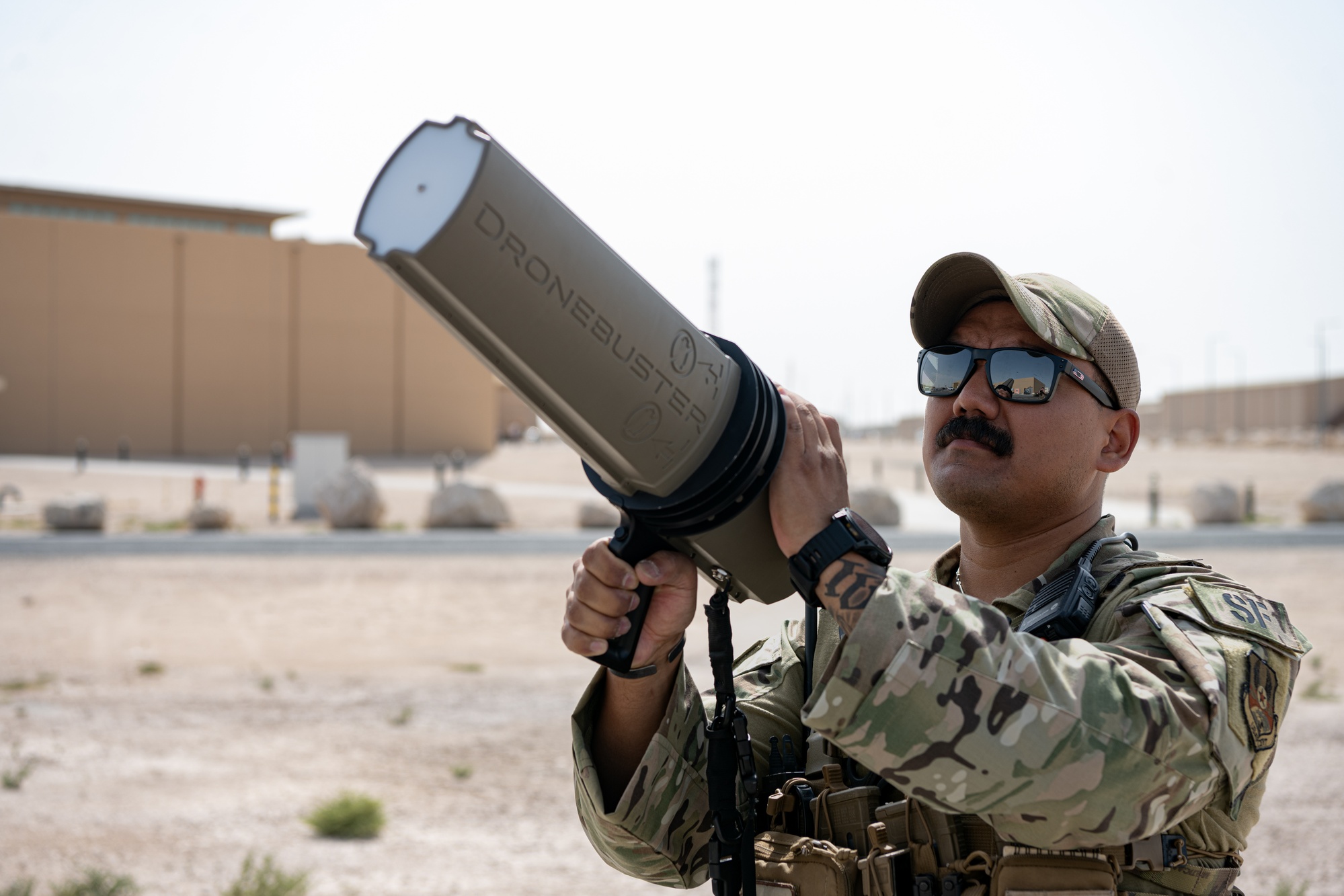
Every July 4, the National Mall becomes one of the most heavily protected pieces of sky in the country. This year, for the first time in the annual celebration's history, that protection carries a specific federal designation — and with it, an inauguration-grade security apparatus built to detect, track, and defeat drones over a crowd that could reach 150,000 people.
Ahead of the July 4, 2026 semiquincentennial — the America 250 milestone marking 250 years since the Declaration of Independence — the U.S. government designated the National Mall fireworks a National Special Security Event (NSSE). It is the same category reserved for presidential inaugurations, state funerals, and major international summits, and it hands the U.S. Secret Service lead authority over the entire security operation. As the Washington Post reported on June 30, the designation is a first for the recurring Independence Day event, and it brings a multi-agency posture that explicitly includes counter-drone and tactical units.
What that means in practice, according to reporting from DroneXL, is a footprint of "hundreds of federal agents and officers" on and around the Mall — including specialized tactical units, counter-drone teams, and National Guard elements folded directly into the plan. Secret Service Special Agent in Charge Tara McLeese leads the Washington Field Office's role in the operation. For the drone-flying public, the message from the federal government is blunt: keep your aircraft on the ground.
An airspace that was never open to begin with
The counter-UAS layer sits on top of an airspace regime that has restricted flight over the heart of Washington for roughly half a century. The National Mall — along with the White House and the Capitol — falls inside FAA Prohibited Area P-56, a zone that has existed for about 50 years and, crucially, carries no waiver path. There is no permit, no Part 107 authorization, and no special-event exception that lets a hobbyist or commercial operator legally put a drone over that ground. The answer is always no.
P-56 is nested inside a larger set of concentric restrictions. The Washington, D.C. Special Flight Rules Area (SFRA) extends outward roughly 48 kilometers — about 30 miles — from the city center, and within it sits a tighter 24-kilometer (roughly 15-mile) inner ring known as the Flight Restricted Zone (FRZ), where flights require specific FAA and TSA authorization. Drone operators anywhere inside that geometry face escalating rules, and inside the FRZ and P-56 the prohibition is effectively absolute.
The FAA reinforced the framing in its own July 4 travel-safety guidance. The agency advises operators not to fly near fireworks displays or large gatherings, points them to faa.gov/uas and the B4UFLY app to check for temporary flight restrictions (TFRs) and standing prohibitions, and notes the no-fly rules that already blanket the nation's capital. In other words, the regulatory apparatus that will be enforced on July 4 is not new — the NSSE designation simply layers dedicated detection and interdiction on top of it.
What happens if you fly anyway
The penalties are steep and were spelled out plainly by federal officials. According to DroneXL's reporting, FBI Washington Field Office Director Darren Cox cited civil penalties of up to $100,000, along with the potential seizure of the aircraft and arrest of the operator. That is on top of any criminal exposure a violation might carry. For a consumer drone that costs a few hundred to a few thousand dollars, the math is not close — a single flight into restricted airspace over the Mall can trigger a six-figure liability, the loss of the equipment, and a trip into federal custody.
It is worth being precise about what a "counter-drone team" is doing in this context. These units are tasked with detecting unauthorized aircraft, tracking them, identifying the operator where possible, and — under the legal authorities that come with an NSSE — mitigating the threat. The combination of a hard no-fly zone, real-time detection, and law-enforcement teams positioned to respond is what separates an NSSE from an ordinary large-event security plan.
Where these teams came from
The counter-drone capability on the Mall did not materialize for the holiday. It traces back to a $500 million federal counter-drone initiative announced on October 14, 2025 — a funding and buildout effort aimed at standing up dedicated counter-UAS units and equipping them for large-scale public events. According to DroneXL, the program explicitly targets both FIFA World Cup 2026 and the America 250 anniversary — two of the largest, highest-profile crowd environments on the U.S. calendar and exactly the kind of soft-target, high-attendance settings that drive counter-drone investment.
The July 4 NSSE is, in effect, one of that program's first major operational tests. The America 250 celebration was among the events the initiative was built to protect from the outset, and its counter-drone teams are now being deployed to a gathering of enormous crowd density and symbolic value. The lineage matters because it signals that the federal government is treating drones not as a niche nuisance but as a standing category of threat to mass gatherings — one worth a half-billion-dollar program and a permanent cadre of specialized teams.
The layered picture on July 4
Put the pieces together and the Mall on Independence Day looks like this: a crowd of up to 150,000 people gathered under airspace that has been prohibited for about 50 years, wrapped in a 48-kilometer SFRA and a 24-kilometer FRZ, now elevated to NSSE status for the first time. Leading the operation is the Secret Service, with hundreds of federal agents on the ground, counter-drone teams scanning the sky, National Guard units in support, and the FBI publicly warning of $100,000 penalties, seizure, and arrest for anyone who flies into the zone.
For the drone community, the operational takeaway is simple and unambiguous. There is no legal way to fly over the National Mall on July 4 — or on any other day — and this year the enforcement layer is denser and better-resourced than it has ever been. Operators anywhere in the D.C. region should check B4UFLY and the FAA's TFR listings before flying, and stay well clear of the FRZ entirely.
Why It Matters
The first-ever NSSE designation for the National Mall fireworks is a marker of how far counter-drone operations have moved into the mainstream of U.S. event security. A capability funded by a $500 million initiative in late 2025 — built for marquee 2026 events including the FIFA World Cup and the America 250 anniversary — is now on the ground to protect a domestic holiday, a sign that the government treats consumer and commercial drones as a persistent threat to any mass gathering, not an occasional edge case. For UAS operators, it is a concrete reminder that the most symbolic airspace in the country is also the most aggressively defended, and that the gap between a curious flight and a six-figure federal penalty has never been narrower. As the counter-UAS mission scales toward the World Cup and beyond, the Mall's July 4 operation offers an early look at what large-event drone defense in the United States will routinely look like.
