
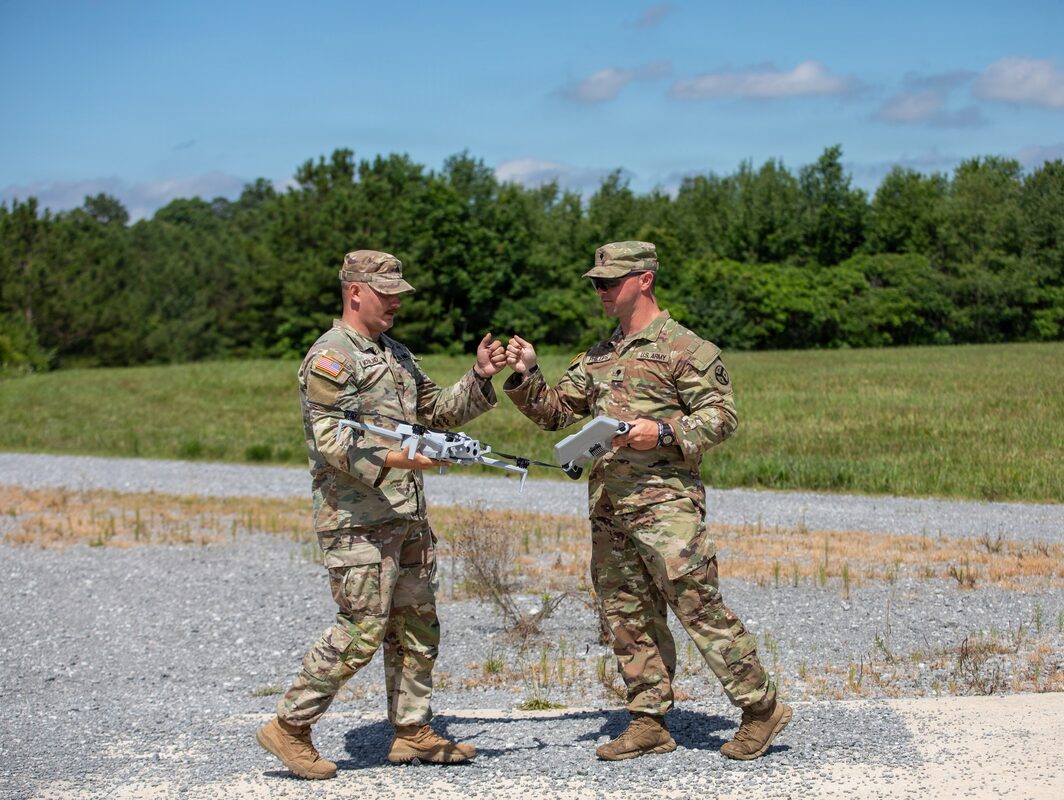
A plan to put Skydio drones in the air over north Minneapolis as a first-responder tool died in a tie on July 16, 2026, after the City Council declined to authorize a contract that would have handed the Police Department a 75-day free trial. The motion failed 6-6, and with an evenly split chamber there were not enough votes to advance it. The room, according to reporting from the vote, was packed — an overflow crowd turned out, many holding protest signs, to watch the council reject the drone proposal.
The objection was not about the drones. It was about who else Skydio sells to.
What the pilot would have done
The rejected proposal was a drone-as-first-responder (DFR) deployment — a model in which a drone is dispatched to a 911 call, often arriving before officers, to give dispatchers and responding units a live look at a scene. The Minneapolis version was pitched as a 75-day free trial of Skydio hardware for the Police Department, concentrated in north Minneapolis, and framed as a way to shave time off 911 response amid the department's ongoing staffing shortages. The trial would have added two rooftop docking units to Minneapolis Fire Station 14. Its no-cost structure is a familiar on-ramp for DFR programs nationally: a vendor lends the equipment, the department runs calls through it, and the pilot becomes the basis for a paid contract if the numbers look good.
The authoritative record of the contract terms and the vote itself sits with the city's Legislative Information Management System, the .gov docket that tracks Minneapolis council actions. But the political stakes were spelled out plainly in the chamber.
Why the deal collapsed
Council members who opposed the contract pointed to Skydio's customer list outside Minneapolis. The California-based company has sold drones to Immigration and Customs Enforcement — including an AI-powered drone that went to ICE for $25,000 in September, a sale reported by Forbes — and to the Israeli military. For a council operating in a city still processing a recent federal enforcement surge, those relationships were disqualifying.
That surge, referred to as Operation Metro Surge, carried a local body count that opponents invoked directly. Council members referenced the deaths of two residents, Renee Good and Alex Pretti, during the federal enforcement push. Before the vote, Council Member Aurin Chowdhury called the proposal "an abysmal mistake." The argument, in essence: a city cannot spend public money on a company whose products it sees as tied to the same enforcement apparatus that residents had just died confronting.
The most striking dissent came from the person who put the contract on the table. Council Member LaTrisha Vetaw, who represents the 4th Ward, spearheaded the pilot, and she used her position to warn about the precedent the vote would set. If the standard is that the city "cannot work with any company that has contracts with a federal agency" whose policies it opposes, she argued, "we will quickly find that standard impossible to apply consistently." Vetaw's point was procedural, not a defense of Skydio's ICE or Israel business: draw the line here, and you have to draw it everywhere, and the city will find itself unable to buy much of anything.
A chamber split down the middle
The motion failed on a 6-6 tie at the council's Thursday meeting — the narrowest possible way for a proposal to fail, and a measure of how evenly the chamber divided. With the vote deadlocked, the pilot could not advance; a single flipped vote would have carried it.
Local broadcast coverage from KSTP framed the outcome around the same two pressure points that dominated the print reporting: Skydio's ties to Israel and to ICE. That consistency across outlets — MPR News, the Minnesota Reformer, and KSTP all landing on the same core objections — suggests the ICE and Israel sales were not a fringe talking point but the central axis of the debate.
Why It Matters
Drone-as-first-responder programs have spread quickly through American policing on the strength of a simple pitch: faster eyes on a scene, at a time when many departments cannot hire officers fast enough. Skydio is one of the dominant domestic vendors in that market, and its "American-made" positioning has been part of its appeal to public agencies wary of Chinese-manufactured drones. Minneapolis shows that domestic manufacturing does not, by itself, clear the political bar anymore.
The Minneapolis vote is a live test of a new gating factor in public-safety drone adoption: the vendor's other customers. A council did not reject DFR on privacy or surveillance grounds — the usual battleground for police drones — but on procurement-ethics grounds tied to who else the manufacturer arms. That is a different and harder problem for vendors, because it is not something a department can mitigate with a data-retention policy or a usage audit. It is a question about the company itself.
Vetaw's warning is the part of this story with the longest reach. If federal contracting becomes a disqualifier for a police vendor, the pool of eligible suppliers shrinks dramatically, because the same companies that sell to ICE also sell to the agencies cities routinely rely on. Other councils weighing DFR pilots will now have Minneapolis as a reference point — both for how quickly local enforcement politics can sink a proposed pilot, and for how a tie vote can turn a "free" trial into a hard no. Expect vendors to face more questions about their federal and foreign customers, and expect more of these fights to be decided not on the technology but on the ledger of who the technology is sold to.
Sources
- City of Minneapolis Legislative Information Management System (LIMS)
- Minneapolis City Council rejects police drone contract with Skydio — MPR News
- Minneapolis City Council rejects Skydio drone contract, citing past ICE sales — Minnesota Reformer
- Minneapolis City Council rejects drones-as-first-responder pilot, citing ties to Israel, ICE — KSTP
