
Japan's Ministry of Defense submitted a record ¥8.9 trillion (roughly $55.6 billion) budget request for fiscal year 2027 on August 31, marking the 13th consecutive record request and the 15th straight year of defense spending increases. The filing lands as Tokyo works through a broader revision of its three core national security documents — the National Security Strategy, the National Defense Strategy, and the Defense Buildup Program — expected to be finalized later in 2026, meaning the final FY2027 total is likely to climb further once that strategic-document funding is settled.
The headline number itself is already a jump from FY2026's ¥8.8 trillion request, and defense spending is being pushed toward roughly 2% of GDP, a threshold Japan has been building toward for several budget cycles. According to Naval News, the final enacted FY2027 budget is expected to exceed ¥10 trillion for the first time once supplementary and strategic-revision funding is folded in.
Uncrewed Systems Take a Bigger Share
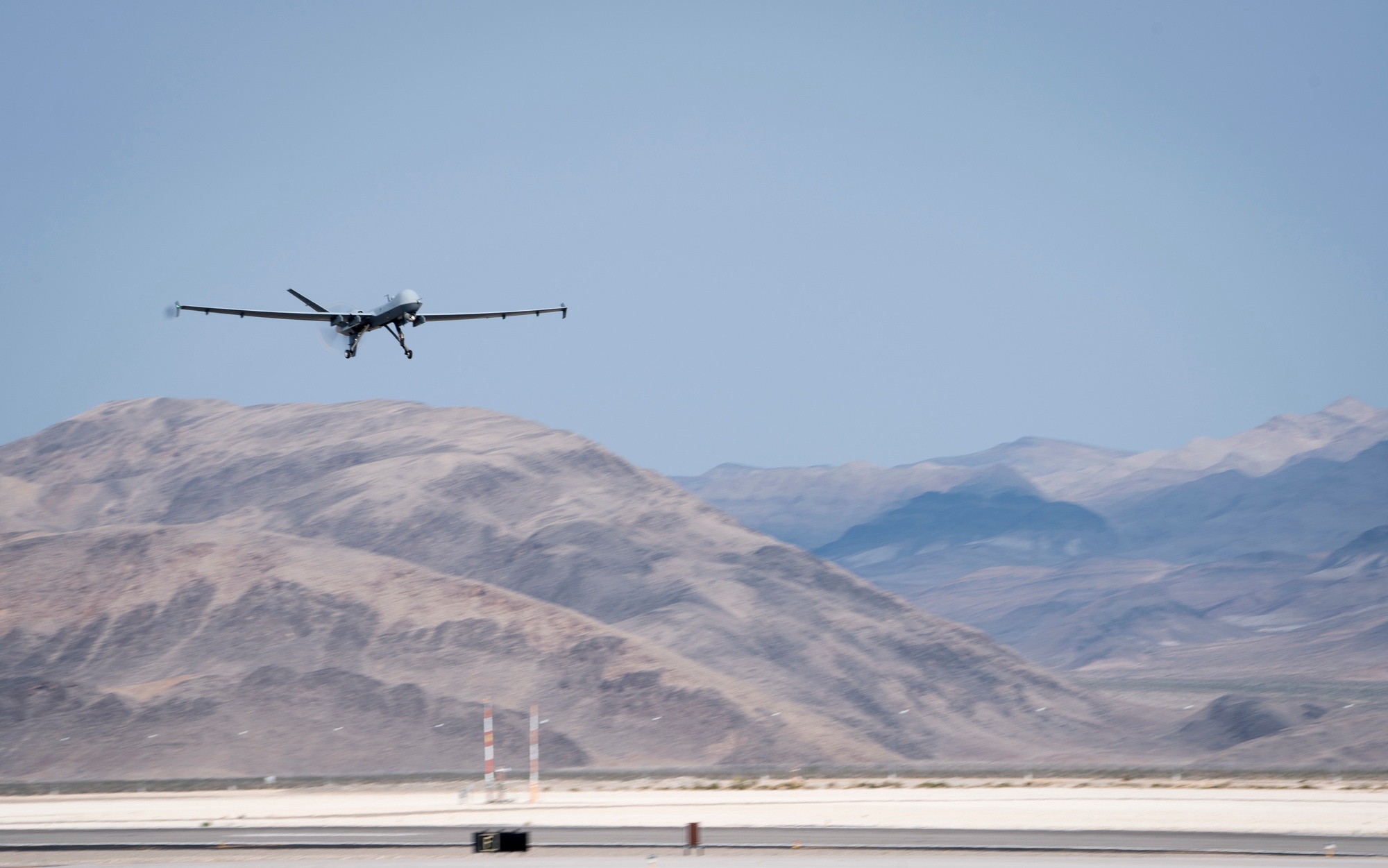
Unmanned platforms are one of the request's clearest through-lines. The single largest drone line item is ¥292.2 billion (about $1.83 billion) earmarked for 17 General Atomics MQ-9B SeaGuardian remotely piloted aircraft — a maritime-surveillance variant of the MQ-9B family built for long-endurance patrol over Japan's surrounding waters.
Alongside the SeaGuardian buy, the budget funds two programs from Japanese firm Terra Drone. The Ministry of Defense is requesting ¥7.6 billion (about $47.5 million) for Terra B1 interceptor drones, a system selected in August 2026 under a rapid-acquisition program aimed at getting counter-drone capability into service quickly. Separately, Terra Drone is supplying 300 Terra Entry modular training UAVs to the ministry, giving Japan's armed forces a domestically sourced platform for drone-operator training at scale.
The request also funds research into uncrewed underwater vehicles (UUVs), including modules for stand-off missile launch and underwater networking — an indication that Japan's unmanned push extends beyond the air domain into subsea systems as well.
AI Orchestrator and Joint Operations Command
Artificial intelligence is threaded through the request as its own priority area. Two systems stand out: a Joint Operations Command decision-support system, and a platform the Ministry of Defense is calling the "AI Orchestrator." Details on the AI Orchestrator's specific function haven't been broken out publicly beyond its billing as a decision-support platform, but its inclusion alongside Joint Operations Command tooling and an expansion of Japan's Defense Cloud infrastructure signals a push to knit AI-assisted analysis into how Japan's services plan and execute joint operations.
Janes reports the FY2027 request is structured around three pillars and nine priority areas, with AI, unmanned assets, stand-off capabilities, integrated air and missile defense (IAMD), space, and cyber all named as focus areas. That structure mirrors a broader pattern in the request: unmanned systems and AI tooling aren't isolated purchases but are presented as interlocking pieces of a wider modernization push.
Beyond Drones: The Rest of the Request
The FY2027 request isn't solely about uncrewed systems. SOFX reports the budget also funds additional F-35 fighters, KC-46 aerial refueling tankers, C-2 transport aircraft, and AGM-88G anti-radiation missiles. On the naval side, Naval News reports six of Japan's planned 12 new FFM frigates are already funded, part of a shipbuilding program that also touches new submarines and an "ASEV" (Aegis System Equipped Vessel, per Naval News' reporting) surface combatant line.
Why It Matters
Japan's defense budget has now grown for 15 consecutive years, and this request is the 13th record-setting submission in a row — a run that reflects a sustained, structural shift in Tokyo's defense posture rather than a one-off response to a single event. The dollar figures matter, but the shape of the spending matters more: roughly $1.83 billion committed to a single MQ-9B tranche, dedicated funding for a rapid-acquisition counter-drone interceptor, and a 300-unit training-drone buy all point to Japan building out unmanned-systems capacity and doctrine simultaneously, not just acquiring hardware piecemeal.
The AI Orchestrator and Joint Operations Command systems are worth watching closely as the strategic-document revisions land later this year. Pairing new decision-support and AI tooling with a formal rewrite of the National Security Strategy, National Defense Strategy, and Defense Buildup Program suggests Japan is trying to codify how AI-assisted command and unmanned systems fit into its overall defense doctrine — not simply bolt new platforms onto an unchanged strategic framework. For a country whose post-war defense posture has historically been constrained and incremental, a budget process built around AI, stand-off capability, and unmanned assets as named pillars — rather than afterthoughts — is itself a signal regional observers are likely to parse closely.
The final numbers are also still in motion. With strategic-document funding not yet finalized and the enacted budget expected to exceed ¥10 trillion for the first time, the August 31 request should be read as a floor, not a ceiling, for what Japan will spend on defense — including on drones and AI systems — in FY2027.
