
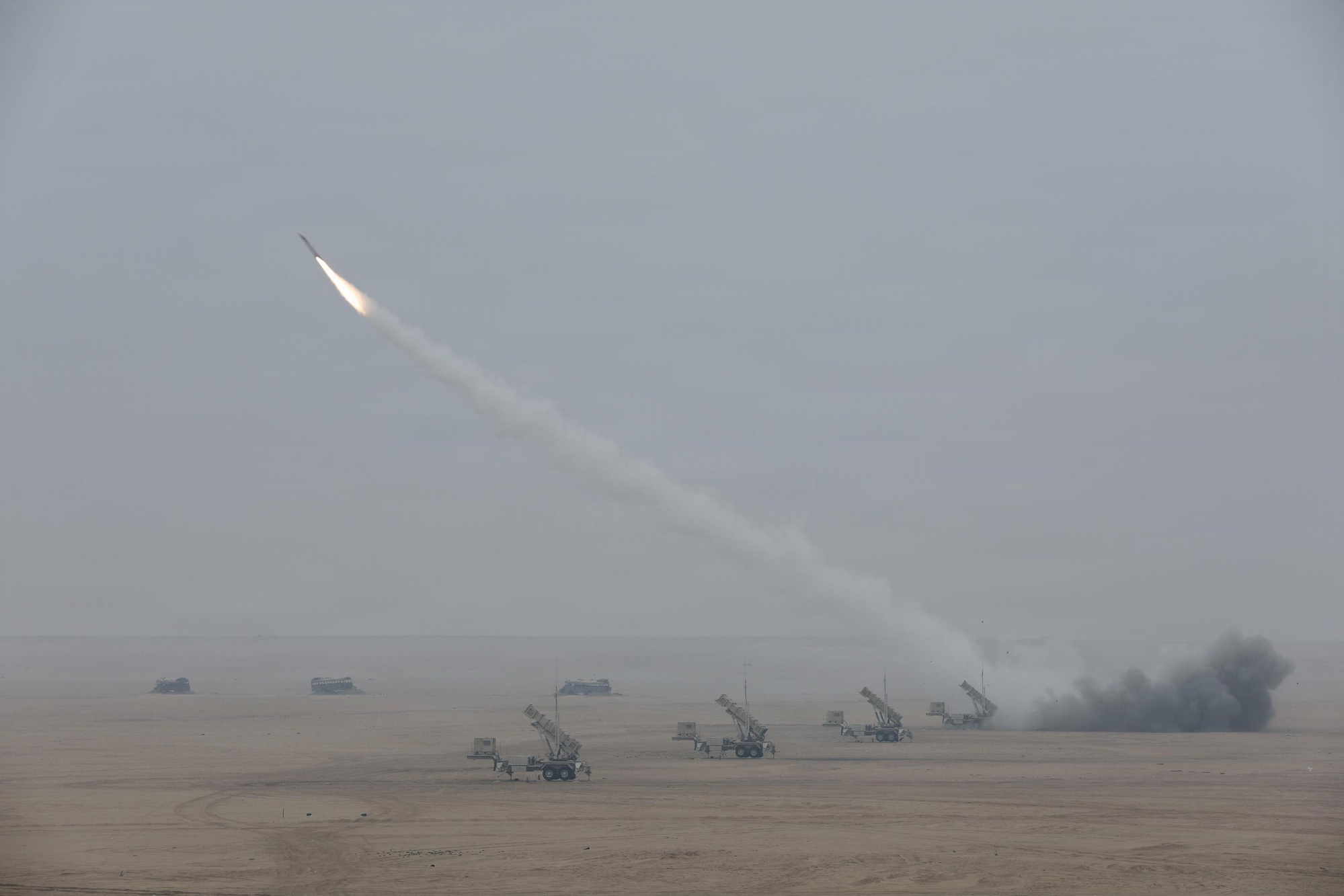
US Central Command and Iran's Islamic Revolutionary Guard Corps traded strikes across three days beginning September 1, 2026. CENTCOM opened with a wave of strikes against Iranian air-defense sites, radar installations, maritime assets, mine-laying capabilities and communications infrastructure. Iran responded with drones and ballistic missiles aimed at US and allied positions in Bahrain, Jordan and Kuwait, triggering intercepts, shelter-in-place alerts and a fresh round of statements from Tehran promising further escalation.
CENTCOM's Opening Strikes
In an official release, CENTCOM said it had "completed strikes on IRGC targets in Iran" on September 1. The targets set included air-defense sites, radar systems, maritime assets, mine-laying capabilities and communications infrastructure — a mix aimed at degrading Iran's ability to track and strike back at US and allied assets in the Gulf and to threaten shipping through the Strait of Hormuz.
Al Jazeera reported the US strikes killed 11 people in Iran, including five people at a wedding in Kuhestak, underscoring the human cost on the ground even as the campaign was framed by Washington as targeting military infrastructure.
Iran's Retaliation: Bahrain, Jordan, Kuwait
Iran's army claimed drone strikes on Bahrain's Sheikh Isa airbase and associated radar installations, prompting Bahrain's Interior Ministry to issue shelter-in-place alerts for residents near the base. Sheikh Isa is located near Manama and has hosted US Navy and other coalition assets, making it one of the more sensitive targets Iran could select in the kingdom.
In Jordan, the IRGC fired 13 ballistic missiles at Camp Titin — a US Marine Corps site — and at Prince Hassan airbase. Jordan's military intercepted 10 of the 13 missiles. A US official said the attack caused no injuries and no significant damage at Camp Titin, though the scale of the barrage — 13 missiles against a single cluster of targets — signaled Iran was willing to expend significant ordnance on a strike that ultimately achieved limited physical effect thanks to interception.
Kuwait's military said it was "currently engaging hostile missile and drone attacks" launched from Iran, marking the first time in this exchange that Kuwaiti air defenses were directly engaged. Kuwait's foreign ministry called the attack "a dangerous escalation that threatens the security and stability of the region" and "a direct threat to Kuwait's security."
Gulf News additionally reported Iranian attacks targeted US bases in Kuwait and in Erbil, Iraq, expanding the geographic footprint of the retaliation beyond the three countries named in Bahrain's and Jordan's own statements.
Shipping and the Strait of Hormuz
Amid the exchange, roughly 40 commercial vessels carrying an estimated 18 million barrels of oil were escorted through the Strait of Hormuz, according to Gulf News — a reminder of how directly this round of strikes intersects with global energy flows through the world's most important oil chokepoint. Gulf News also reported that a Saudi-flagged tanker, the Sidr, was struck by projectiles near the strait during the same window, killing two Filipino crew members, underscoring that the maritime dimension of this confrontation extended beyond the naval escort operation itself.
The Rhetoric Escalates
President Trump said the US was "prepared to do another one any time we want," signaling that CENTCOM's September 1 strike package was not necessarily a one-off. On the Iranian side, the country's security chief warned of a "new strategy" intended to "shatter your foundations" — a statement pointed enough to suggest Tehran views this round of strikes as the opening of a broader campaign rather than a contained tit-for-tat.
Why It Matters
This exchange is notable less for any single strike than for its breadth. Rather than a narrow US-Iran duel, the retaliatory wave pulled in air defenses in three separate host nations — Bahrain, Jordan and Kuwait — each forced to intercept or shelter against incoming drones and missiles within the same 48-hour window. For US Central Command, that spread illustrates both the reach of Iran's drone and ballistic-missile inventory and the dependence of forward US posture in the region on allied air-defense networks: Jordan's interception of 10 of 13 inbound missiles, and Kuwait's active engagement of "hostile drones and missiles," did the work of protecting US personnel as much as any American system did.
The tanker escort through the Strait of Hormuz — 40 vessels, 18 million barrels — is the clearest signal that this is no longer a contained military exchange but one with direct implications for global oil markets. Combined with explicit threats of further strikes from both sides, the September 2026 exchange reads as an escalation baseline rather than a resolution, with Gulf states now bearing direct exposure to a conflict fundamentally shaped by Washington and Tehran.
