
Two separate reporting threads converged this week to sketch the shape of Ukraine's evolving long-range strike campaign: a defense-intelligence disclosure about the scale of AI-guided loitering munition use, and a fresh round of deep strikes that took one of Russia's largest oil refineries fully offline. Together they point to a force that is firing autonomous weapons in volume while simultaneously reaching further into Russian territory with larger, more damaging long-range drones.
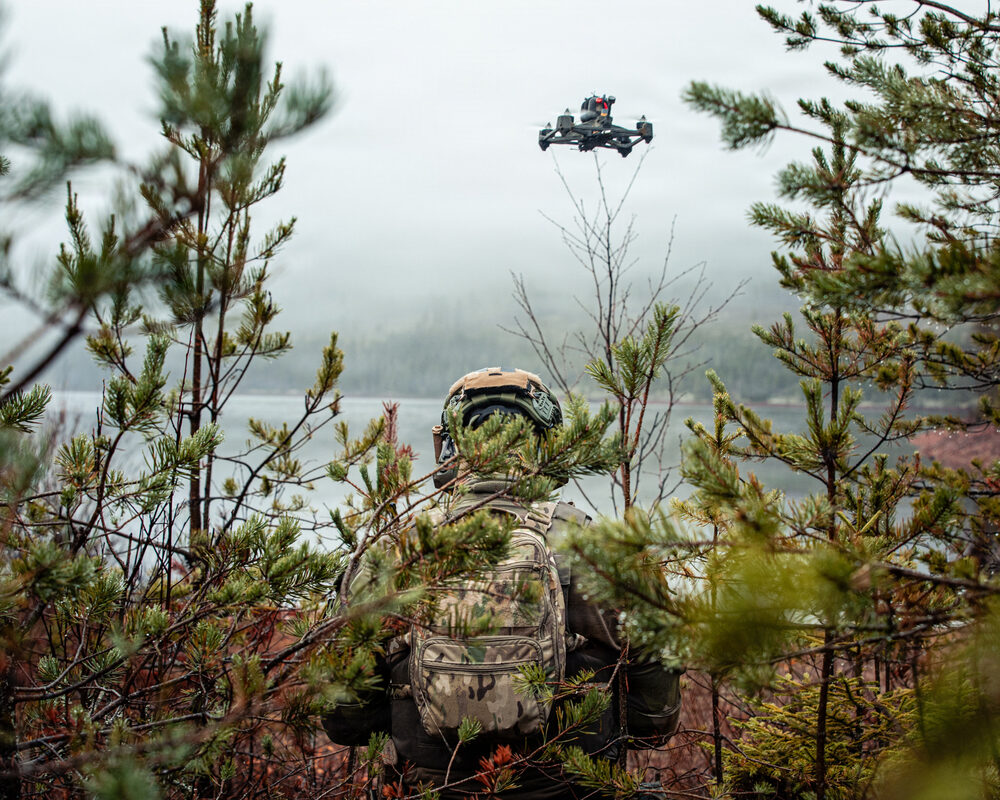
According to Janes, which cited a defense source that confirmed the figures on Sept. 2, Ukraine's armed forces have used more than 10,000 Hornet loitering munitions in strikes on Russia over the past three months. The Hornet is built by Perennial Autonomy, a U.S. firm founded by former Google CEO Eric Schmidt. Janes reports the munition has a range exceeding 200 km and is equipped with AI-enabled optical tracking that allows it to detect, track and engage targets autonomously. The majority of the more than 10,000 strikes reportedly used AI guidance rather than manual piloting.
A Russian intelligence source cited in the same Janes report offered a partial caveat: most Hornets fly pre-programmed routes rather than making autonomous targeting decisions throughout a mission, but a portion of strikes against high-value targets remain under active human control at the terminal stage. That distinction matters — it suggests the "AI-guided" figure spans a range of autonomy levels rather than describing 10,000 fully independent kill decisions, even as it confirms the technology is now being used at meaningful scale rather than in isolated trials.
A Refinery Goes Dark, and an Air Defense Battery Goes Quiet
The Hornet disclosure landed just as Ukraine carried out one of its more consequential deep-strike nights of the campaign. In the early hours of Sept. 6, Ukrainian long-range drones struck the Ryazan oil refinery, roughly 180 km southeast of Moscow, along with an airfield, a radar station and two Pantsir-S1 air-defense systems in Russia's Rostov Oblast. The strikes coincided with a visit by U.S. officials Steve Witkoff and Jared Kushner tied to ongoing peace negotiations, according to the Kyiv Independent. Ukraine's General Staff confirmed the operation via Facebook, describing the Ryazan refinery as a facility "supplying the armed forces of the Russian aggressor," per Ukrinform. The General Staff also confirmed hits on the Rostov-on-Don airfield, one Podlyot-type radar station, and two Pantsir-S1 short-range air-defense systems — all in Rostov Oblast — though a full damage assessment was still pending as of publication.
The drones involved in the refinery and Rostov strikes were identified via Telegram as FP-1 models, built by Ukrainian manufacturer Fire Point, according to Ukrainian outlet UNN. The outcome at Ryazan was unambiguous: the refinery "completely halted operations" following the strike, UNN reported. The facility has a refining capacity of roughly 17 million tonnes per year — about 4.9% of Russia's total refining volume — and is owned by Rosneft, Russia's state oil major. It was previously struck in May 2026, an attack that reportedly took more than three months to fully repair.
Over Rostov-on-Don, drones circled the city for roughly four hours before being engaged; the regional governor said 36 were destroyed. Three residential buildings were damaged in the process and one child was hospitalized, according to the Kyiv Independent.
Two Weapons, Two Roles
The Hornet and the FP-1 are not the same tool doing the same job, and the reporting this week illustrates why the distinction matters. The Hornet, per Janes, is a shorter-range loitering munition — its 200-plus km reach and AI-driven optical targeting make it well-suited to high-volume use against tactical and near-rear targets, consistent with a strike count in the thousands over a single quarter. Its value proposition is throughput: overwhelming defenses and striking dispersed or moving targets without tying up an operator for every engagement. The FP-1, by contrast, is the tool for the deepest, highest-value missions — a refinery hundreds of kilometers from the front line, an airfield, a radar site, air-defense batteries. Fire Point's drone doesn't appear in the Hornet volume figures at all; it's a distinct program aimed at industrial and military infrastructure deep inside Russia, and its Sept. 6 results — a fully halted refinery representing close to 5% of national refining capacity, plus confirmed hits on air-defense assets meant to protect against exactly this kind of strike — read as a targeting success rather than a saturation attack.
Why It Matters
The scale figure from Janes — more than 10,000 AI-guided munitions in three months — is one of the clearest public data points yet that autonomous or semi-autonomous targeting has moved from experimental use to a standing feature of Ukraine's strike doctrine. That an American-founded company (Perennial Autonomy, founded by Eric Schmidt) is a manufacturer of record for a weapon reportedly fired in these numbers also underscores how deeply Western commercial autonomy technology has become embedded in an active war, ahead of clear international rules governing autonomous lethal targeting. The Ryazan strike carries a different but complementary significance: it demonstrates that Ukraine can repeatedly knock out a fraction of Russia's refining capacity with drones alone, and that Russian air defense — including Pantsir-S1 systems specifically designed to counter this threat — did not prevent either the refinery strike or the multi-target Rostov Oblast operation. The fact that Ukraine struck two Pantsir-S1 batteries in the same operation as the refinery hit suggests a deliberate effort to degrade the defensive layer protecting these facilities, not just the facilities themselves. And the timing — during a visit by senior U.S. negotiators working toward a peace settlement — adds a diplomatic dimension to strikes that are, on their own terms, straightforward military and economic targeting. Taken together, the Hornet volume numbers and the FP-1's demonstrated effectiveness against a major refinery and layered air defenses point to a Ukrainian strike capability that is both wider in reach and harder to intercept than it was even a few months ago — a trend line worth watching regardless of how the negotiations underway this week resolve.
Sources
- Janes: Ukraine uses more than 10,000 Hornet loitering munitions in Russia strikes
- Kyiv Independent: Ukrainian drones strike Russia's Ryazan oil refinery, Rostov air defenses
- Ukrinform: Ukrainian forces strike Ryazan oil refinery, airfield and three Russian air defense assets
- UNN: Ryazan oil refinery in Russia has completely ceased operations after being hit by FP-1 drones
