
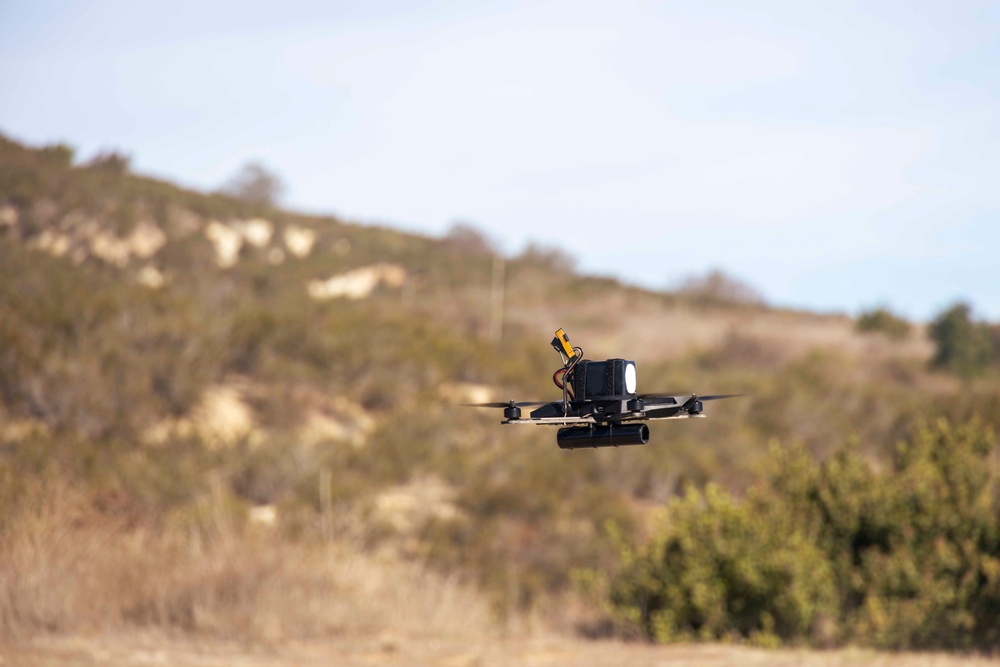
Helsing, the German defense-AI company that has emerged as one of Europe's fastest-growing military technology suppliers, has enlisted an unlikely partner to break into the Japanese market: Rakuten, the Tokyo-based e-commerce and finance conglomerate better known for online shopping and mobile carriers than munitions. On Aug. 18, 2026, the Japan Times reported that Rakuten has become Helsing's official representative in Japan and is now brokering a potential sale of the company's HX-2 loitering strike drone to the Japan Ground Self-Defense Force (JGSDF) — a deal that, if it closes, would mark Helsing's entry into one of the Indo-Pacific's most consequential defense markets.
The arrangement is notable less for the hardware than for the messenger. Rakuten is the first civilian technology company authorized to act as a defense broker under Japan's arms-procurement rules, which the cabinet reformed in April 2026. Historically, Japan's defense-industrial base has run through a small circle of established prime contractors with decades-old ties to the Ministry of Defense. Rakuten's certification signals that Tokyo is deliberately widening that circle, opening a lane for consumer-tech firms to help import next-generation systems that legacy contractors have been slower to field.
According to the Japan Times, JGSDF units are currently field-testing the HX-2, with trials scheduled to run through the end of September 2026. If those trials succeed, Rakuten will formally propose the system to Japan's Ministry of Defense, and the two companies say they will explore building HX-2-class drones on Japanese soil — a localization step that would echo the domestic-production arrangements Japan has increasingly demanded from foreign defense suppliers.
Defense News, which broke related reporting on Aug. 17, 2026, noted that Helsing had already struck an "initial agreement" with the Japanese government earlier this year for use of its systems, suggesting the Rakuten broker relationship formalizes and extends a relationship already underway rather than starting one from scratch. Defense News also highlighted the personal dimension behind the deal: Rakuten founder and CEO Hiroshi Mikitani has been an outspoken supporter of Ukraine and has previously helped Ukrainian defense firms secure exhibit space at Japanese arms fairs — a track record that makes Rakuten's pivot into brokering a Ukraine-tested European drone system less surprising than it might first appear.
What the HX-2 Actually Is
The HX-2 is Helsing's second-generation loitering strike drone, and the company is not treating it as a boutique product. Janes.com, the defense-trade publication, reported that Helsing is investing GBP350 million (about USD445 million) to mass-produce the AI-enabled UAV in the United Kingdom — a scale of manufacturing commitment more typical of an established prime contractor than a five-year-old startup founded in 2021. Per Janes, the HX-2 can strike targets up to 100 km away and carries multi-purpose, anti-tank, or anti-structure payloads depending on mission requirements.
The system's defining feature is its onboard AI, which Helsing says is engineered to resist electronic warfare. Rather than depending on a continuous operator data link — the single point of failure that jamming and spoofing have exploited relentlessly on drone-saturated battlefields — the HX-2's autonomy stack is designed, according to Janes, to keep tracking and engaging a designated target even if that link is severed. That capability is the core of Helsing's pitch: a strike drone that degrades gracefully under the kind of electronic attack that has grounded or diverted less resilient systems.
DroneXL, in its Aug. 18, 2026 coverage, complicated that resilience narrative considerably rather than simply endorsing it. The outlet reported that Bloomberg had revealed in January 2026 that Ukraine's 14th Regiment paused further HX-2 orders after frontline trials, and that an internal German Defense Ministry presentation dated Nov. 20, 2025 alleged the drone suffered takeoff failures and lacked terminal guidance, midcourse navigation, and visual target-acquisition capability — the very autonomy features Helsing is marketing to Japan. Helsing disputed the account, saying it had no knowledge of the presentation, denying elevated failure rates, and noting the same regiment has since requested more than 1,000 additional aircraft, with the HX-2 remaining in Ukraine's central military ordering system; the company called its documented early hit rate "encouraging." A German Defense Ministry spokeswoman said her own management had never reviewed or approved the internal document. DroneXL's own analysis concluded that neither Ukraine nor Germany has released independent performance data — leaving Japan to evaluate the HX-2 largely on competing, unverified claims from Helsing and the disputed ministry document. That unresolved dispute is what sits behind DroneXL's headline framing of Helsing pitching Japan "a strike drone with a contested combat record."
Why It Matters
Three threads converge in this deal, and each has implications beyond the HX-2 itself.
First, Japan's decision to certify a civilian tech conglomerate as a defense broker is a structural change, not a one-off exception. Defense News situates the move inside Tokyo's broader push to modernize its military in response to an increasingly assertive China — a buildup that has already driven record defense budgets and a loosening of the export and procurement restrictions Japan maintained for decades under its postwar pacifist posture. If Rakuten's brokerage succeeds, it establishes a template other Japanese tech firms could follow, potentially accelerating how quickly foreign systems reach the JGSDF compared to the slower, prime-contractor-mediated path of the past.
Second, the deal is a case study in how European drone makers are using Ukraine combat exposure as a market credential — and in the transparency gap that comes with it. Helsing's pitch to Japan leans on the HX-2's Ukraine deployment as proof of real-world electronic-warfare resilience, but as DroneXL detailed, that record is itself disputed between Helsing and an internal German Defense Ministry document, with no independently verified performance data from either Kyiv or Berlin. Expect that same pattern — battlefield credentials that only the vendor can fully substantiate — to recur as Helsing and comparable firms pursue other Indo-Pacific and NATO customers.
Third, the GBP350 million UK production investment Janes reported indicates Helsing is scaling for sustained, multi-customer demand rather than one-off contracts. A successful Japan sale — paired with the stated interest in domestic production on Japanese soil — would make Japan not just a customer but potentially a second manufacturing base, diversifying Helsing's supply chain away from reliance on a single country's industrial capacity at a moment when European defense procurement is itself under strain.
The near-term signal to watch is straightforward: the JGSDF's field trials run through the end of September 2026. Their outcome determines whether Rakuten's formal proposal to Japan's Ministry of Defense goes forward — and whether Japan's arms-procurement reform produces its first real sale.
Sources
- German drone maker Helsing enlists Rakuten to broker Japan military deal - The Japan Times
- German drone maker Helsing enlists Rakuten to broker Japan military deal - Defense News
- Helsing to mass-produce AI-enabled HX-2 UAV in UK - Janes
- Helsing Pitches Japan A Strike Drone With A Contested Combat Record - DroneXL
