
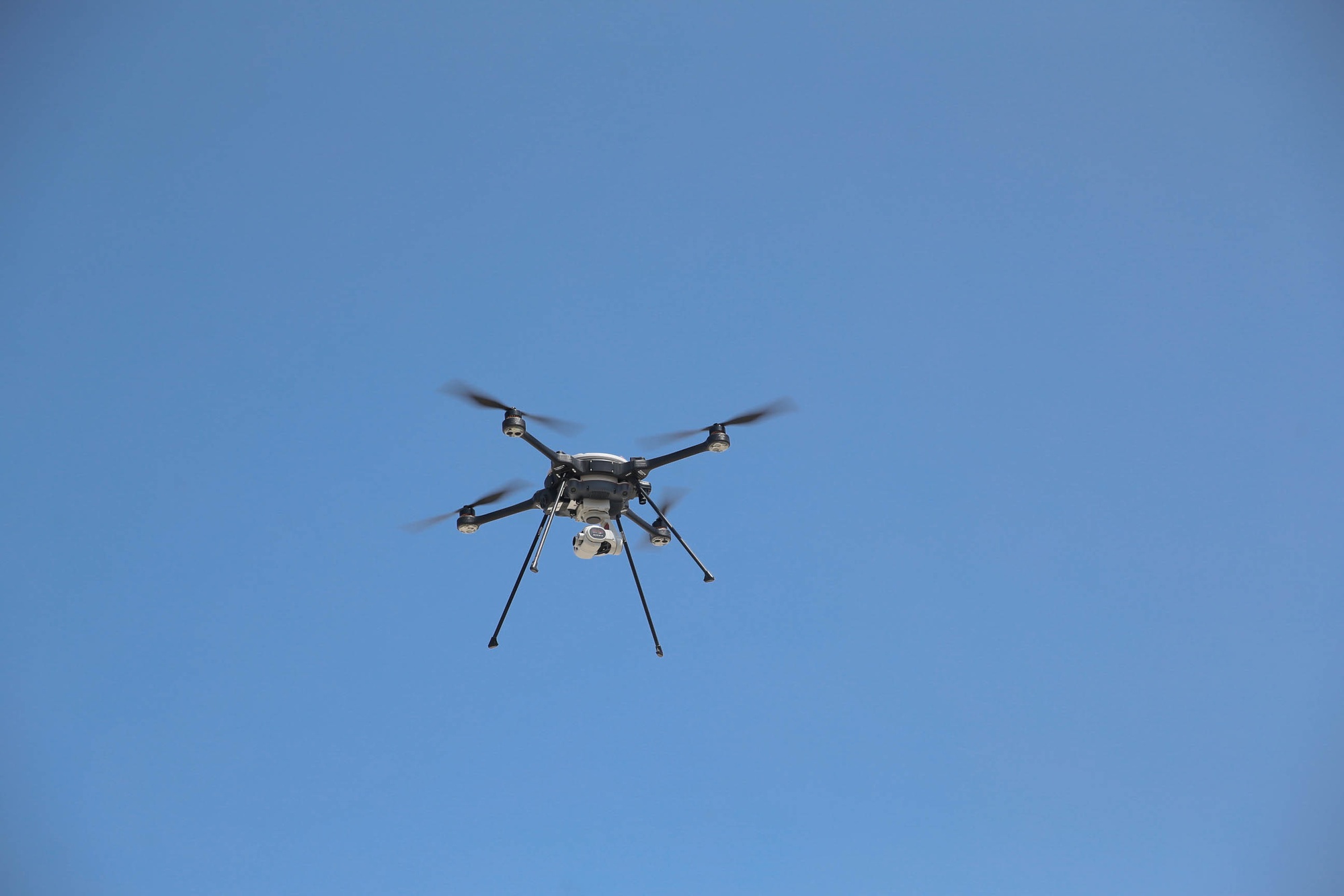
Greece's civil aviation authority has closed a broad stretch of southeastern Aegean airspace to drone traffic for roughly six and a half weeks, a defensive measure officials say is a direct response to Turkish unmanned aircraft repeatedly probing Greek air-defense reaction times near the maritime border. The move, executed through six separate Notices to Airmen (NOTAMs), bars essentially all recreational and low-altitude commercial drone flight across a cluster of islands south of Rhodes through the end of October.
The restrictions took effect September 16 and center on Karpathos, Kasos, Saria and Armathia — a chain of islands and islets that sits at the southern edge of the Aegean, near the maritime boundary with Turkey. According to Greek Reporter, the NOTAMs establish temporary restricted areas within the Athens Flight Information Region running from ground level up to 400 feet — the legal ceiling for recreational drone operations in Greece — and are in force daily from 7 a.m. to 7 p.m. through October 31, 2026.
What the NOTAMs Actually Cover
NOTAMs are not new legislation; they are operational notices issued through the flight-information system that instruct pilots and operators — in this case, drone operators — that a defined volume of airspace is temporarily off-limits. Six were issued to blanket the relevant airspace around Karpathos, Kasos, Saria and Armathia, effectively closing the entire ground-to-400-foot layer over that island group to daytime UAS flight for a roughly six-and-a-half-week window.
That ceiling matters: 400 feet AGL is the standard operating limit for hobbyist and most commercial drones under Greek rules, meaning the ban does not require operators to fly lower or seek special waivers to stay legal elsewhere — it simply removes the airspace over these islands from the table entirely during daylight hours. The restrictions run alongside the general UAS flight-permission framework published by the Hellenic Civil Aviation Authority (HCAA), which already governs where drones may and may not operate in Greek airspace — including the standard 400-foot altitude ceiling and the requirement to steer clear of airports and other sensitive sites — and under what authorization. The new NOTAMs function as a temporary, geographically targeted override layered on top of that baseline framework.
The Stated Rationale: Air-Defense Response Times
Greek officials cited in the Greek Reporter account point to a specific and unusually candid justification: mounting Turkish drone activity in the area has been testing how quickly Greek air-defense assets detect and respond. That framing casts the restricted areas less as a conventional safety-of-flight measure — the kind typically imposed for air shows, VIP movements, or wildfire operations — and more as a hardening of the airspace picture around a sensitive frontier zone, where the presence of unidentified or unauthorized small UAS could complicate the job of distinguishing hostile probing activity from legitimate civilian drone traffic.
By clearing civilian and recreational drones out of the ground-to-400-foot band over Karpathos, Kasos and the surrounding islets during daylight hours, Athens simplifies that detection problem: any UAS spotted in the restricted volume during the ban window is, by definition, not a sanctioned local operator, cutting down on ambiguous contacts that air-defense controllers would otherwise need to sort through. Coverage from Greek City Times details the specific island geography involved, including the restricted zones around the islands' airports and high ground on Karpathos, while a separate report from New Greek TV, headlined as a "sweeping" ban, reinforces both the scope of the restrictions and their proximity to the Turkish border as central to the air-defense rationale Athens has offered.
Timing: A Diplomatic Backdrop in Paris
The timing of the NOTAMs is notable. According to To Vima, the notices were issued on the same day Prime Minister Kyriakos Mitsotakis met with French President Emmanuel Macron in Paris, and again the following day. That meeting focused on a Greece-Cyprus-Israel electricity interconnector project, but To Vima frames the drone restrictions as part of a broader Greek air-defense posture unfolding in parallel with that diplomatic engagement — a reminder that Athens' eastern Aegean security concerns and its western-facing infrastructure diplomacy are running on separate but simultaneous tracks this month.
Who Is Affected
The practical effect for drone operators is straightforward: recreational pilots, photographers, and most commercial UAS operators cannot legally fly in the ground-to-400-foot layer over Karpathos, Kasos, Saria and Armathia between 7 a.m. and 7 p.m. any day through October 31. That window covers essentially all daylight hours when recreational and commercial drone use would normally occur, leaving only nighttime operation — itself tightly restricted under existing Greek UAS rules — technically outside the NOTAMs' stated hours. Tourism-season aerial photography, agricultural or infrastructure inspection flights, and hobbyist flying in one of the Dodecanese's more popular island groups are all directly curtailed for the duration.
The HCAA's general guidance on where UAS may legally fly in Greece remains the underlying regulatory backbone; operators checking current airspace status for any Greek location would already consult NOTAM listings as a matter of course, and the six notices covering this island group are now part of that active picture through the end of next month.
Why It Matters
This is a rare instance of a NATO member's civil aviation authority publicly tying a civilian drone-flight ban to a specific foreign military activity — Turkish UAV incursions — and to the mechanics of its own air-defense reaction time, rather than couching the restriction in generic safety-of-flight language. It signals that Athens views the recreational and commercial drone environment over its southeastern Aegean islands as a live complicating factor in an active air-defense monitoring problem near the Turkish border, not a peripheral hobbyist concern. For the wider UAS community, it is also a concrete illustration of how quickly civil airspace access can be curtailed at a frontier when a government judges that unregulated small-drone traffic is muddying its detection picture — a dynamic likely to recur wherever civilian drone adoption intersects with contested or heavily monitored borders. The roughly six-and-a-half-week duration, spanning the tail of the tourist season into autumn, also suggests Athens expects the underlying Turkish activity prompting the ban to persist through at least the end of October.
Sources
- Greece Bans Drone Flights Over the Southeastern Aegean Through October — Greek Reporter
- Athens Imposes Drone Restrictions Across SE Aegean Through Oct. — To Vima
- Greece Restricts UAV Flights Over Kasos, Karpathos and Nearby Islands — Greek City Times
- Athens imposes sweeping drone ban over Aegean Islands near Turkish border — New Greek TV
- Where you are allowed to fly a UAS in Greece — Hellenic Civil Aviation Authority
