
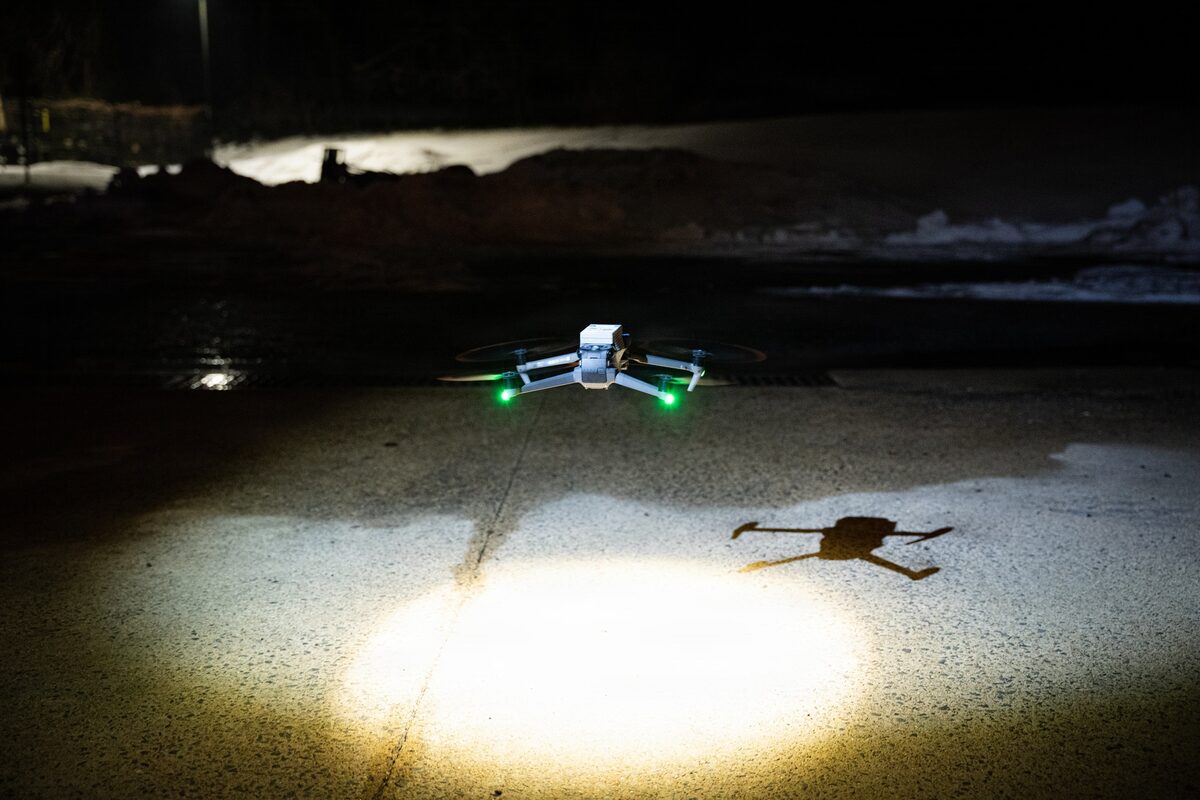
On July 22, 2026, the Federal Communications Commission will vote on a rule that sounds narrow — a labeling requirement for online marketplaces — but is aimed squarely at a much bigger target: the parts bin. The agenda item is a Third Report and Order and Third Further Notice of Proposed Rulemaking that would require sites like Amazon to display FCC certification IDs for wireless devices, including drones, at the point of sale. Buried inside the same order is a provision that could matter more: a near-total ban on authorizing devices that contain "logic-bearing hardware components" sourced from companies on the FCC's Covered List — DJI among them.
The meeting is scheduled to begin at 10:30 a.m. ET at FCC headquarters, 45 L Street NE, in Washington, D.C., according to the agency's tentative agenda released ahead of the July Open Commission Meeting.
What the Order Actually Does
Two mechanisms are doing the work here, and they're designed to reinforce each other.
The first is a transparency measure: online marketplaces would be required to display a device's FCC ID during the shopping process, not buried in a manual or a compliance page three clicks deep. For a shopper scrolling Amazon at midnight, that means the FCC certification — or the conspicuous absence of one — shows up before checkout, not after the box arrives.
The second, and more consequential, mechanism closes what the industry press has taken to calling the component-level loophole. Current rules restrict finished devices from Covered List entities, but a workaround has persisted: source the risky part — the chipset, the flight controller board, the "logic-bearing" guts of the thing — from a Covered List company, then assemble or badge the final product under a different name. Because the restriction attached to the label on the box rather than the provenance of what's inside it, banned technology could still find its way into U.S. commerce one subassembly at a time.
The new order would prohibit authorization of devices incorporating logic-bearing hardware components from Covered List entities, full stop — with an exemption only for simple mechanical parts. A propeller, a plastic frame, a battery housing: probably fine. A flight controller, a radio module, anything with firmware or a processor: not fine, regardless of whose name is on the outer casing.
Why DJI and Amazon Are Named Specifically
DJI has been on the FCC's Covered List, which already restricts new equipment authorizations for DJI-branded gear. What the marketplace-listing and component provisions target is the gap that restriction left open: DJI hardware reaching consumers indirectly, either through resale of previously authorized units without clear FCC ID visibility, or through DJI-sourced components embedded in products sold under other brands. Amazon is named because it is the marketplace where that gap is most visible. FCC Chairman Brendan Carr framed the effort in blunt terms: "The FCC is always working to safeguard our country's national security interest." The rule would fold into Operation Clean Carts, the FCC's ongoing marketplace-enforcement campaign that has already resulted in the removal of more than four million unauthorized devices from online listings.
The Conditional Approval Pathway — And Its Deadline
The order doesn't operate in a vacuum; it lands on top of a Covered List exemption process the FCC has been building out for months. On March 18, 2026, the FCC — coordinating with the Department of Defense and the Department of Homeland Security — granted the first conditional approvals under that pathway, clearing four drone systems for continued use despite Covered List-adjacent components or supply chains: SiFly Aviation's Q12 Drone System, Mobilicom's SkyHopper Series (including its M Band and Tactical Data Link, along with its ICE and OS3 software), ScoutDI's Scout 137 Drone System, and Verge Aero's X1 Drone System. Those approvals are explicitly temporary. All current conditional approvals expire December 31, 2026, meaning the manufacturers holding them are on a clock to either demonstrate compliance under whatever framework emerges from this rulemaking cycle or lose their exemption entirely. The July 22 order and the pending Third Further Notice of Proposed Rulemaking are the mechanism by which that longer-term framework gets built — and the conditional-approval holders will be watching the vote closely for signals about what comes next.
Why It Matters
For the drone industry, this is the difference between a rule that bans a logo and a rule that bans a supply chain. Manufacturers that assumed rebadging or component-sourcing around DJI's Covered List status was a durable workaround now have to reckon with a provision that follows the silicon rather than the branding. That has real consequences for smaller manufacturers and hobbyist-adjacent brands that have relied on off-the-shelf flight controllers and radio modules without close scrutiny of origin — those supply chains will need re-auditing before this order takes effect.
For consumers, the marketplace-labeling requirement is the more immediate, visible change: an FCC ID displayed at the point of sale is a small piece of information that lets a buyer check, in seconds, whether a listing is actually authorized for U.S. sale — something that currently requires digging through documentation or trusting the listing photo. Combined with Operation Clean Cart's four-million-device enforcement track record, the marketplace-visibility piece gives the FCC a tool it can point directly at platforms like Amazon when noncompliant listings surface. For policy watchers, the real story is the December 31, 2026 deadline sitting underneath all of this. Four manufacturers now hold conditional approvals that expire at year's end, and the framework this order helps build will determine whether that pathway becomes a durable compliance route or a one-time bridge. The July 22 vote is the first concrete signal of which direction the FCC is leaning.