
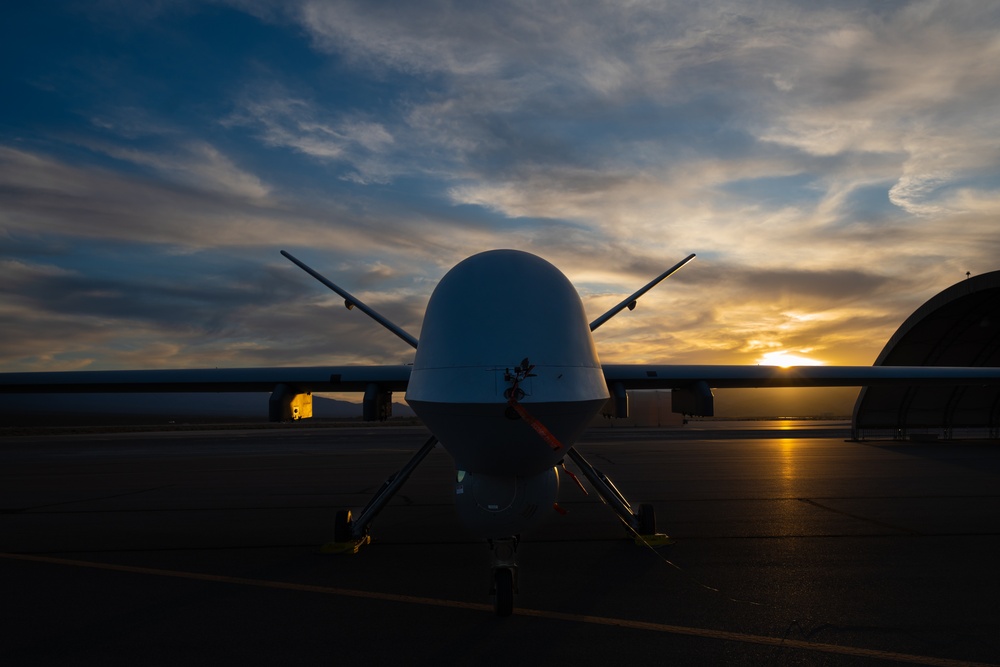
El Obeid, the capital of Sudan's North Kordofan state and home to more than 500,000 people, has become the latest proving ground for the drone war that has come to define Sudan's civil conflict. According to the United Nations human rights office, the city and its surroundings absorbed 15 separate drone strikes over a three-week span in June 2026, killing at least 45 civilians and repeatedly hitting the infrastructure ordinary residents depend on to survive: markets, schools, fuel stations, water systems and civilian vehicles.
UN High Commissioner for Human Rights Volker Turk described the warning he was issuing as a "red alert" that "is not a drill," explicitly invoking the massacre in El Fasher last October, where an estimated 6,000 people were killed in three days. The comparison is deliberate — a warning that El Obeid could be trending toward a similar mass-casualty event unless the bombardment stops.
What Happened
Per the UN human rights office's July 3 accounting, the 15 strikes recorded through June struck civilian sites with a consistency that officials say points to a sustained campaign rather than isolated incidents. Markets and fuel stations — dense with civilians and, in the case of fuel points, sources of secondary explosions — were hit repeatedly, as was water infrastructure serving a population that already includes some 100,000 internally displaced people sheltering in and around the city. Schools and civilian vehicles rounded out the target set described by UN monitors.
The UN's reporting attributes responsibility to both sides of Sudan's civil war — the Rapid Support Forces (RSF) and the Sudanese Armed Forces (SAF) — without assigning strikes to one belligerent over the other, reflecting the difficulty of attribution in a conflict where both sides operate drones and neither has offered a public accounting of El Obeid operations.
The human cost extends beyond the strikes themselves. UN figures cited in the same reporting show displacement across Kordofan has risen nearly 66 percent over three months, with more than 100 distinct displacement incidents recorded in under nine months — averaging roughly one every two to three days, a pace that suggests the drone campaign is only one driver of a broader unraveling across the region.
The AU's Warning, Days Earlier
The UN's July 3 alarm followed, and echoed, a statement issued 11 days earlier by the African Union. On June 22, AU Commission Chairperson Mahmoud Ali Youssouf issued a formal statement on "escalating violence in and around El Obeid," calling on all parties to the conflict to immediately cease hostilities, exercise maximum restraint, and uphold the civilian-protection and humanitarian-access commitments made under the Jeddah Declaration.
The Jeddah Declaration obligates Sudan's warring parties to protect civilians and permit humanitarian access — commitments that, per the UN's subsequent findings, appear to have gone unmet in North Kordofan through June. The AU statement also demanded accountability for abuses and urged external actors not to take steps that would worsen the conflict, alongside a reaffirmation of Sudan's sovereignty, unity, independence and territorial integrity and a call for renewed efforts toward an inclusive political process.
That the AU felt compelled to issue a dedicated statement on El Obeid specifically — rather than a general appeal on the wider Sudan war — signals that the city's deterioration was already visible to continental diplomats before the UN's more granular casualty and target data emerged less than two weeks later.
Why El Fasher Is the Reference Point
Turk's decision to invoke El Fasher by name carries specific weight. The massacre there last October — roughly 6,000 people killed in a three-day rampage of documented war crimes — has become the grim benchmark against which Sudanese urban sieges are now measured. El Fasher, capital of North Darfur, was besieged before the killings that rights investigators have since documented extensively.
By framing El Obeid's drone bombardment as a "red alert" against a repeat of that outcome, the UN rights chief is making a preventive argument: that the warning signs — repeated strikes on civilian infrastructure, a swelling IDP population, a besieged provincial capital — are recognizable in advance, and that international attention now could avert a mass-casualty event later. Whether that argument moves either the RSF or SAF is untested; neither force has publicly responded to the UN's attribution or the AU's June 22 appeal as of this reporting.
Why It Matters
El Obeid's bombardment is a case study in how loitering munitions and armed drones have reshaped urban warfare in Sudan's civil war, extending both sides' reach into cities far from active front lines. Markets, water systems and fuel stations are not incidental casualties in a 15-strike, three-week campaign — they are the load-bearing infrastructure of a city sheltering 100,000 displaced people on top of its resident population, and their repeated targeting degrades a population's ability to survive independent of any single strike's body count.
The episode also illustrates the limits of existing accountability mechanisms. The Jeddah Declaration's civilian-protection commitments predate this bombardment, yet the AU found it necessary to specifically re-invoke them for El Obeid in June, and the UN's casualty count published less than two weeks later suggests that appeal produced no immediate change on the ground. For a UAS-focused readership, El Obeid is a reminder that the accessibility of armed and loitering drones has lowered the threshold for sustained strikes on population centers in protracted, multi-party civil conflicts — and that international statements alone are not currently sufficient to interrupt that pattern.
