
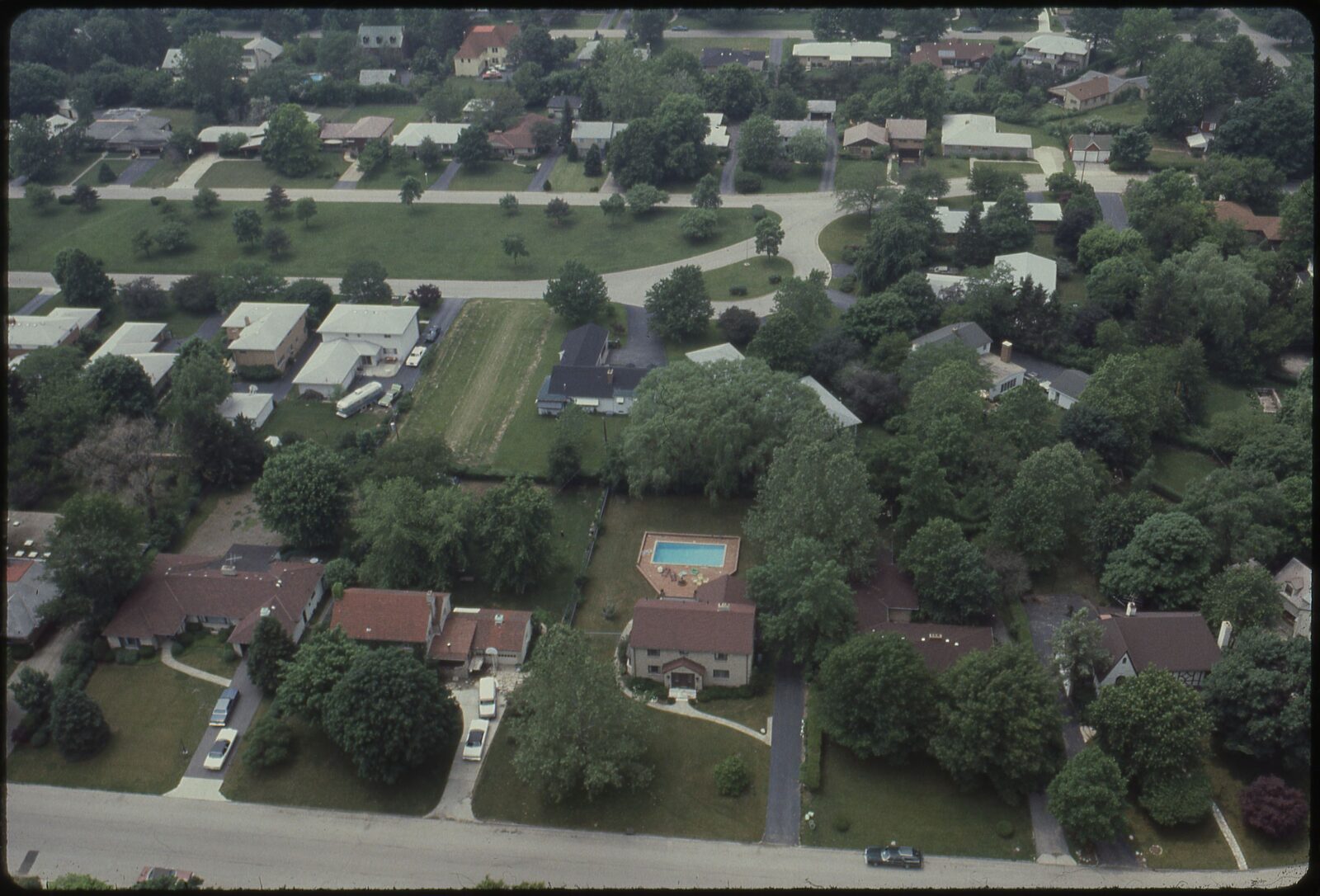
Aerial photography’s grip on residential real estate has tightened steadily since consumer-grade multirotor aircraft made sub-$2,000 drone ownership viable for working photographers. The National Association of Realtors’ 2025 Technology Survey found that 52 percent of REALTORS® now use drone photography or video — third among all technology tools, behind electronic signatures and MLS software. NAR’s compilation of MLS research states the performance premium plainly: homes displayed with aerial shots are 68 percent more likely to sell. MLS research cited by HomeJab and Drone Launch Academy finds that listings with aerial video sell 68 percent faster than standard-photo equivalents. The aerial shot has become a competitive baseline expectation across a wide swath of the residential market.
That adoption curve has a compliance problem running beneath it. The same market penetration that normalized drone listing media has generated a persistent cohort of operators — agents, assistants, and weekend-warrior photographers — who fly commercially without understanding what the FAA classifies as commercial. Civil penalties can exceed $11,000 per violation and may reach up to $32,000 per flight for unlicensed commercial operation.
The Commercial Line Is Broader Than Most Pilots Assume
FAA Part 107 governs all commercial small-UAS operations in U.S. airspace, and the definition of “commercial” is deliberately expansive. Rupprecht Law’s analysis of the rule puts it precisely: “The FAA evaluates the purpose of the flight, not the pilot’s intent or payment structure.” Four scenarios regularly trip operators who assume they fall outside Part 107’s reach.
Direct-pay photography is the obvious case. But Part 107 applies equally to agents shooting their own listings — the flight supports a real estate transaction regardless of who signs a check — and to any photographer shooting “as a favor.”
“Even if you’re just helping a friend with a property listing, you’re still required to have Part 107 certification, as the activity doesn’t fall under recreational use.” — HomeJab
The sub-250-gram exemption warrants direct correction. Recreational pilots with aircraft under 250 grams are exempt from FAA registration — but that carve-out does not extend to Part 107. Commercial operators require a Remote Pilot Certificate regardless of aircraft weight. The DJI Mini 4 Pro, popular because its 249-gram airframe sidesteps hobbyist registration, still requires Part 107 for any commercial real estate flight. The FAA evaluates purpose, not weight class.
Certification, Airspace, and Operational Constraints
The Part 107 Remote Pilot Certificate requires passing the FAA’s Unmanned Aircraft General – Small aeronautical knowledge test: 60 multiple-choice questions over two hours at an FAA-approved testing center, 70 percent threshold, $175 non-refundable fee, with a 14-day waiting period between retakes. The Drone Girl’s April 2026 analysis found that in 2025 the average Part 107 score hit a record low of 79.31 percent, with only 82.96 percent of test-takers passing. The certificate renews every 24 months via free online FAA Safety Team training, making ongoing compliance cost negligible after the initial exam.
Many desirable residential neighborhoods sit inside controlled airspace. Any commercial drone flight in Class B, C, D, or Class E surface area requires prior FAA authorization. The Low Altitude Authorization and Notification Capability (LAANC) system provides near-instant digital clearances through compliant apps. Flying controlled airspace without LAANC authorization is one of the most commonly cited enforcement violations in real estate aviation compliance literature — suburban markets frequently sit inside airport rings that non-pilot agents do not anticipate.
Remote ID compliance has been required since September 16, 2023: all commercial drones must broadcast identification and location data — what Rupprecht Law describes as a “digital license plate.” Visual line of sight remains an absolute operational constraint; FPV goggles used in isolation do not satisfy VLOS requirements under Part 107 — a visual observer is required for any FPV-assisted commercial flight. The operational envelope: 400 feet AGL maximum altitude, 100 mph maximum groundspeed, night operations permitted with anti-collision lighting as required under 14 CFR § 107.29.
Gear, Workflow, and the Pricing Structure
The real estate niche has consolidated around mid-tier prosumer aircraft. Drone Launch Academy’s 2026 guide identifies three practical tiers: entry-level (DJI Mini 4 Pro, $750–$1,000); intermediate (DJI Air 3S, $1,000–$1,500, with larger sensor and superior low-light performance); and professional/luxury (DJI Mavic 4 Pro, $2,100–$3,000, with a 4/3-inch sensor for high-end residential and commercial work). Minimum professional specifications: 1-inch sensor or larger, 30-plus minutes of flight time, 3-axis gimbal, and 4K video capability. ND filters are mandatory for video — without them, maintaining the standard 180-degree shutter angle overexposes in direct sunlight.
A professional aerial session runs a predictable sequence: elevated front-angle hero shot, nadir overhead to establish property boundaries and yard dimensions, rear-yard angle, and contextual neighborhood views. Optimal altitude sits between 50 and 80 feet — high enough to clear rooflines and convey lot scale, low enough to keep the property filling the frame. Still settings: RAW format, ISO 100–200, aperture f/2.8–f/5.6, shutter 1/500 second or faster. Post-processing covers white-balance correction, highlight recovery, and lens-profile correction.
Pricing by job type (Drone Launch Academy 2026): residential photos only, $150–$250; photos plus video, $250–$400; luxury estate, $400–$800; commercial property, $500–$1,500 or more; video flyover added to an existing package, $100–$200. HomeJab’s 2025 market data puts the national average for standard real estate photography at $230, with drone-only aerial packages starting at approximately $249; rates range from $208 in Phoenix to $318 in Los Angeles. Startup investment runs $1,000–$3,000 covering aircraft, batteries, ND filters, exam fees, editing software, and liability insurance. Industry-standard liability coverage is $1 million — not legally mandated under Part 107, but required by most brokerages from contractors.
Legal Exposure Beyond the Certificate
Several compliance failures cluster specifically around real estate shoots. Controlled-airspace violations without LAANC are common where airport rings overlap suburban neighborhoods. Part 107 restricts commercial flight directly over uninvolved persons — neighbors on a sidewalk or children in an adjacent yard constitute uninvolved persons; heavier aircraft require an FAA Declaration of Compliance or specific waiver to fly over people. Privacy exposure does not end at FAA compliance: sustained low-altitude hovering near adjacent yard spaces or windows can generate nuisance claims under state tort law even when the flight itself is legal. Private homeowners associations can prohibit commercial drone operations within a development entirely, independently of FAA authorization — operators must verify HOA bylaws alongside airspace authorization before any residential shoot.
The compliance pathway is accessible. A $175 exam, a free biennial online renewal, a LAANC check before any controlled-airspace flight, and standard liability insurance cover the regulatory surface area. Video appears in 70 percent of the top 100 Google search results, per data cited by HomeJab — making video-augmented listings substantially more discoverable than photo-only alternatives. In any competitive listing market where the aerial-media performance premium is documented and durable, that is a clear cost of entry.
Sources
- National Association of Realtors — Drones in Real Estate
- Virtuance — Real Estate Drone Laws and FAA Compliance
- Drone Launch Academy — Drone Real Estate Photography Guide
- HomeJab — FAA Part 107 Certification Requirements Explained
- Rupprecht Law — FAA Part 107 Commercial Drone Rules Explained
- The Drone Girl — Drone License for Real Estate (April 2026)
- HomeJab — Benefits of Real Estate Drone Videos
- HomeJab — Real Estate Photography Pricing Guide 2025
- American Realty Academy — Is Your Real Estate Drone Flight Illegal?
- Federal Aviation Administration — Commercial Operators (Part 107)
