
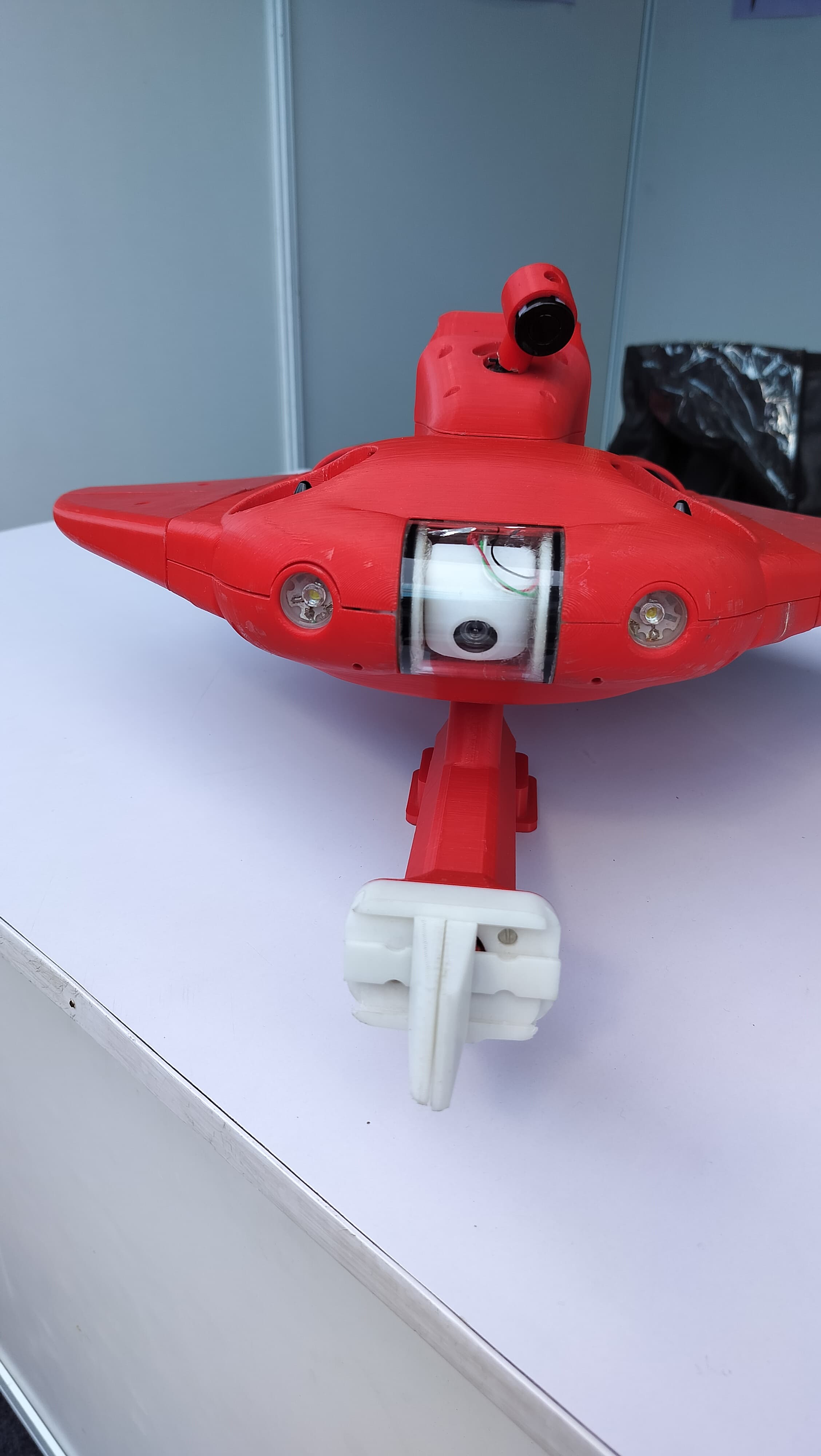
The United States has detailed federal rules covering drone registration, pilot certification, altitude caps, and — since September 2023 — a real-time Remote ID broadcast requirement transmitting serial number, location, altitude, and control station position. What federal law does not have is anything governing privacy. That omission is deliberate, documented, and consequential.
When the FAA finalized its small-UAS rule (14 CFR Part 107) in June 2016, it was unambiguous: the agency "unequivocally stated that it lacks the authority to regulate the privacy aspects of drone operations." The FAA governs navigable airspace. What happens to the data collected while transiting that airspace is, in the agency's framing, someone else's jurisdiction — fifty state legislatures, a body of common law built around manned aircraft, and a Supreme Court whose drone-era jurisprudence rests on cases decided before the consumer quadcopter existed.
The Airspace Boundary and Its Blind Spot
Part 107's operational constraints carry indirect privacy effects, but they are safety rules, not privacy rules. Drones cannot fly over non-participating persons without waivers. Visual line-of-sight requirements limit distant surveillance. A drone operator who satisfies every FAA requirement can still be sued under state tort law for surveilling a neighbor's backyard. The FAA acknowledged this in Part 107 by directing pilots to "check state and local laws before flying" — a candid admission that the regulatory framework stops at the airspace boundary.
That boundary has a peculiar shape. Navigable airspace begins at 500 feet over uncongested areas and 1,000 feet above obstacles in congested airspace. Most commercial and recreational drones operate well below those floors — in the legal gray zone between the rooftop and where federal jurisdiction actually begins.
Causby, Ad Coelum, and the Fight Over Low Altitude
The foundational dispute in drone privacy is a property question. Common law once answered via the ad coelum doctrine — landowners held title to the sky above their property indefinitely. The Supreme Court swept that away in United States v. Causby (1946), a case involving military aircraft flying as low as 83 feet over a North Carolina chicken farm, killing more than 150 birds. The Court held that navigable airspace is public domain and that the ad coelum doctrine "has no place in the modern world." But the Causby Court was careful: landowners still possess airspace in the "immediate reaches" above their property, and flights so low and frequent as to constitute "a direct and immediate interference with the enjoyment and use of real property" could amount to a Fifth Amendment taking.
That "immediate reaches" standard — never precisely defined — is now the contested terrain of drone law. Oregon regulates government drone use and requires warrant procedures to be published. These statutes represent legislative guesses at where Causby's undrawn line falls.
The Fourth Amendment on a Framework Built for Biplanes
In California v. Ciraolo (1986), the Supreme Court held that police observation from a private plane at 1,000 feet of a fenced backyard marijuana crop required no warrant. Three years later, Florida v. Riley (1989) extended the logic downward: a sheriff's helicopter flying at 400 feet over a partially covered greenhouse did not constitute a Fourth Amendment search, because the observation could be made with the naked eye from airspace open to public travel. Justice Brennan posed a hypothetical about a silent helicopter hovering just above an enclosed courtyard — a scenario commentators now read as anticipating modern drone surveillance. That theoretical concern is now a live litigation question.
The deeper problem is persistence. Riley and Ciraolo assumed sporadic observation. Modern drones can hover invisibly for hours over the same location. In Carpenter v. United States (2018), the Supreme Court recognized that long-term location tracking requires a warrant, departing from third-party doctrine because of "seismic shifts in digital technology" enabling "near perfect surveillance." Whether that reasoning extends to persistent drone surveillance of residential property remains unresolved at the federal level. The Kyllo v. United States (2001) principle applies more cleanly: using technology "not in general public use" to reveal interior details of a home constitutes a search, which means drones carrying thermal or infrared sensors require warrants regardless of altitude.
The clearest recent signal came on May 3, 2024, when the Michigan Supreme Court decided Long Lake Township v. Maxon. The township had hired a drone operator to fly over the Maxons' property three times between 2017 and 2018 to document zoning violations invisible from the street. The Michigan Supreme Court declined to rule on whether the surveillance itself violated the Fourth Amendment, holding only that the exclusionary rule does not apply in civil zoning proceedings, meaning the evidence was admissible regardless of how it was obtained. The Institute for Justice, representing the Maxons, argued the ruling opened the door to local governments conducting warrantless "fishing expeditions" using cheap drones for any civil infraction.
Twenty-Four Statutes in Search of a Floor
Since 2013, at least 24 states have passed UAS-specific privacy legislation. Roughly half require law enforcement to obtain warrants before using drones for surveillance — Alaska, Montana, Minnesota, Florida, North Carolina, and Virginia among them, with standard emergency carve-outs. Florida's Freedom from Unwarranted Surveillance Act covers both government and private use. Texas's Government Code Chapter 423 restricts drone photography over private property without consent, with exceptions for news gathering, real estate, and academic research. Virginia classifies knowingly flying over another's property after notice as a Class 1 misdemeanor. Oregon requires government drones to be registered and warrant procedures to be published.
No comprehensive federal drone privacy statute exists. A 2015 Congressional Research Service report identified "unresolved privacy concerns that have barely begun to be addressed," and a 2015 presidential memorandum directed federal agencies to protect "privacy, civil rights, and civil liberties" in UAS operations — but neither created enforceable private rights. Recent federal attention has focused on national security: the FY2024 NDAA restricted purchase of Chinese-manufactured drones; a proposed Drone Espionage Act would criminalize unauthorized recording of military installations. Civil privacy legislation at the federal level has not advanced.
The result is a system where a commercial operator must reconcile FAA airspace rules, state law, local ordinances, and a constitutional framework extrapolated from cases decided decades before the consumer drone market existed. Law enforcement faces the same layered complexity. For now, the privacy protections a person enjoys when a drone hovers over their backyard depend almost entirely on which state they live in.
Sources
- FAA — Small Unmanned Aircraft Systems (UAS) Regulations (Part 107)
- IAPP — The FAA's de facto drone privacy standards
- Suffolk University Journal of High Technology Law — Watching From Above: Drones and the Fourth Amendment's Struggle to Keep Up
- Studicata — Florida v. Riley, 488 U.S. 445 (1989)
- Minnesota Law Review — Florida v. Riley: Foreshadowing Fourth Amendment Issues in 21st Century Aerial Surveillance
- DroneLife — Long Lake Township v. Maxon: Michigan Supreme Court Allows Drone Surveillance Evidence in Civil Case
- ACLU — Long Lake Township v. Maxon case page
- LegalClarity — Drones and Law Enforcement: Surveillance Laws and Warrants
- Moro Lawyers — Drone Surveillance, Warrant Requirements, and Fourth Amendment Rights
- J. Rupprecht Law — State Drone Laws
- Congressional Research Service — Law Enforcement and Technology: Use of Unmanned Aircraft Systems
- Federation of American Scientists / CRS — Domestic Drones and Privacy: A Primer (R43965)
- CriminalDefenseLawyer — Is It Legal to Fly a Drone Over Private Property?
- Boston University Law Review — Airspace in an Age of Drones (Troy A. Rule)
