
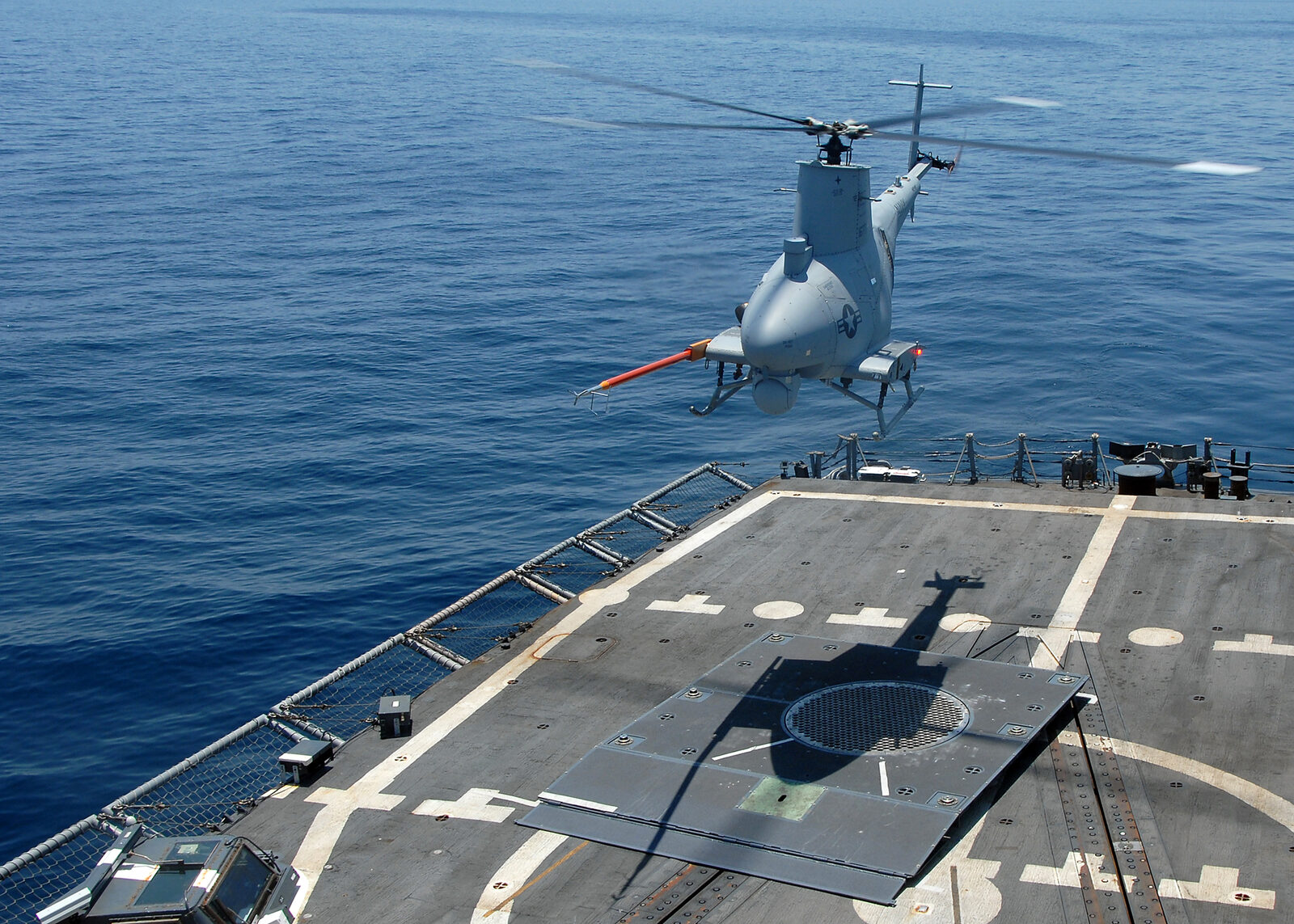
For most of commercial aviation's history, a drone required a pilot — someone physically present, eyes on the aircraft, finger on the controls. The emerging class of systems known as drone-in-a-box (DIB) dismantles that assumption entirely. These platforms house an autonomous unmanned aircraft inside a weatherproof docking station that handles launch, mission execution, landing, and recharging without anyone on site. A remote operator, potentially hundreds of miles away, monitors a dashboard. The drone does the rest.
The implications are significant. DIB systems enable continuous 24/7 aerial operations over infrastructure, perimeters, and urban environments at a fraction of the cost of manned patrols or conventionally piloted drone programs. The global market for these systems is projected to reach $3.38 billion by 2032, growing at 13.7% annually, with thermal imaging applications accounting for 28.9% of market share.
What a Drone-in-a-Box System Actually Is
The architecture is consistent across vendors. Every DIB platform has three core components.
The drone is a purpose-built autonomous UAV with high-resolution imaging, weather resistance, RTK/GNSS positioning, and — critically — the ability to land with millimeter precision on a charging pad without human guidance.
The docking station is the physical nerve center: a sealed, climate-controlled enclosure that protects the aircraft between missions, provides contact-based charging or automated battery exchange, and serves as the data uplink point. These stations are engineered for outdoor permanence. The Skydio Dock for X10 carries an IP56 dust/rain rating, tolerates winds up to 160 km/h when bolted down, and operates in temperatures from -20°C to 50°C. DJI's Dock 2 weighs 34 kg and can be installed by two people, making it repositionable for temporary deployments.
The software platform ties it together: cloud-based flight planning, real-time telemetry, triggered mission execution (a perimeter alarm fires the drone automatically), and third-party integration APIs. Most enterprise platforms expose remote video streaming, geofence definition, and fleet health dashboards to operators working from centralized control centers.
The Systems Reshaping the Market
American Robotics Scout/ScoutBase holds a historically significant position: in January 2021, the company received the first-ever FAA approval to operate automated drones beyond visual line of sight (BVLOS) without a human operator on site — a regulatory landmark that validated the entire category. The Scout uses acoustic Detect-and-Avoid (DAA) technology to maintain safe separation from other aircraft.
"Decades worth of promise and projection are finally coming to fruition." — Reese Mozer, CEO, American Robotics
Percepto has built a substantial regulatory portfolio. In November 2022, the company secured a nationwide FAA BVLOS waiver enabling its customers at qualifying sites to begin operations without site-specific approval delays. A year later, in November 2023, Percepto received FAA authorization for a single remote operator to simultaneously control up to 30 autonomous drone systems nationwide — without humans on site and without the expensive ground-based radar previously required for detect-and-avoid. "Simply put," said Ariel Avitan, Percepto's Co-founder and Chief Commercial Officer, "with large-scale remote inspections we'll see fewer large-scale safety and environmental failures across critical infrastructure."
Skydio Dock (X10-compatible) is the leading US-manufactured DIB platform targeting both enterprise and public safety markets. The Dock launches an X10 in 20 seconds and charges its battery from 15% to 95% in approximately 35 minutes under normal conditions. For BVLOS compliance it integrates a built-in ADS-B receiver for airspace awareness, onboard weather sensors, dock-mounted cameras for remote pre-flight inspection, pre-programmed emergency landing zones, and Remote ID capability. Hive configurations of two to six docks enable persistent coverage with redundancy across a monitored area. Projected operational lifespan is five years under regular use, with minor service every three months.
DJI Dock 2 brought the category's price floor down substantially. It carries an IP55 rating, operates with a 10 km radius, and pairs with the Matrice 3D and 3TD drones offering up to 50 minutes of flight time per sortie. At 34 kg, it remains field-portable and can be installed without specialized tooling.
Easy Aerial SAMS-T occupies the defense and high-durability tier. MIL-STD-810 tested for extreme heat, cold, shock, vibration, and electromagnetic interference, it is NDAA-compliant and manufactured in the United States. Its tethered configuration can maintain sustained flight for over 24 hours using data-over-power cable technology with auto-retraction — making it distinctly suited for persistent perimeter watch at military installations and critical infrastructure sites where an untethered drone must eventually land and recharge. The Easy Guard docking enclosure measures 4×4 ft with a 2 ft height profile and deploys from a standard pickup truck.
The BVLOS Regulatory Backbone
Every DIB system's autonomous value proposition has a regulatory ceiling: BVLOS operations require specific FAA authorization. Under existing Part 107 rules, operators cannot fly beyond unaided visual range without a waiver. Until recently, obtaining those waivers was a slow, site-specific process measured in months rather than weeks.
That friction is dissolving on two fronts. First, the FAA streamlined its Drone as First Responder (DFR)-specific waiver process in 2024–2025. As of June 2025, the agency had received 300 DFR BVLOS waiver submissions under the new process, approving 214 with 78 pending — a sixfold increase in approval rates. Average processing time dropped from more than 11 months to approximately one week, with some waivers cleared in under two hours. Notably, 87% of submissions cover below-200-foot shielded operations; only 13% propose detect-and-avoid systems for flights up to 400 feet.
Second, and more fundamentally, the FAA published a Notice of Proposed Rulemaking introducing Parts 108 and 146 — a framework designed to normalize BVLOS operations through regulatory compliance rather than individual waivers.
Part 108 establishes operating rules for highly automated BVLOS systems, including drones over 55 lbs, along with design and manufacturing standards. Key provisions: operators must obtain "declarations of compliance" for their aircraft systems from an FAA portal; new operational roles (Operations Supervisor, Flight Coordinator) require organization-provided training but no separate pilot certificate; drones operating in shielded areas near fixed infrastructure gain right-of-way over manned aircraft; unshielded flights require Electronic Conspicuity (ADS-B equivalent) for detect-and-avoid. The proposed pilot-to-aircraft ratio reaches 1:20 for lower kinetic energy drone classes — enabling the fleet-operations model that companies like Percepto have been pioneering under waivers. Part 146 certifies third-party organizations providing automated safety data services that support BVLOS operations.
A presidential executive order targets finalization approximately March 2026.
Three Verticals, One Operating Model
Critical infrastructure inspection is the category's largest commercial vertical. Power plants, oil and gas facilities, solar installations, mining operations, pipelines, and electrical transmission lines share a common operational problem: they span large areas, require frequent inspection, and put human workers in environments that range from inconvenient to hazardous. DIB systems address all three dimensions simultaneously. A single remotely managed fleet node can run multiple inspection sorties per day, every day, uploading thermal and visual data to cloud analytics without a human entering the facility. Thermal imaging leads all DIB applications with 28.9% market share.
Security and perimeter monitoring is the second major vertical. Autonomous dock systems can hold programmed patrol routes and respond to triggered alerts — a fence breach fires the drone automatically, providing eyes on the intrusion before any guard unit responds. Easy Aerial's defense-oriented SAMS-T has been deployed by U.S. and allied forces for exactly this purpose. Commercial facilities — data centers, energy infrastructure, logistics yards — are adopting similar architectures.
Drone as First Responder is where the public safety application has matured fastest, and where the data is most compelling. The Chula Vista, California Police Department pioneered the model and as of March 2022 had completed more than 10,000 emergency BVLOS flights. Police Chief Roxana Kennedy has called DFR "one of our best de-escalation tools," noting it has "de-escalated more incidents than any other tool" in the department's history.
The numbers aggregate to a clear national pattern. Across U.S. DFR programs measured in 2025, drones returned ground units to service — resolving the call before officers arrived on scene — in 25% of responses.
The economic logic of DIB is straightforward once regulatory BVLOS authority exists: one trained operator, managing a fleet of docks across multiple sites from a central control room, performs work that previously required physical presence at each location. Percepto's November 2023 waiver — 30 drones under one operator, nationwide — is the clearest proof-of-concept yet of what the operating model looks like at scale. Neta Gliksman, Percepto's VP of Policy and Government Affairs, described the approval as "opening doors for critical inspection operations for our clients, expanding the possibilities and scale of autonomous inspection technology."
Part 108, if finalized on schedule in early 2026, shifts that model from waiver-by-waiver negotiation to a compliance-based regime. Operators who certify their systems and procedures gain BVLOS access as a matter of right rather than exception. The near-term constraint is no longer technology — the Skydio Dock, Percepto Air, DJI Dock 2, and American Robotics Scout are all operationally mature. The constraint is the regulatory framework catching up to what these systems can already do, and by the FAA's own timeline, that gap closes within months.
Sources
- Skydio — Dock for X10 FAQs
- Skydio — FAA BVLOS Waivers and New Rules
- PR Newswire / Percepto — Nationwide US BVLOS Waiver (November 2022)
- PR Newswire / Percepto — FAA Approval for 30-Drone Fleet Under One Operator (November 2023)
- Drone Life — American Robotics First-Ever FAA Automated BVLOS Approval (January 2021)
- Drone U — Drone-in-the-Box Systems
- DJI Enterprise — Dock 2
- Police1 — 2025: The Year DFR Programs Went Mainstream
- DroneResponders — Chula Vista PD Surpasses 10,000 BVLOS Emergency Flights (March 2022)
- Drone Pilot Ground School — FAA Part 108 Overview
- Drone Nerds Enterprise — BVLOS Docking Stations and Automation
