
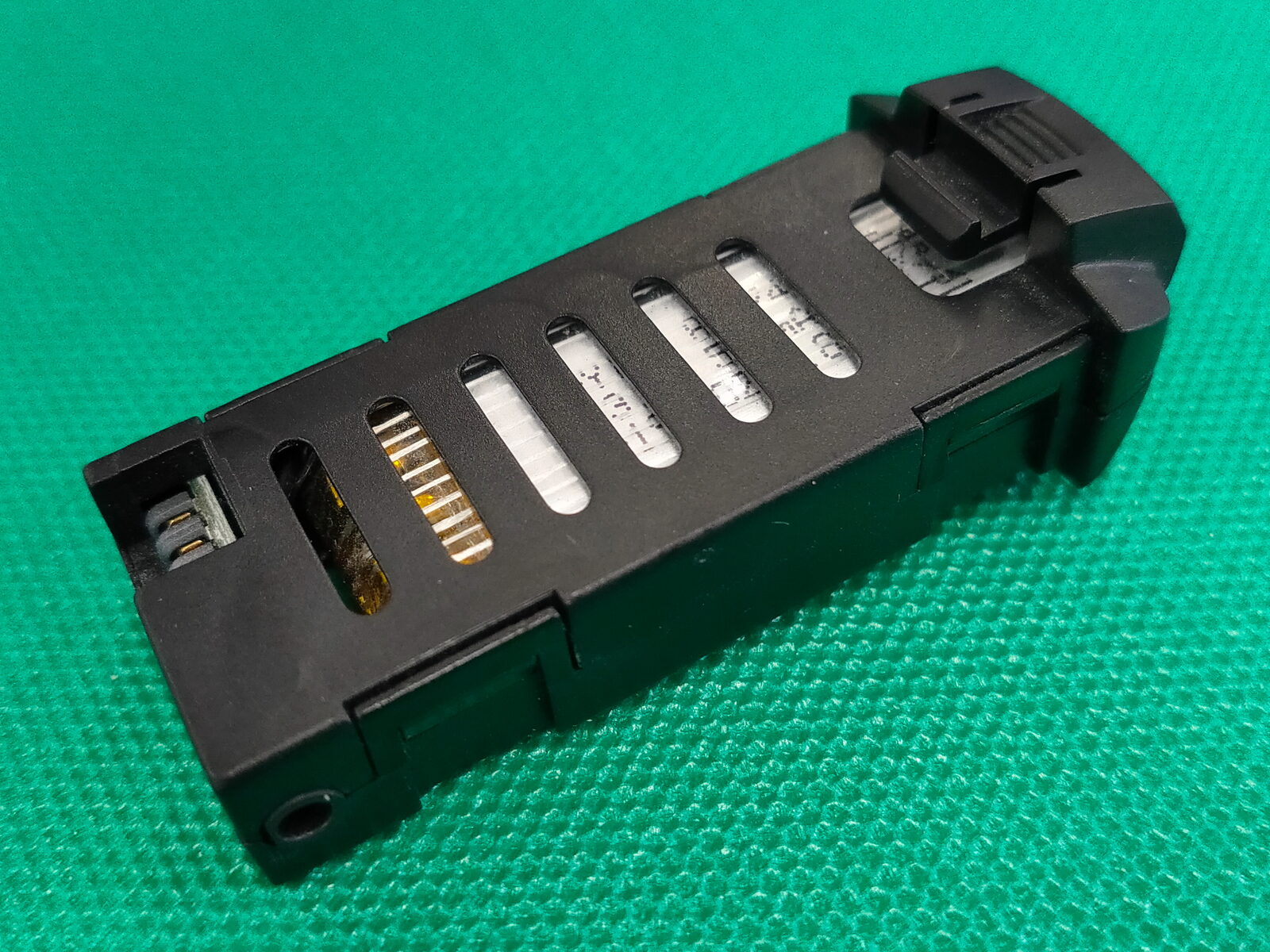
Every operator who has watched a drone descend for a battery swap mid-mission understands the frustration intuitively. The engineering behind it is less intuitive. Commercial rotor-based UAVs typically achieve only 20–40 minutes of flight time before requiring recharge or battery swap — a constraint that isn't primarily about motor efficiency, frame weight, or software. It's about what a kilogram of electrochemical storage can actually deliver against what a multirotor actually demands.
The Physics of Hovering Is Brutal
A typical 2–4 kg quadcopter consumes 200–400W while hovering. Push it into rapid maneuvering and that figure exceeds 800W. Those numbers alone reveal the problem: lithium-based packs at the cell level deliver roughly 150–250 Wh/kg on mature industrial cells; pack-level performance, after accounting for enclosures, wiring, and BMS overhead, runs lower. Do the arithmetic on a 5 kg UAV carrying a 1 kg battery pack at a cruise draw of 250W: theoretical endurance is 48 minutes. Real-world endurance, after safety margins and the voltage sag that accompanies discharge, is considerably less.
That sag matters. A fully charged 4S LiPo begins at 16.8V. Under load, as capacity depletes, it drops to around 14–15V — forcing motors to draw excess current to maintain thrust, which accelerates discharge in a feedback loop. The battery isn't failing; it's doing exactly what lithium-polymer chemistry does under load. The problem is that the energy density ceiling hasn't moved enough to escape it.
Lithium-polymer cells handle discharge rates of 25C to 50C and deliver approximately 1–1.5 kW/kg for high-strength formulations, which is why they dominate the multirotor market: no other production chemistry matches that combination of power density and discharge rate for flying machines that need short, intense bursts. Lithium-ion trades some of that power density for better cycle life. LiFePO4 (lithium iron phosphate) adds thermal stability at the cost of the worst energy density in the commercial lithium family. NMC (nickel manganese cobalt) occupies the industrial middle ground — better energy density than LiFePO4, better cycle behavior than standard LiPo. The practical drone battery market has ended up using all of these in different mission profiles, but none of them escape the cell-level 150–250 Wh/kg reality.
Next-Generation Cells: What's Real and What's Marketing
The numbers that appear in press releases frequently aren't the numbers operators will experience in the field. Claims of 350–400+ Wh/kg typically represent cell-level data only, not pack-qualified performance. Pack-level reality — with the structural, thermal, and electrical overhead that a deployable system requires — runs lower.
"Treat >300 Wh/kg pack claims as pilot/demo unless the supplier provides test matrices you can audit." — HereWin Power industrial battery guide
That caveat applied, the trajectory of next-generation chemistry is real. Semi-solid state batteries have reached a validated procurement target of 260–300 Wh/kg at pack level. One manufacturer's semi-solid platform, using nano silicon-carbon technology, reaches 320 Wh/kg and delivers a 30% capacity increase versus traditional batteries at equivalent volume and weight.
Cycle life matters as much as energy density for total cost of ownership. Industrial-grade lithium solutions last 500 to 800 cycles before capacity degrades to 80%, with field planning ranges of 800–1,200 cycles under proper thermal management. Fast charging degrades that envelope: charging into 4C+ territory increases lithium plating risk, especially at low temperature or high state of charge, and accelerates cycle degradation. Battery management systems (BMS) are doing increasingly sophisticated work to extend pack life, but the fundamental chemistry still constrains how aggressively packs can be cycled.
Hydrogen as the Break from Chemistry
Hydrogen fuel cells don't improve lithium chemistry. They sidestep it. Hydrogen fuel cells have energy density 4 to 5 times greater than current lithium-based batteries — a gap large enough to shift the mission envelope rather than just extend it incrementally.
The production numbers bear that out. Where a battery-equivalent platform achieves 30 minutes and 25 km of range, a fuel cell system extends that to 90 minutes and 75 km — a 3x improvement on both dimensions. Fixed-wing fuel cell configurations can fly beyond 7 hours. The Cellen H2-6, a hydrogen-hybrid multirotor, achieves up to 150 minutes of flight duration versus the 20–40 minutes of traditional lithium-ion drones.
The architecture matters. Hydrogen fuel cells have poor specific power and cannot handle peak power demands alone. Every current production hydrogen drone uses a hybrid approach: the fuel cell handles cruise-power steady state; a lithium-polymer battery handles the surge loads of takeoff, maneuvering, and payload actuation. The Cellen H2-6 pairs a compressed hydrogen tank and fuel cell stack with a LiPo buffer for exactly this reason.
"Hydrogen fuel cells generate electricity through a clean electrochemical reaction, producing only water vapor as a byproduct," said Roberto Yelin, CEO of Cellen H2. Beyond emissions, fuel cell platforms operate more quietly than combustion engines and carry higher mean time between failures than combustion engines.
Refueling is faster than recharging. The DS30 fuel cell platform — an 8-motor, 2.6 kW fuel cell design — carries a 350-bar, 10.8-liter carbon-composite hydrogen tank holding up to 300g of hydrogen; tank replacement takes less than one minute. A battery-powered equivalent would require more than six battery replacements to complete the same missions as a single fueled DS30 cycle. As Intelligent Energy puts it: "With high energy density and fast refuelling, they allow drones to fly longer and get back in the air quicker, unlocking greater efficiency and performance for operators."
The tradeoffs are real: 350-bar compressed hydrogen storage requires purpose-built infrastructure, and system cost for fuel cell drones remains significantly above lithium-equivalent platforms. Defense procurement has begun absorbing those costs for BVLOS and long-dwell ISR missions where endurance is operationally decisive.
Cold Weather, Swapping Infrastructure, and the Operational Realities
Temperature is an underappreciated variable in battery endurance planning. Cold weather performance decline begins at 59°F (15°C). Operations below 14°F (-10°C) carry serious risk of sudden LiPo failure. The capacity hit is not marginal: where a fully charged LiPo provides 20–25 minutes in warm weather, cold conditions reduce that to 10–15 minutes or lower — roughly a 50% reduction.
"Where a fully charged LiPo battery could provide 20-25 minutes of flight time in warmer weather (59°F or above), in colder weather flight time could drop to 10-15 minutes or lower." — UAV Coach
The mechanism is straightforward: cold temperatures increase battery internal resistance, slow lithium ion activity, and reduce the rate of electrochemical reactions. Counterintuitively, cold air is denser and actually improves aerodynamic performance — the limiting factor in winter operations is battery chemistry, not aerodynamics. The operational implication is that endurance specs published at standard temperature are not conservative in winter environments; they're often optimistic by a factor of two.
Battery swapping and docked charging represent the infrastructure layer sitting atop chemistry constraints. Manual swap — a human pops a depleted pack and installs a charged one — takes seconds and requires minimal mechanical complexity. Automated swap takes minutes with high mechanical complexity but enables unattended operations. Inductive power transfer (IPT) docked charging offers coil-alignment-sensitive efficiency but is sensitive to misalignment. An emerging drone-to-drone charging concept positions a dedicated "charging drone" as mobile infrastructure for mission extension in GPS-denied or remote environments where fixed infrastructure isn't available.
The 30-minute wall isn't moving quickly on lithium chemistry alone. Semi-solid cells at production scale, hydrogen-hybrid gaining defense traction, and increasingly intelligent BMS are each chipping at different parts of the constraint. The ceiling is rising — but it's rising against physics that don't negotiate.
Sources
- arXiv — "A Comprehensive Review of Advancements in Powering and Charging Systems for Unmanned Aerial Vehicles" (2025)
- HereWin Power — Industrial Drone Battery Ultimate Guide (2026)
- HereWin Power — High Energy Density UAV Batteries for Industrial Drones (2026)
- Intelligent Energy — Can Fuel Cell Powered Drones Overcome the Challenge of Long-Endurance Flight?
- Vicor Power — Fuel Cell Powered Drones
- Commercial UAV News — Cellen H2 Inc. Hydrogen-Powered Drones (2025)
- Elsight — Hydrogen Fuel Cells: Overcoming the Limitations of Traditional Drone Propulsion Methods
- UAV Coach — Cold Weather Drone Operations
- EcoFlow Blog — Small Multirotor UAV Battery Power
- U.S. Department of Energy — How Lithium-ion Batteries Work
