
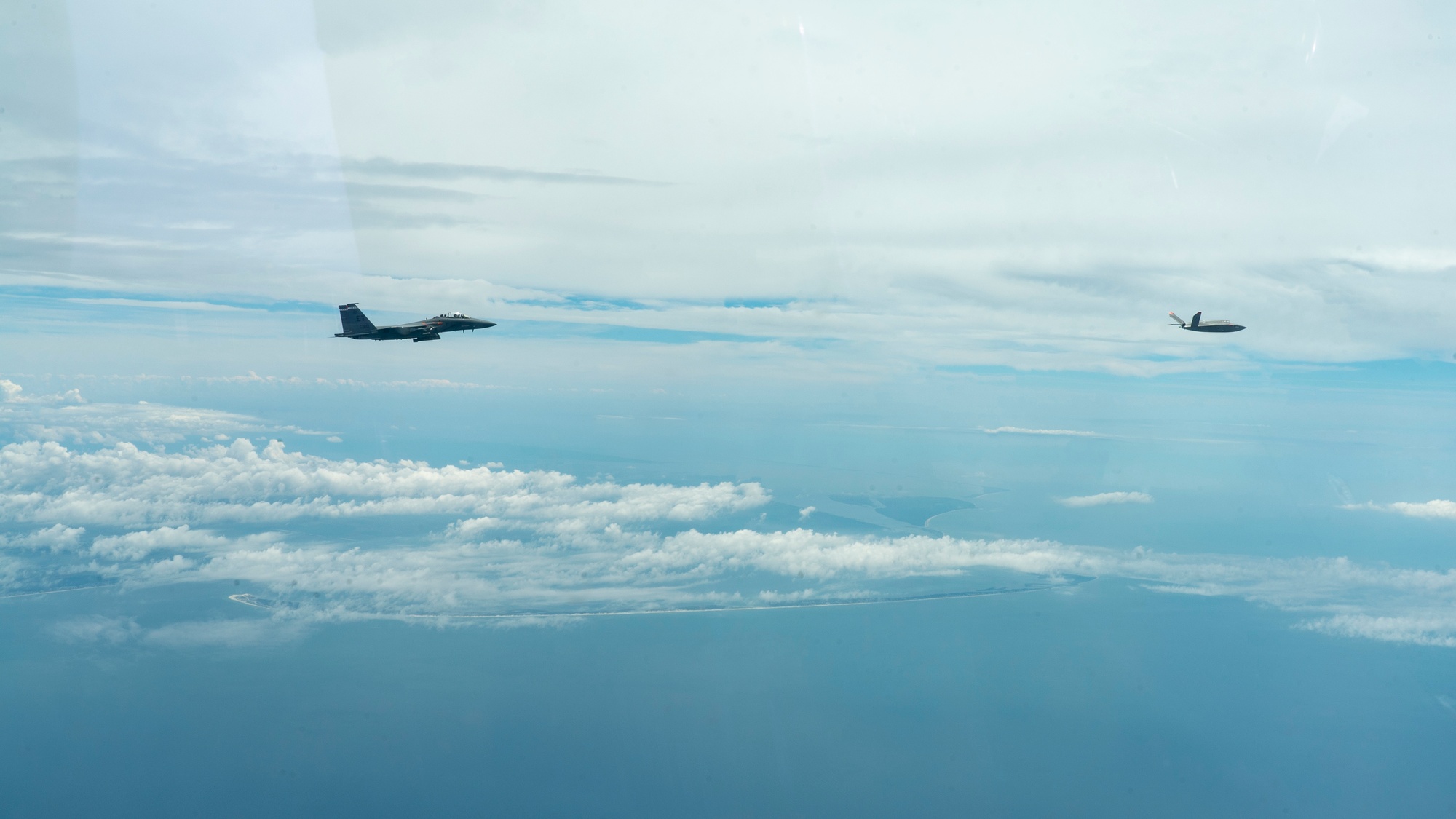
Dassault Aviation and French startup Harmattan AI announced on July 13 that they had flown a collaborative test in which an F4-standard Rafale fighter took control of an uncrewed aircraft carrying a newly developed electronic-warfare payload called NAMIB. During the flight, the drone detected and geolocated a radar system several dozen kilometers away and passed the target's coordinates to the Rafale, which used the data to carry out a simulated strike. The test marks one of the most concrete public demonstrations to date of crewed-uncrewed teaming built around France's newest fighter standard.
The announcement, confirmed in a Dassault Aviation press kit and reported by Janes and Interesting Engineering, frames the flight as an early but significant step toward integrating uncrewed electronic-warfare assets directly into a fighter pilot's targeting workflow -- rather than treating drones as separate, independently tasked systems.
What Is NAMIB?
NAMIB is an electronic-warfare payload jointly developed by Dassault Aviation and Harmattan AI, designed to detect, identify, and geolocate electromagnetic emissions from air-defense systems. According to the companies, the payload is compatible with both quadcopters and fixed-wing uncrewed aircraft, giving it flexibility to be carried by a range of drone platforms rather than a single bespoke airframe.
Development of NAMIB began in January 2026, part of a broader strategic partnership between Dassault Aviation and Harmattan AI, a startup working on autonomous and electronic-warfare technology. The July 13 flight test was the program's first publicly disclosed demonstration.
How the Test Worked
In the demonstration, the F4-standard Rafale controlled the NAMIB-equipped drone during flight, rather than the drone operating autonomously or under separate ground control. The payload detected and geolocated a radar system located several dozen kilometers away, then transmitted the target's coordinates to the Rafale. The fighter used that targeting data to carry out a simulated strike against the radar.
That sequence -- detect, geolocate, hand off coordinates, strike -- is the basic shape of a suppression-of-enemy-air-defense (SEAD) mission, in which aircraft work to locate and neutralize hostile radar and air-defense systems that would otherwise threaten friendly aircraft. Using a drone to do the initial detection and geolocation work, rather than the fighter's own onboard sensors, allows the crewed jet to stay farther from the radar's engagement envelope while still generating a strike-quality target.
Why the Rafale F4 Matters Here
The Rafale F4 is Dassault's latest standard for the fighter, and according to the company's press materials, its design places particular emphasis on connectivity -- specifically, the ability to exploit data collected by uncrewed systems and other networked assets rather than relying solely on the aircraft's own sensors. The NAMIB test is presented by Dassault as a direct expression of that design philosophy: a Rafale F4 pulling in real-time targeting data generated by a drone it is actively controlling, and acting on it.
Interesting Engineering's coverage situates the demonstration within a broader collaborative-combat and sensor-fusion roadmap for the F4 standard, suggesting NAMIB is one piece of a larger effort to network Rafale fighters with uncrewed systems rather than a standalone side project.
Why It Matters
Human-machine teaming -- pairing crewed fighters with uncrewed aircraft that extend their sensor reach or absorb risk -- has become a central theme in next-generation air combat programs worldwide, from the US Air Force's Collaborative Combat Aircraft effort to Europe's own future fighter initiatives. Most of that work remains conceptual or is still in early flight test. The NAMIB demonstration is notable because it shows a fielded, operational fighter type -- the Rafale -- directly controlling a drone and acting on the sensor data it produces, in a mission set (SEAD) that is both dangerous and high-value.
For France specifically, the test reinforces a narrative Dassault has been building around the Rafale F4: that its value proposition going forward rests less on new hardware and more on its ability to plug into a growing ecosystem of uncrewed and networked assets. If NAMIB or similar payloads mature into a fielded capability, it would give Rafale squadrons a way to locate and target enemy air defenses while keeping the crewed aircraft itself farther from the threat -- a capability gap that has taken on renewed urgency as modern integrated air-defense networks push detection and engagement ranges further out.
It's also a data point in the broader defense-industry trend of established prime contractors partnering with smaller, faster-moving startups on software-heavy capabilities like electronic warfare and autonomy. Harmattan AI's role alongside Dassault -- on a program that began development just six months before this test flight -- reflects how quickly such partnerships are now expected to move from concept to flight demonstration.
What's Still Unknown
The available reporting does not specify which drone platform carried the NAMIB payload during the test, the exact radar type used as the target, further technical details of the payload itself, or a timeline for further testing, qualification, or fielding. Nor is it clear whether the "simulated strike" involved live weapons employment procedures or was purely a targeting-data exercise. Those details will matter for assessing how close NAMIB is to an operational capability versus a proof-of-concept.
