
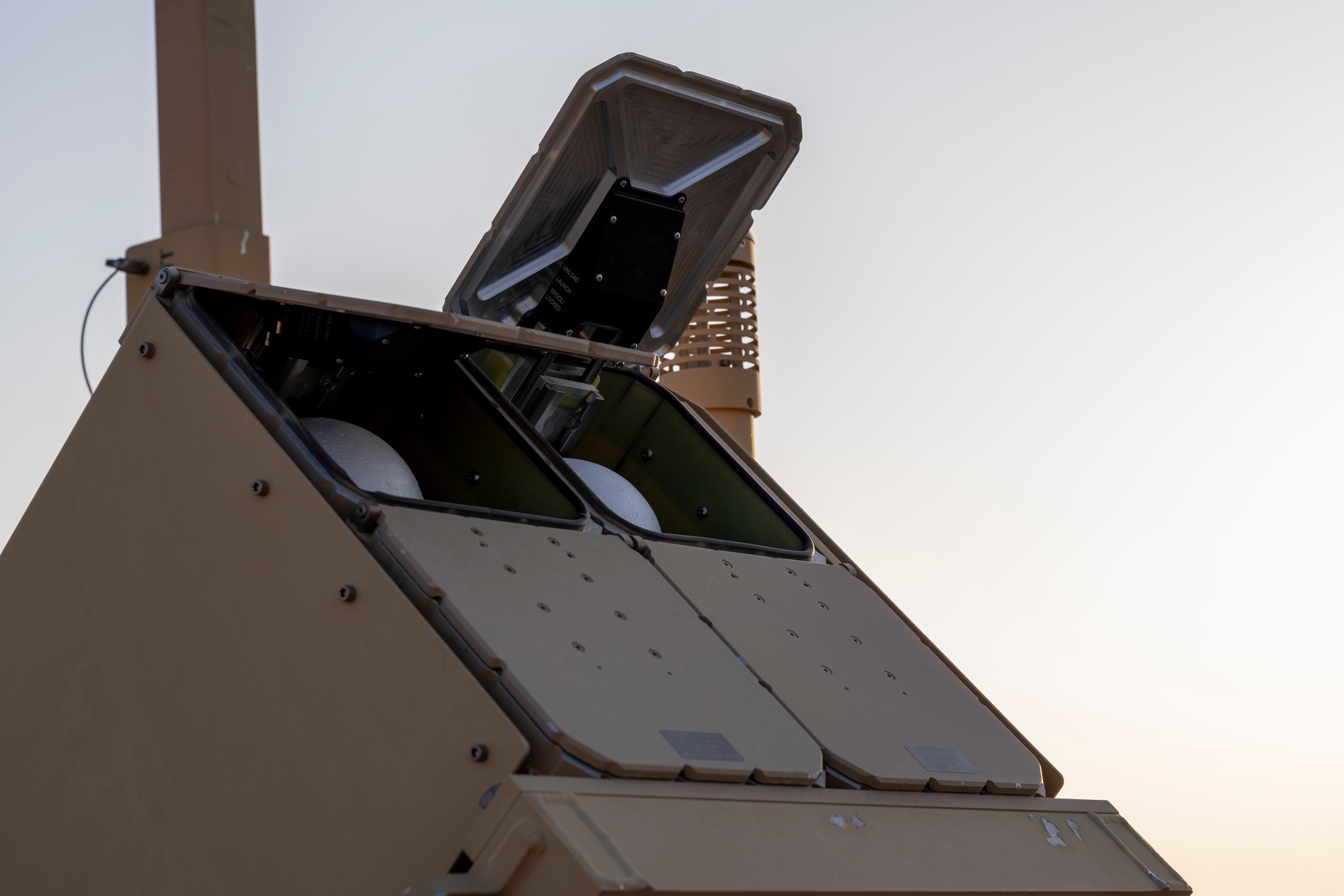
The U.S. Army is shopping for a cheaper way to shoot down mid-size drones, and it wants industry's answer in two weeks. On August 4, 2026, the service posted a Sources Sought notice on SAM.gov for the Next Generation C-sUAS Missile (NGCM), an extended-range interceptor designed to defeat Group 2 and Group 3 unmanned aircraft systems while fitting into a launcher the Army already owns. The pitch is blunt: field a missile that costs less than $150,000 per round at scale, and make it fire out of the existing Raytheon-built Coyote Launcher with minimal modification.
It's a request-for-information, not a contract award, but the specificity of the numbers attached to it signals a program office that already knows what it wants and is mostly checking who can build it fast.
What the Army Is Asking For
The Army is looking for what DefenseScoop describes as a "quick-fire interceptor," able to detect, track, identify and defeat drones using some combination of radar, kinetic kill, electronic jamming, and electro-optical/infrared guidance, per Stars and Stripes. The target threats fall into the Group 2 (21 to 55 pounds) and Group 3 (up to 1,320 pounds) categories -- mid-size drones the Army says current systems struggle to counter affordably.
The performance thresholds, reported by DefenseScoop and Military Times on August 4, are exacting for a weapon meant to be inexpensive:
- Threshold range: greater than 16 km at 6 km altitude
- Objective range: greater than 25 km at 8 km altitude
- Unit cost: under $150,000 per round, based on a lot buy of at least 5,000 units
- Technology Readiness Level 7 by the end of the developmental test series in the fourth quarter of fiscal year 2027
- 50 missiles delivered and ready for an Operational Assessment by early 2028
That timeline gives industry just over a year -- roughly 13 months -- from responses-due to the hardware maturity milestone, and about a year and a half to have production-representative rounds in soldiers' hands for evaluation -- an aggressive schedule for a new missile design, even one built around an existing launch platform.
Why the Coyote Launcher
The compatibility requirement is the detail that narrows the field fastest. Rather than fielding a new launch system alongside a new round, the Army wants NGCM to integrate into the Coyote Launch System already in its counter-UAS inventory. DefenseScoop's August 4 report frames this as a deliberate move to extend range, enable rapid launch, and cut time-to-target compared with the effectors currently fielded on that launcher -- without forcing units to adopt new launch infrastructure, training, and logistics chains alongside the new missile.
Military Times, in a separate August 4 report, corroborated the same trio of requirements independently: the sub-$150,000 cost ceiling, the Group 2/3 threat definitions, and the Coyote Launcher compatibility mandate. Four distinct outlets -- the SAM.gov notice itself, Stars and Stripes, DefenseScoop, and Military Times -- are now reporting consistent figures, which suggests the underlying requirements document is stable and not still being negotiated internally.
Practically, that means any vendor responding needs a missile that shares the Coyote's launch tube dimensions, electrical interfaces, and fire-control integration -- or can get there with what the Army describes as minimal to no modification to the launcher itself. That's a real constraint. It rules out clean-sheet designs that would require a new launcher program, and it favors vendors who already have missile bodies or seeker packages that were designed with tube-launched constraints in mind.
The Economics Behind the Ask
The $150,000-per-round target is the headline number, and it's worth sitting with. Legacy air-defense interceptors -- the Patriot system, for instance, or even shorter-range systems -- routinely run into the high six figures or millions of dollars per round. Using a $1 million-to-$4 million interceptor against a $35,000-to-$50,000 drone -- the price range Stars and Stripes cites for the Iranian-made Shahed-136 and its Russian-built Geran-2 variant -- is the cost-exchange problem that has driven much of the counter-drone conversation in recent years. NGCM's pricing target is explicitly an attempt to fix that math for the mid-size drone category, where cheap kamikaze drones and larger tactical UAS still require a kinetic answer that jamming can't always provide.
The 5,000-unit lot size referenced for pricing also signals the Army isn't looking for a boutique buy. That's a production-quantity number, consistent with a service trying to build a magazine deep enough to sustain attrition warfare against drone swarms rather than a limited defensive stockpile.
Why It Matters
NGCM sits at the intersection of two problems the Army has been unable to fully solve: Group 2/3 drones are too big and too fast for most electronic-warfare-only counter-UAS systems to reliably stop, but existing kinetic interceptors are too expensive to fire in the volume that drone saturation attacks demand. A sub-$150,000 missile that slots into a launcher already in the field -- rather than requiring a new launch system procurement -- is a much faster path to fielded capability than a ground-up program would be. The compressed timeline -- TRL 7 within roughly 13 months of the RFI, and 50 rounds ready for operational assessment a few months after that -- suggests the Army views this as urgent rather than exploratory. How industry responds by the August 20 deadline, and how many credible bidders can meet both the cost ceiling and the Coyote integration requirement simultaneously, will be the first real signal of whether this timeline is achievable or aspirational.
Sources
- Next Generation C-sUAS Missile (NGCM) Sources Sought Notice — SAM.gov
- Army seeks new, less costly anti-drone missile — Stars and Stripes
- Army seeks next-gen missile that could shoot down small drones for less than $150K a pop — DefenseScoop
- US Army wants a surface-to-air missile that can destroy small drones — Military Times