
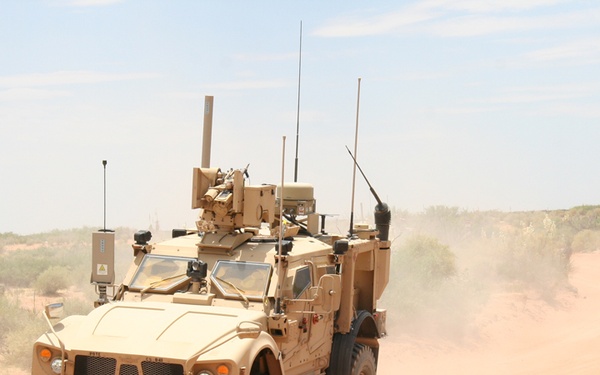
The Army has moved its Tactical Intelligence Targeting Access Node (TITAN) program from prototype testing into full production, issuing a combined $192 million award to Palantir Technologies and Anduril Industries on August 31 and announcing it publicly on September 1, the same week the Army has otherwise been pushing several drone-related acquisition reforms forward.
TITAN is designed to fuse sensor data from satellites, aircraft and ground-based systems into a single intelligence picture that soldiers can act on in the field — a capability the Army has treated as a proving ground for how it wants future AI-enabled targeting systems to be built and fielded.
Anduril's $65 Million Hardware Slice
Of the total award, Anduril received $65 million to manufacture and integrate hardware for eight new mobile ground stations. Those units are scheduled for delivery over an 18-month timeline and will join nine operational prototype units the Army has already fielded, bringing the total initial fleet to 17 mobile intelligence nodes once complete.
Palantir serves as the overall TITAN program team lead, with Anduril acting as lead hardware systems architect. The broader team includes L3Harris Technologies, Sierra Nevada Corporation, Strategic Technology Consulting and World Wide Technology — a roster that spans software integration, systems engineering and traditional defense hardware manufacturing. Col. Jonathan Lipscomb, Project Manager for Intelligence Systems and Analytics, said TITAN represents "a key solution that enhances the speed of target recognition and geolocation from multiple sensors." The Army expects to place an additional production order in fiscal year 2027.
From a $178 Million Prototype Deal to Production
TITAN's path to this point stretches back to 2021, when the Army gave Palantir and RTX each an $8.5 million award for early system and software design, followed by $36 million apiece in 2022 to build out competing prototype approaches. Palantir won the head-to-head competition in March 2024, beating the longtime defense incumbent to a $178.4 million contract covering ten prototype ground stations — five "advanced" and five "basic" variants — under a 24-month period of performance. Palantir delivered the first two of those systems to the Army in March 2025. The new $192 million production award effectively confirms that Palantir's software-led approach, rather than RTX's more traditional bid, will define how the Army builds its next generation of sensor-fusion ground stations going forward.
An Advanced and a Basic Variant
The eight units in this production order split evenly between two configurations: four "TITAN Advanced" and four "TITAN Basic" stations, mirroring the same five-and-five split the Army used for its original 2024 prototype order. The Army has not detailed the precise capability gap between the two variants, but the split has held constant across both the prototype and production phases, suggesting the service sees value in fielding a mix of higher- and lower-capability nodes rather than standardizing on a single configuration across every unit that receives one.
Why It Matters
TITAN's shift to production is one of the clearest signals yet that the Army intends to keep buying AI-fusion targeting infrastructure from a mixed team of traditional primes and newer defense-tech entrants rather than a single incumbent contractor. With nine prototypes already in soldiers' hands and eight more on order, the program gives the Army an early, real-world test of whether a Palantir-led software stack paired with Anduril-built hardware can scale past a handful of demonstration units into a fielded capability — a template the service is likely to reuse as it looks to modernize other targeting and sensor-fusion systems. The approach also gives the Army a hedge against relying on any single vendor for a capability it now treats as core infrastructure, spreading both technical risk and production capacity across two companies with very different histories in the defense market.