
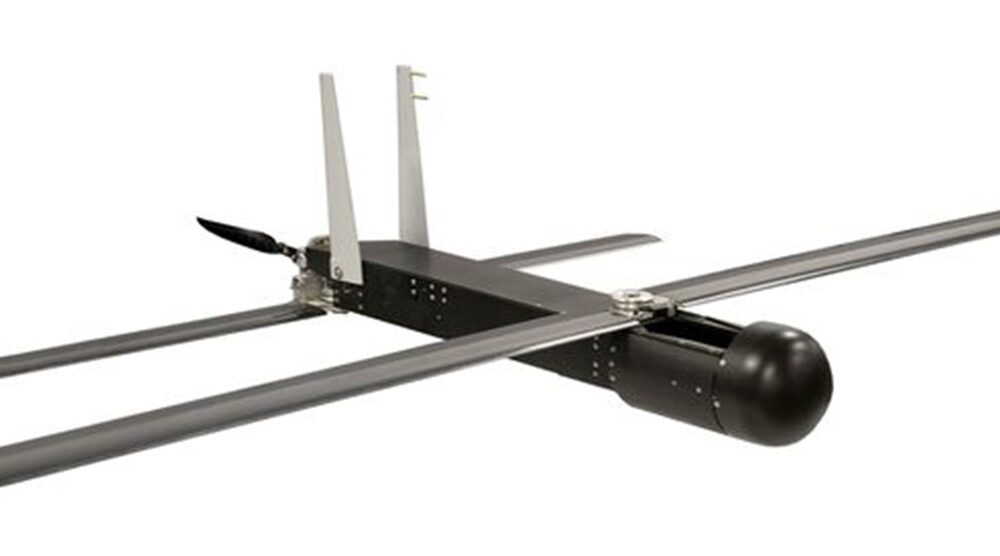
On June 9, Alta Ares announced a €50 million round led by Air Street Capital, with Cherry Ventures, OTB Ventures, and Harpoon Ventures joining existing backers. Forty-eight hours later, at ILA Berlin, Airbus Defence and Space signed a memorandum of understanding with the company to develop integrated European counter-drone and air-defense solutions. Two moves, two days apart — and the sequencing is the tell. Capital and a prime-contractor handshake arriving simultaneously is not coincidence; it is the signal that a startup has cleared the credibility threshold that European defense primes require before they will share a stage.
Alta Ares was founded in 2024, which means it has been building, deploying, and refining hardware in a live war faster than most legacy contractors complete a requirements review. Its systems have been operationally deployed in Ukraine since that same year, with reported combat intercepts. The company was shaped entirely by the threat environment that Ukraine exposed: not legacy air-superiority scenarios but attritable mass — cheap one-way attack drones dispatched in volume, alongside longer-range cruise missiles and precision glide munitions. That focus is encoded directly into the two interceptors the company has brought to market.
Two Interceptors, Two Threat Tiers
The X-Lock is the lighter platform: 4 kilograms, 270 km/h top speed, 15-kilometer range, designed to engage Shahed-136-class loitering munitions — the low-cost, high-volume threat that has defined the drone war over Ukraine. The Black Bird is built for harder targets: 6 kilograms, 670 km/h, 30-kilometer range, with a claimed capability against KH-101 cruise missiles and FAB-500 glide bombs. The performance gap between the two is not incremental — the Black Bird is more than twice as fast and twice the range of the X-Lock, reflecting a fundamentally different engagement geometry against faster, higher-value targets.
The specs are notable less for the numbers than for what they imply architecturally: a layered intercept capability covering both the drone swarm and the stand-off munition in the same operational package, without requiring a legacy surface-to-air missile system for the lower tier. Former NATO Supreme Allied Commander Transformation Philippe Lavigne sits on the company's advisory board, and Alta Ares received a NATO innovation award in March 2025 — endorsements that carry weight in procurement conversations but do not, on their own, close a contract.
What Fortion Integration Actually Buys
The Airbus partnership is, in practical terms, a software integration agreement. Alta Ares interceptors will feed into Airbus's Fortion IBMS — Integrated Battle Management Software — and Fortion SAMOC, cutting the manual sensor-to-shooter handoffs that slow response time against fast-moving threats. For a two-year-old company, that integration path is not trivial. Fortion is already embedded in NATO-allied command networks; getting your hardware to speak its language means your interceptors can, in principle, be cued and employed through existing allied command chains rather than requiring a separate parallel architecture that operators have to learn and maintain.
That is the structural value of a prime partnership at this stage: not validation (the Ukraine deployments provide that), but interoperability. European defense procurement at the NATO-member level does not favor novel standalone systems — it favors systems that slot into existing frameworks with minimal integration friction. By anchoring to Fortion now, Alta Ares sidesteps the interoperability negotiation that would otherwise consume years of the sales cycle.
"Modern air defence is neither a software issue nor a hardware issue. It's both, at the same time — and at scale." — Hadrien Canter, CEO, Alta Ares
François Lombard of Airbus Defence and Space was direct about the demand signal: "Against the current geopolitical backdrop, defending against suicide drones is a priority that urgently needs to be tackled and integrated into our broader air defence solutions." The language is unambiguous about urgency in a way that Airbus press releases rarely are. The European counter-drone market is in a steep growth phase, driven almost entirely by the threat data coming out of Ukraine.
The €50 million will fund industrialization, manufacturing expansion in both France and Ukraine, and the opening of offices in the Middle East and Asia. The Ukraine manufacturing component is its own signal — production capacity in-country, closer to the active theater, rather than a purely European industrial base that ships eastward. The capital raise and the Airbus MoU together give Alta Ares the resources to scale production and the network to move units through allied procurement pipelines. Whether that combination is sufficient to translate into fielded military capacity at meaningful volume is a different question.
The Gap Between Integration and Capacity
An MoU is a statement of intent, not a delivery order. As Army Recognition's analysis notes, "integration is not the same as fielded military capacity" — safety certification, rules of engagement frameworks, and production scaling all remain ahead of this announcement. Those are not trivial hurdles. Defense-grade software integration with a platform like Fortion requires certification processes that move on government timelines, not startup timelines. Rules of engagement for autonomous or semi-autonomous intercept systems in NATO-member airspace involve legal and doctrinal layers that no amount of private capital accelerates. And production scaling from operational deployment in Ukraine — however credible — to the volumes required by a multi-nation European procurement is a manufacturing challenge that the Series A capital has to actually solve, not just fund in principle.
None of that undercuts the significance of the 48-hour sequencing. For a company that did not exist before 2024, landing a funded balance sheet and a signed agreement with a tier-one European prime at the same ILA cycle represents a compressing of the typical defense startup timeline by years. The question is whether the certification, doctrine, and production infrastructure can compress on a similar schedule — or whether the gap between this week's announcements and actual fielded units widens rather than narrows in the execution.
Sources
- Alta Ares newsroom — Alta Ares raises €50M to become a leading European player in air defense
- Airbus newsroom — Airbus and Alta Ares sign partnership to develop Europe's air defence solutions
- Army Recognition — Europe strengthens counter-drone defenses with Airbus/Alta Ares AI interceptors after Ukraine lessons
- AeroTime — Airbus and Alta Ares counter-drone systems
