
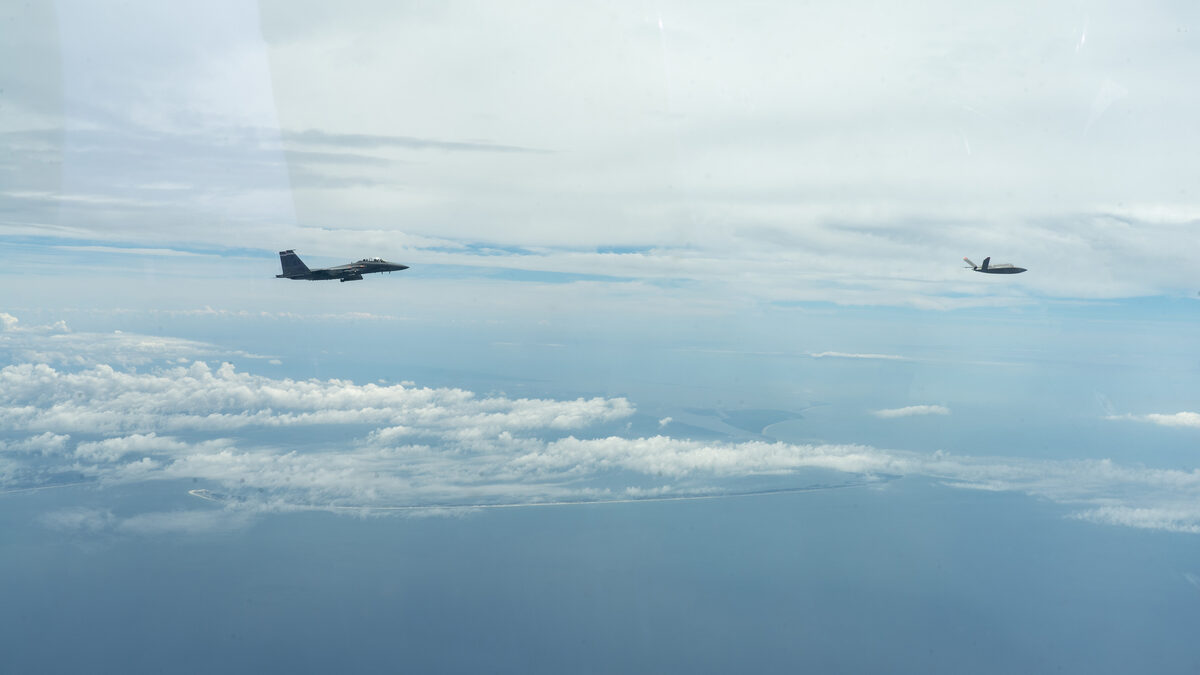
The calculus behind the Airbus-Kratos partnership is straightforward: Europe has a 2029 deadline it cannot meet with clean-sheet development alone. Germany wants a sovereign uncrewed collaborative combat aircraft in Luftwaffe hands before the decade closes. Airbus's answer is not to spend six years designing one — it is to buy an American attritable that already works, wrap it in European mission systems, and ship it while the in-house answer catches up.
That is the logic behind the U740 Valkyrie, unveiled at ILA Berlin on June 10 and running through the 14th. The airframe is a direct derivative of Kratos's XQ-58A — the low-cost, runway-independent drone that has served as the U.S. Air Force's primary CCA testbed for years. Airbus acquired XQ-58As in 2025 to adapt the design for NATO and EU operational requirements, and the result debuted under Airbus livery with a distinctly European nervous system underneath.
MARS, Mindshare, and the Luftwaffe Target
The U740's differentiation from its American parent lives in the mission system stack. Airbus has integrated its MARS — Multiplatform Autonomous Reconfigurable and Secure — architecture into the airframe, with an AI-enabled autonomy component called Mindshare. MARS is designed to be platform-agnostic, meaning the same software spine can theoretically run across multiple airframes in the Airbus portfolio; Mindshare handles the autonomous flight and sensor-processing workload that makes the teaming concept viable in a contested environment.
Operationally, the U740 is aimed at three missions in sequence: operational experimentation, initial air-to-ground strike, and teaming with the Eurofighter. That ordering is deliberate — Germany gets a live system to train tactics and develop doctrine well before a higher-end platform arrives, and Airbus gets a fielded reference customer to iterate the autonomy software against real operational feedback. Airbus describes the Valkyrie's role as supporting operational experimentation, initial air-to-ground capability, and teaming with the Eurofighter. The target date for operational sovereign capability is 2029.
For Kratos, the partnership is a significant commercial milestone. The XQ-58A has accumulated USAF flight hours and credibility as an affordable, attritable airframe, but its export pathway was constrained by the U.S. program's domestic focus. Airbus provides the European defense procurement relationships, the sovereignty narrative, and the mission-system integration that NATO air forces will require — effectively opening a continent-sized export market for an airframe that was already proven.
The Dual Track: U740 Now, Ravenstorm Later
Airbus was explicit at ILA that the U740 is a bridge, not the destination. Alongside it, the company revealed the U760 Ravenstorm — a fully European in-house UCCA concept that is a different class of aircraft entirely.
Where the U740 inherits an attritable-class airframe, Ravenstorm is a purpose-designed stealthy loyal wingman: 13 meters long, 10-meter span, approximately 6 tonnes maximum takeoff weight, and a 500-plus kilogram internal payload — figures that put it squarely in the same weight class as Boeing's MQ-28 Ghost Bat rather than in the light-attritable tier. Low-observable design is baked in from the outset: a top-mounted air intake and internal weapons bays are intended to minimize radar cross-section. The operational concept mirrors the U740's teaming mission at a higher capability tier — the pilot retains command authority while AI handles routine flight operations and sensor processing — but the mission set is substantially broader.
Ravenstorm's assigned roles per Airbus, citing Janes reporting from the show, span "air-to-surface strikes using precision-guided munitions, air-to-air defence with long and medium-range anti-aircraft missiles, and electronic warfare for suppressing enemy air defences." That SEAD/EW tasking is notable — it reflects European air forces' growing recognition that the first hours of a high-end conflict will be fought in a heavily contested electromagnetic environment, and that unmanned platforms are the appropriate vehicle for the most dangerous suppression runs.
Target operational readiness for Ravenstorm is the early 2030s. The implied customer base is the Eurofighter community — Germany, Spain, and the United Kingdom — which gives the platform a natural teaming argument and a built-in constituency among Airbus's existing defense relationships.
The dual-track structure hedges the timeline risk neatly. If Ravenstorm slips — large European defense programs have a well-documented tendency to do so — the Luftwaffe already has a fielded CCA from 2029 to work with. If it hits its schedule, the transition from U740 to Ravenstorm is an upgrade within an established operational concept rather than a cold start on new doctrine.
Kratos's Export Leverage and the Loyal-Wingman Market
The broader ILA Berlin picture for Airbus was one of deliberate portfolio density. The show also saw the reveal of the U680 Bird of Prey drone interceptor — first flight March 2026 after a nine-month development sprint, aimed at massed aerial threats — and the company continued promoting its U145 uncrewed H145 helicopter and the U950 Eurodrone MALE, targeting a first flight in 2029. ILA's collaborative combat aircraft field was crowded, with Helsing among the companies debuting combat-drone concepts at the same show.
For Kratos specifically, the U740 partnership represents a structural shift in the company's export strategy. The XQ-58A's unit economics — low production cost, designed for attrition — translate well to European air forces that need numbers to make teaming concepts work against a peer adversary with deep air defense layering. The USAF's own Collaborative Combat Aircraft program is the pace-setter for how Western air forces think about attritable autonomy. The U740 lets Airbus and Kratos position themselves as the European answer to that same operational problem, with a proven airframe rather than a concept model.
CEO Mike Schoellhorn framed Airbus's posture at the show in terms that left little ambiguity about the company's ambitions across the uncrewed spectrum: "Whatever uncrewed or 'drone' capability our customers need to strengthen sovereign air power, we deliver." The U740-to-Ravenstorm progression is the evidence behind that claim — one borrowed American airframe to hit the near-term date, one clean-sheet European design to own the decade after it.
Sources
- Airbus Newsroom — Airbus showcases Europe's most versatile drone portfolio at ILA Berlin
- Aviation Week — Airbus Unveils Ravenstorm CCA Concept in Berlin
- Janes — ILA 2026: Airbus reveals Ravenstorm loyal wingman UCAV
- The War Zone — Ravenstorm at the Center of Airbus's New Combat Drone Portfolio
- Defence Industry Europe — Airbus showcases broad European drone portfolio at ILA Berlin
