
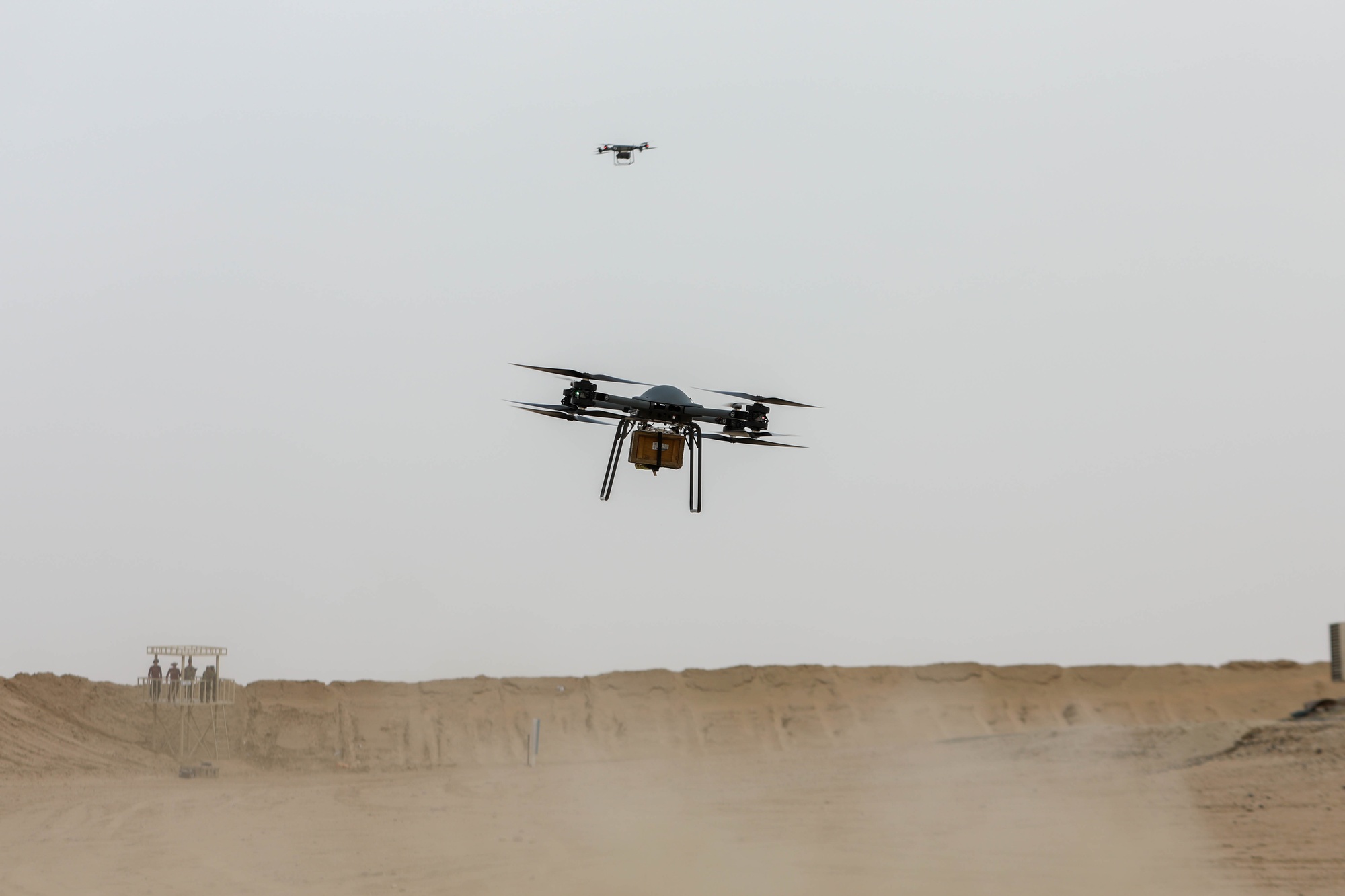
Five years after Kroger grounded one of the grocery industry's most closely watched drone-delivery experiments, the company that ran it is back at the table — and this time the regulatory ground may finally be shifting under its feet.
A Reuters wire report published July 10, 2026, and syndicated across U.S. News & World Report, Investing.com and the American Journal of Transportation, offers a rare inside look at the state of the U.S. drone-delivery industry as it moves from novelty pilots toward an attempt at real commercial scale. The centerpiece of the story is Kroger's on-again talks to revive a grocery-drone service that collapsed in 2021 under the weight of a regulatory constraint the industry has spent years trying to dismantle: the requirement that operators keep drones within a human observer's line of sight.
What Killed Kroger's First Attempt
Engineer Beth Flippo ran Kroger's Ohio grocery-drone pilot starting in 2021. According to Reuters, the program was suspended after just eight months — not because the technology failed, but because the economics did. Federal rules at the time barred drones from flying beyond a human operator's visual line of sight, forcing Kroger to station costly human spotters along delivery routes. As Flippo put it, the arrangement "just couldn't scale."
That single regulatory constraint — visual-line-of-sight, or VLOS — has been the industry's central bottleneck for years, and it's precisely the barrier the Federal Aviation Administration is now working to dismantle. Flippo's company, Dexa, is in active talks with Kroger to bring the drone-delivery service back, per the Reuters report, betting that the regulatory landscape that killed the original program has changed enough to make round two viable.
Wing and Zipline: Two Different Bets on the Same Market
While Kroger weighs a comeback, the two most established players in U.S. drone delivery are already deep into their own scaling campaigns, and Walmart has emerged as the connective tissue between them.
Wing, Alphabet's drone-delivery unit, has been operating for 12 years and counts Walmart as its largest client. The company brought on Heather Rivera as its first chief business officer under a year ago — a hire that signals Wing is treating commercial partnerships and revenue growth as a distinct, dedicated function rather than an adjunct to its engineering operation.
Zipline is Walmart's other major drone-delivery partner alongside Wing. Rather than the two operators splitting the market into separate niches, Walmart's own framing of the business case applies to its drone program as a whole: senior vice president of fulfillment innovation Mike Walden describes the retailer's drone deliveries as serving "last-minute, urgent, convenience-driven" purchases — allergy medication, cat food, the kind of small-basket items that don't justify a car trip but are exactly what a fast aerial drop is built for. It's a proposition built around speed and convenience for small, high-frequency orders rather than displacing bulk grocery runs, and it underscores the same thesis whether the aircraft is Wing's or Zipline's.
The Regulatory Backdrop: Part 108 and BVLOS
The rule that doomed Kroger's first pilot is the same one the FAA is actively trying to rewrite. The agency's rulemaking docket, FAA-2025-1908 — "Normalizing Unmanned Aircraft Systems Beyond Visual Line of Sight Operations," part of the forthcoming Part 108 framework — has drawn more than 900,000 public comments, according to Regulations.gov. A reopened comment period focused on electronic-conspicuity and right-of-way issues closed February 11, 2026, but as of July 2026 a final rule remains pending.
That pending status matters enormously to companies like Kroger and Dexa. Widespread, codified BVLOS authority — rather than the case-by-case waivers operators like Wing and Zipline have relied on to date — would be the regulatory unlock that lets a grocery-drone program eliminate the human-spotter costs that sank the 2021 effort. Until Part 108 is finalized, any relaunch talk is a bet on a rule that hasn't yet been written into law.
The Market Case
The commercial argument for pushing through that regulatory uncertainty is substantial. PwC projects the U.S. drone market will grow 65% a year through 2034, and forecasts global drone deliveries climbing from roughly 13 million this year to more than 800 million annually by 2034 — a more than 60-fold increase in under a decade.
Those numbers explain why Wing is investing in dedicated business-development leadership, why Walmart is leaning on both Wing and Zipline to nail the convenience-delivery use case, and why a company that already tried and shelved a grocery-drone program is willing to revisit it. Reuters' reporting frames all three threads — Wing's Walmart scale, Zipline's role in that same partnership, and Kroger's possible second act — as facets of the same underlying race: figuring out which operating model can turn drone delivery from a subsidized pilot program into a profitable, standing logistics category.
Why It Matters
Kroger's 2021 collapse is the clearest data point the industry has for what happens when drone-delivery economics collide with visual-line-of-sight restrictions: even a well-funded pilot from a Fortune 25 retailer couldn't survive the cost of human spotters. That a company burned by exactly that constraint is now in active talks to try again is itself a signal about where operators think the regulatory winds are blowing — even though the FAA's Part 108 BVLOS rule, the change that would actually fix the underlying economics, has not yet been finalized despite drawing nearly a million public comments. If Part 108 lands roughly as the industry hopes, PwC's 65%-a-year growth forecast becomes a plausible trajectory rather than an aspirational slide-deck number. If it doesn't, Kroger's revival talks — and the broader push by Wing and Zipline toward profitability — will run into the same wall that ended the Ohio pilot in the first place.
Sources
- Inside the U.S. Race for Drone Delivery Dominance — U.S. News & World Report (Reuters)
- Inside the U.S. race for drone delivery dominance — Investing.com
- Inside the U.S. race for drone delivery dominance — American Journal of Transportation
- Normalizing Unmanned Aircraft Systems Beyond Visual Line of Sight Operations — Docket FAA-2025-1908, Regulations.gov
