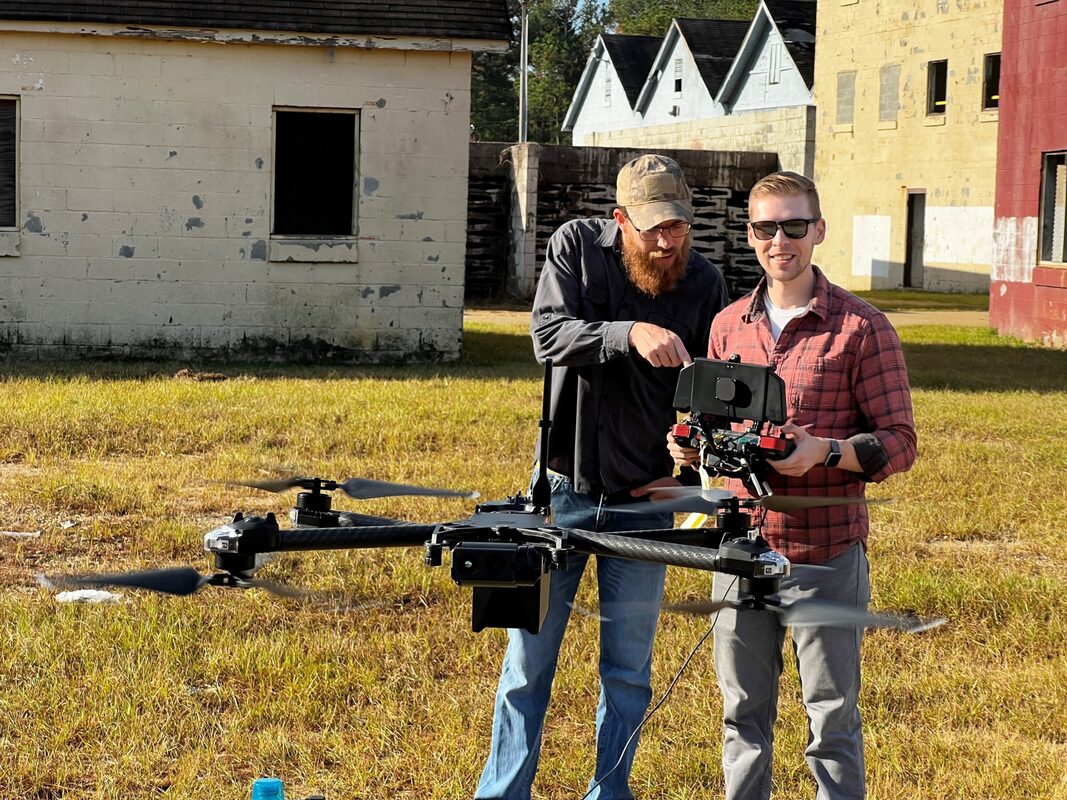
Wing and Walmart said on July 8 that drone delivery has gone live at eight additional Walmart Supercenters across Greater Houston, pushing the metro area's total to 13 active drone "nests" and extending the service to more than 1 million area residents. The expansion is the latest step in a partnership the two companies have been scaling in Texas, and it comes as Wing and Walmart continue working toward a stated goal of reaching 270 U.S. locations and 40 million Americans by 2027.
The eight new hubs are located at Walmart Supercenters on Tomball Parkway, Highway 6 South, New Caney, two locations in Spring, Northwest Freeway, East Freeway, and FM 1960 West, according to reporting from Axios. Combined with the five nests already operating in the region, Houston now has 13 Wing-Walmart drone delivery points.
How the Service Works
Each "nest" functions as a launch and staging site co-located with a Walmart Supercenter, from which Wing's delivery drones pick up packed orders and fly them to customers' homes. DroneLife's coverage of the expansion walked through what the ordering experience looks like in practice: customers within a nest's delivery radius place an order through the Walmart app, Walmart.com, or the Wing app; store staff load the prepared package onto a Wing aircraft; and the drone flies it to the delivery address, hovering above the yard and lowering the package by tether into a small, unobstructed space — about the size of a picnic blanket — rather than landing.
The model is designed to compress delivery windows for smaller, time-sensitive orders — groceries and everyday household essentials — into minutes rather than the hours or a full day typical of ground-based last-mile delivery. Wing says its drones cruise at roughly 150 feet and fly up to 60 mph, with the average delivery reaching a customer in under five minutes. Expanding from 5 to 13 nests in the Houston metro significantly widens the geographic footprint the service can reach, which is how the companies arrive at the figure of over 1 million eligible consumers in the area.
The Regulatory Backbone
Wing's ability to operate a multi-site commercial drone delivery network at this scale rests on its FAA Part 135 Air Carrier Certificate, the same category of authority that governs on-demand commercial air carriers. Wing first received this certification in 2019, according to the FAA's official Part 135 package-delivery page, and it remains the regulatory basis for the company's current Houston-area operations. Part 135 certification allows an operator to conduct commercial carriage of property by aircraft — in this case, small unmanned aircraft — under FAA oversight, distinguishing scaled delivery operations like Wing's from more limited drone flights conducted under other rule sets.
That certification is a prerequisite for the kind of buildout Wing and Walmart are now pursuing: standing up more than a dozen nests in a single metro area, and eventually 270 nationwide, requires a regulatory framework built for repeatable, at-scale commercial air operations rather than one-off demonstration flights.
Scaling Toward 270 Locations
The Houston expansion is explicitly framed by Wing and Walmart as a step toward a larger national target: 270 drone delivery locations serving 40 million Americans by 2027, per Axios's reporting on the announcement. Houston's jump from 5 to 13 nests in one announcement suggests the companies are moving in metro-wide batches rather than adding single sites incrementally, at least in markets where they have already established initial infrastructure and regulatory clearance.
Neither DroneLife nor Axios detailed the specific timeline for further Houston additions or which other metro areas are next in line, but the scale of this single expansion — eight new sites announced simultaneously — indicates the pace at which Wing and Walmart intend to move if they are to hit the 2027 target.
Why It Matters
The Houston expansion is a useful data point for how drone delivery is actually scaling in the United States: not through scattered pilot programs, but through concentrated build-outs in metro areas where the regulatory groundwork and retail partnership already exist. Going from 5 to 13 nests in a single announcement, in a single metro, is a meaningfully different signal than another isolated pilot launch — it points to Wing and Walmart treating Houston as a proof point for the operational playbook they intend to replicate across the 270 locations targeted by 2027.
It also underscores the centrality of Part 135 authority to any operator hoping to compete at this scale. Wing's ability to add eight nests in one metro area in a single move is possible specifically because the underlying air carrier certification already covers the operation — new sites can be added to an existing certificated network rather than requiring fresh regulatory approval for each one. For an industry still working out what commercially viable, at-scale drone delivery looks like, Houston's 13-nest network is one of the clearest real-world examples running today.