The United Kingdom has given a name to its bid for the front rank of autonomous air combat. At the Global Air and Space Chiefs' Conference, Luke Pollard, the Minister of State for Defence Readiness and Industry, christened the Royal Air Force's Collaborative Combat Aircraft (CCA) effort "Storm Fighter" — the umbrella program the RAF is now betting on to make it, in its own framing, "Europe's first sixth-generation air force."
The announcement, delivered alongside Air Chief Marshal Harv Smyth, did more than attach a label to a slide. It pulled together a family of uncrewed systems under a single named program, put a funding figure against it, and set out — with some deliberate ambiguity — a timeline for getting hardware into the air. And it arrived wrapped in a threat message that the Chief of the Air Staff made unmistakable: conditions feel like "a storm is brewing and very much heading our way."
What Was Actually Announced
Strip away the weather metaphor and three concrete things happened.
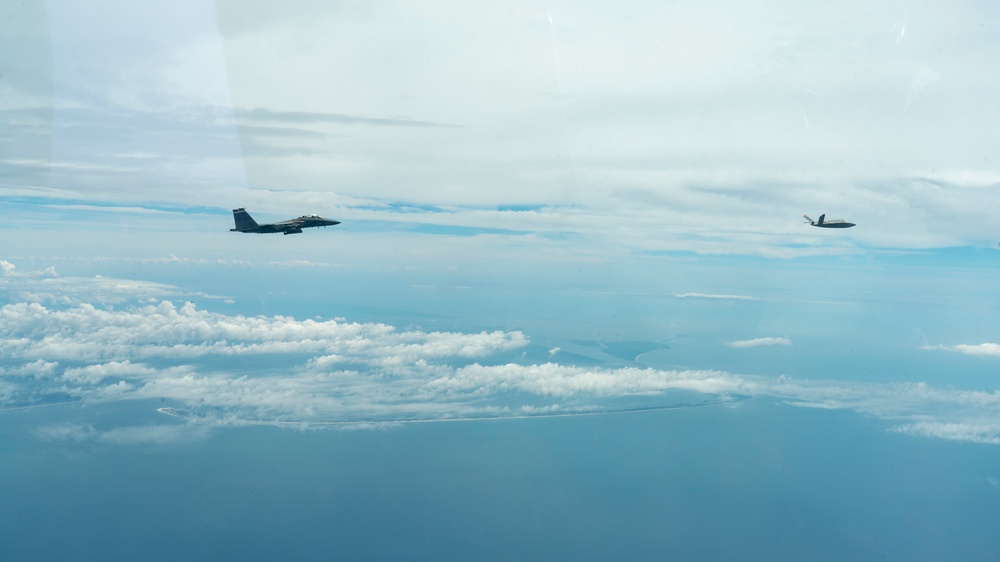
First, the RAF formally launched Storm Fighter as its Collaborative Combat Aircraft effort. Per Janes, the primary source on the launch, the service is positioning the program as the path to becoming Europe's first sixth-generation air force, and as the organizing structure for a new RAF family of uncrewed "wingman" aircraft designed to fly alongside crewed fighters.
Second, two new drone designs were unveiled. "Storm Chrome" is an electronic-warfare platform built to jam enemy radars. "Storm Fire" is a one-way attack drone with a range of roughly 1,000 miles. Both join a system already in service: "StormShroud," an autonomous drone the RAF has been operating since 2025. The naming convention is not subtle — the "Storm" prefix now denotes an entire ecosystem rather than a single airframe.
Third, the money. The UK allocated GBP300M — about $406M — to the effort. That figure sits inside a far larger envelope: a GBP298B, four-year Defence Investment Plan that includes GBP15B in added defense spending.
The Family: Storm Chrome, Storm Fire, StormShroud
Read together, the three named systems sketch a division of labor that mirrors how modern air forces increasingly think about autonomy: not one all-purpose robot fighter, but a spread of cheaper, specialized, expendable-or-attritable platforms that extend a crewed jet's reach and soak up risk.
StormShroud is the one already flying operationally, in service since 2025. Its presence in the announcement matters because it lets the RAF frame Storm Fighter not as a blank-sheet aspiration but as an expansion of a capability it already fields.
Storm Chrome takes on the electronic-warfare role. A platform dedicated to jamming enemy radars is, in practice, an enabler — it degrades an adversary's ability to see and target the crewed aircraft it accompanies, opening lanes for everything behind it.
Storm Fire is the sharp end: a one-way attack drone with a stated range of around 1,000 miles. "One-way" is the operative descriptor — this is an expendable strike system designed to reach out and hit, not to return. Range of that order turns it into a deep-strike option rather than a battlefield loitering munition.
The Timeline: 2030, or 2027 If Smyth Gets His Way
Here is where the announcement gets interesting, because the official documents and the man running the air force are not quite saying the same thing.
The Defence Investment Plan targets a demonstrator flight "at least 2030." That is the on-paper commitment. But Air Chief Marshal Harv Smyth has signaled he wants to move faster — specifically, a demonstration flown from a Eurofighter Typhoon as early as 2027. In other words, the plan sets a floor and the service's leadership is openly pushing to beat it by roughly three years.
That gap is worth watching. A 2027 Typhoon-based demonstration would be a very different proposition from a clean-sheet 2030 demonstrator — it implies wringing early capability out of an existing, in-service crewed platform rather than waiting on a bespoke system to mature. It is the difference between "we intend to build this" and "we intend to fly something soon."
Why the Name, and Why Now
Programs get named for reasons, and the messaging around Storm Fighter was pointed. Forces News confirmed Pollard's reveal of the name and paired it with the Chief of the Air Staff's warning that "a storm is brewing and very much heading our way" — a framing built to convey threat-driven urgency rather than routine modernization. The naming and the ministerial attribution were corroborated across three independent outlets, which is itself a signal of how much the RAF wanted this landing as a headline moment at the conference.
The choice to announce at the Global Air and Space Chiefs' Conference — in front of an audience of allied air commanders — reinforces the intent. Positioning Storm Fighter as the route to "Europe's first sixth-generation air force" is a claim staked as much for allies and adversaries as for the domestic audience footing the bill.
Reading the Money
The GBP300M headline figure deserves context, because on its own it is modest for a sixth-generation ambition. It is best read not as the total cost of fielding autonomous wingmen but as the initial allocation that seeds the effort inside the broader GBP298B Defence Investment Plan. The GBP15B in added defense spending that accompanies the plan is the larger pool from which sustained CCA investment would have to come if the program matures past demonstrators.
That structure — a named program, a seed allocation, a demonstrator target, and an in-service system to point at — is the recognizable shape of a capability the UK wants to signal commitment to without yet writing the very large checks that operational fielding of a full uncrewed fighter family would require.
Why It Matters
Collaborative Combat Aircraft — the idea of pairing crewed fighters with autonomous "loyal wingman" drones — has become the defining thread of next-generation air power, and until now the loudest programs in the space have been American and European multinational efforts. Storm Fighter is the UK planting its own named flag, distinct from those, and doing so with an explicit claim to European primacy in sixth-generation air combat.
The substance behind the branding is a coherent family concept: an electronic-warfare jammer (Storm Chrome), a long-range one-way strike drone (Storm Fire), and an already-fielded autonomous system (StormShroud) to prove the RAF is building on operational experience rather than starting from zero. The tension between the "at least 2030" demonstrator on paper and Smyth's push for a 2027 Typhoon demonstration is the real story to track — it will reveal whether Storm Fighter is a funded, urgent program or an aspirational one dressed for a conference stage. For allies coordinating their own CCA roadmaps, and for adversaries the RAF is pointedly warning, the name now exists. Whether the hardware follows on the accelerated timeline the air force wants, rather than the cautious one the budget documents state, is what the next few years will decide.