
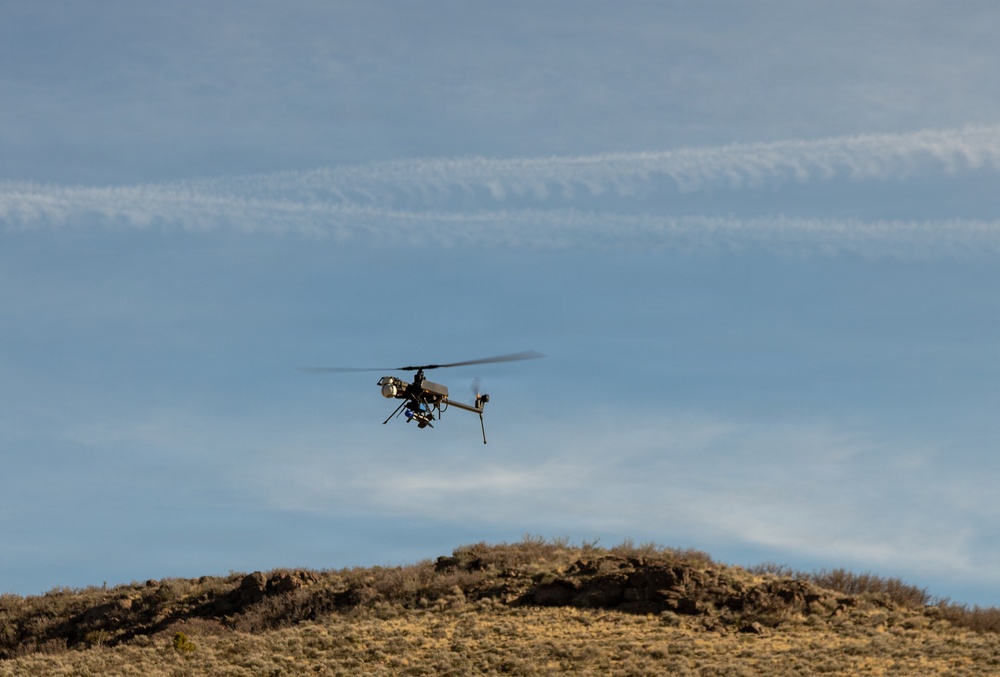
A quadrotor caught by a sudden gust doesn't fail gracefully. It pitches, overshoots, and often crashes before a human pilot — or even a conventional autopilot — can react. A team at the University of Houston's Cullen College of Engineering says it has a fix that doesn't require rewriting how the drone flies at all: a lightweight monitoring layer that watches the vehicle's state in real time and briefly seizes control only when the drone is about to cross into dangerous territory.
The system, developed by Marzia Cescon, the David C. Zimmerman Assistant Professor of Mechanical & Aerospace Engineering at UH, is built around a mathematical tool called a Control Barrier Function (CBF). Rather than replacing a drone's existing flight controller, the CBF-based "safety supervisor" runs alongside it, continuously predicting whether the aircraft's tilt and position are trending toward a crash boundary. When they are, the supervisor intervenes — correcting the trajectory — and then relinquishes control back to the drone's normal task once it's clear of danger.
"You can think of it as an invisible fence that defines where the drone can safely be," Cescon said, describing the boundary the algorithm enforces around the vehicle's operating envelope.
How the Safety Supervisor Works
The core idea behind a Control Barrier Function is prediction, not reaction. Traditional collision-avoidance or stability systems typically respond after a threshold has already been crossed — the drone tips too far, or drifts too close to an obstacle, and only then does the controller push back. A CBF instead evaluates, on a continuous basis, how close the system's current state is to a mathematically defined unsafe region, and computes the minimum control adjustment needed to keep the trajectory inside the safe set before the boundary is ever reached.
That distinction matters for small quadrotors, which are especially vulnerable to fast-onset disturbances like wind gusts. A gust can flip a drone's attitude in a fraction of a second — faster than many control loops can recognize and correct for the deviation once it has already occurred. By continuously monitoring tilt and position and forecasting the trajectory forward, the safety supervisor is designed to catch the drone on the way toward instability rather than after it has already started to tumble.
According to a summary of the work published July 7, 2026 by TechXplore, the supervisor is designed to be minimally invasive: it does not try to fly the drone or optimize its path. It simply monitors, and steps in only long enough to pull the vehicle back inside its safe envelope, then hands control back so the drone can resume whatever task it was performing — a survey pattern, an inspection route, a delivery leg.
Where It Was Built and Tested
The research was conducted at UH's Advanced Learning, Artificial Intelligence and Control laboratory, according to a report from Unmanned Airspace. Two students, Paramjit Singh Kainth and Andoni Urrutia Urcelay, assisted in developing and testing the module, which the researchers say guarantees "run-time assurance" — a formal engineering term describing a system's ability to keep a monitored process within safe bounds during live operation — against disturbances such as wind gusts, while still allowing the drone to complete its assigned task safely.
Photos accompanying the coverage show Cescon and the two students flying drones inside UH's drone lab, and Cescon has said the work "advances the state of the art by showing how CBF-based RTA schemes can be reliably integrated with standard optimal controllers and deployed on real hardware" — indicating the algorithm was exercised on physical quadrotors rather than in simulation alone.
Published Research
The work has been published in the ASME Journal of Dynamic Systems, Measurement, and Control (2026), under the DOI 10.1115/1.4071137, with Mariam Ismail Ali listed among the lead authors alongside Cescon's group. The paper was announced through the ASME Digital Collection, according to Unmanned Airspace's coverage.
Q&A: What Is a Control Barrier Function, and Why Does It Matter for Drones?
What problem is a Control Barrier Function actually solving?
It's a formal method for keeping a dynamical system — in this case, a quadrotor's tilt and position — inside a predefined "safe set" at all times, by computing corrective control inputs before the system state reaches the edge of that set. It's a well-established concept in control theory, applied here specifically to real-time drone stability.
Does this replace the drone's flight controller?
No. Based on the published descriptions, the safety supervisor runs as a monitoring and intervention layer on top of the drone's existing controller. It only takes over when the predicted trajectory is heading toward the crash boundary, and returns control once the drone is safely inside the envelope again.
What kind of disturbances is it meant to handle?
Wind gusts are the disturbance explicitly cited in the research coverage. The "run-time assurance" framing suggests the system is meant to generalize to other real-time destabilizing events, though the wind-gust scenario is what's been reported as tested.
Where does the "invisible fence" name come from?
It's Cescon's own analogy for describing the safe operating boundary the algorithm enforces — the drone is free to fly anywhere inside that boundary, but the moment it approaches the edge, the supervisor pulls it back, much like an invisible pet fence delivers a correction before a dog crosses a property line.
Why It Matters
Small quadrotors are increasingly being pushed into environments where a crash isn't just an inconvenience — inspection flights near infrastructure, low-altitude delivery routes over populated areas, and search-and-rescue operations in gusty, unpredictable conditions all raise the stakes of a single destabilizing gust. Most onboard safety approaches today either constrain flight envelopes conservatively in advance (limiting where and how a drone can fly at all) or react to instability only after it's underway, when the margin for correction is already shrinking.
A run-time assurance layer built on a Control Barrier Function offers a middle path: it doesn't restrict the drone's mission in advance, and it doesn't wait for a problem to fully develop before responding. If the approach proves robust across a wider range of platforms and disturbance types beyond the wind-gust testing reported here, it could become a standard supervisory layer bolted onto existing autopilots — adding a real-time crash-prevention guarantee without requiring operators to redesign how their drones fly. That has particular relevance for regulators and commercial operators weighing beyond-visual-line-of-sight and low-altitude urban operations, where the cost of an uncorrected instability event is measured in more than just a lost airframe.
