
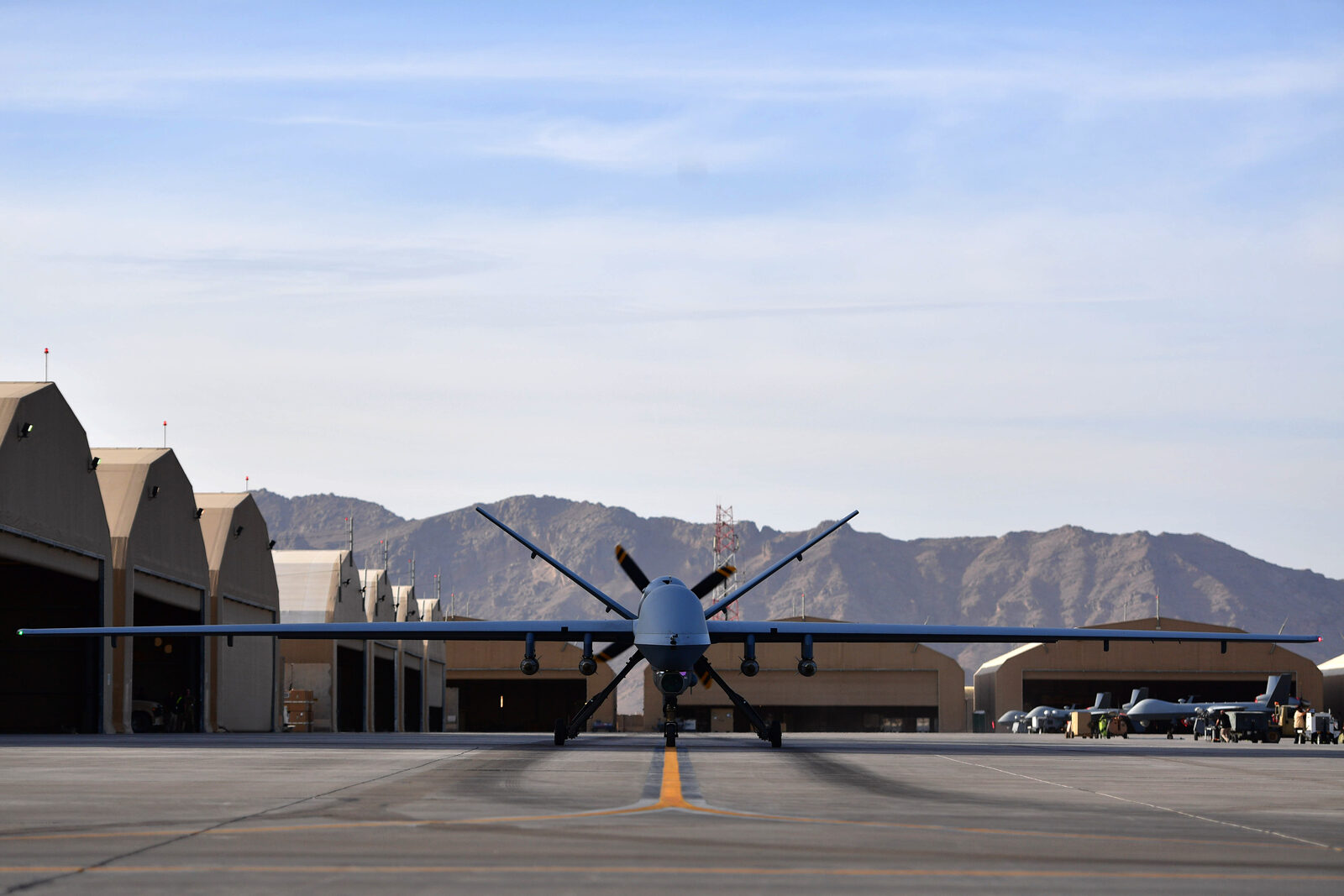
The remotely piloted aircraft has become the signature weapon of 21st-century counterterrorism — used to kill military commanders near international airports, pursue non-state actors across sovereign borders without host-state consent, and sustain lethal campaigns against individuals on executive targeting lists, all while maintaining a technically peacetime legal posture at home. Understanding what armed drone use actually requires under international law means working through three overlapping bodies of rules: the jus ad bellum (when states may use force), international humanitarian law (IHL, governing conduct once conflict exists), and international human rights law (which does not switch off outside declared war zones). Layered on top are specialized regimes — the Missile Technology Control Regime for exports and the UN Convention on Certain Conventional Weapons forum for autonomous systems.
When a State May Legally Strike
The foundational rule is Article 2(4) of the UN Charter, which prohibits "the threat or use of force against the territorial integrity or political independence of any State." Article 51 provides the principal exception: the inherent right of self-defense "if an armed attack occurs." Four words — "if an armed attack occurs" — have generated decades of argument. States in the Global South and the Non-Aligned Movement read Article 51 as permitting self-defense only after an attack has materialized. The United States and several European allies argue for a broader anticipatory right, asserting force may be used against an imminent attack before it is launched.
The argument grows more complicated when the target is a non-state actor operating from a third state's territory. Standard doctrine holds Article 51 is triggered only by attacks attributable to states. To address this gap, the United States developed the "unwilling or unable" doctrine: if a host state cannot or will not suppress a non-state actor, the victim state may act unilaterally. The US explicitly cited it in Article 51 reports to the Security Council during the anti-ISIL campaign in Syria. The frequency with which Article 51 has been invoked since 2021 reflects a pronounced acceleration suggesting the doctrine is being stretched to cover an expanding range of unilateral military actions.
The January 2020 Soleimani strike crystallized these tensions. A US armed drone near Baghdad International Airport killed Iranian General Qassem Soleimani and at least twelve others. The UN Special Rapporteur on extrajudicial, summary, or arbitrary executions found no International Armed Conflict existed at the time, the threat was not imminent (intelligence was "remarkably vague"), and nine persons were killed without individual threat assessments.
"The targeting of General Soleimani...constitutes an arbitrary killing for which...the US is responsible." — UN Special Rapporteur, A/HRC/44/38
The US rejected this finding — a structural disagreement that armed drones have made acutely visible.
IHL: How Force Must Be Used Once Conflict Exists
The ICRC's position is unambiguous on one foundational point: "Armed drones per se are not prohibited by IHL." They possess no inherent features that prevent compliance with humanitarian law and are legally comparable to weapons deployed from manned aircraft. What IHL demands — regardless of delivery platform — is compliance with three core principles.
Distinction requires attacks be directed only at combatants and military objectives. For drone operators, this becomes technically demanding when camera resolution is insufficient to assess a target. The ICRC has specifically flagged this problem with first-person-view (FPV) drones and one-way attack munitions, noting that low-resolution cameras can make it difficult for operators to distinguish lawful from unlawful targets and that poor image quality compromises proportionality assessments. Proportionality prohibits attacks when expected civilian harm would be "excessive in relation to the concrete and direct military advantage" anticipated — a contextual judgment the ICRC argues cannot be delegated to automated systems. Precautions require all feasible steps to minimize civilian harm through choices of timing, location, and method.
Accountability under IHL is categorical: distance from the battlefield does not diminish legal obligations. The ICRC holds that IHL does not apply in the territory of a non-belligerent state — preventing treatment of "the whole world" as a battlefield. The US asserts IHL governs hostilities against al-Qaeda, the Taliban, and associated forces globally; international lawyers disagree sharply about whether this is sustainable.
MTCR Erosion and the Autonomy Horizon
Proliferation of armed drone systems is governed — imperfectly — by the Missile Technology Control Regime (MTCR), a voluntary arrangement established in 1987. Category I covers systems capable of delivering at least a 500-kilogram payload to 300 kilometers or more, including capable UAS, and carries a strong presumption of denial for exports. In July 2020, the Trump administration reinterpreted MTCR to shift drones flying below 800 kilometers per hour — Predator, Reaper, Global Hawk — from Category I to the more permissive Category II. Arms Control Association board member Rachel Stohl warned the move "undermines a global regime, allows others to ignore international restraints, and focuses on economic benefits over U.S. national security, foreign policy and human rights concerns." A second round of relaxation in September 2025 tied a further reinterpretation to enabling a $142 billion Saudi arms package including over 100 MQ-9 drones. The reinterpretation notably did not apply to Ukraine, where the U.S. has withheld large drone sales to prevent advanced technology from falling into enemy hands — an acknowledgment that technology-control logic operates situationally even as the formal regime weakens.
The hardest legal problem ahead is not remotely piloted systems but systems that select and engage targets without human intervention. International discussion of lethal autonomous weapons systems (LAWS) has proceeded through the UN CCW Group of Governmental Experts since 2016. By September 2025, 40 states had delivered a joint statement calling for negotiations of a binding instrument; UN Secretary-General António Guterres and the ICRC president have called for binding rules by 2026. Progress has been stymied by procedural obstruction — Russia "has employed procedural tactics to delay discussions and reject progressive proposals" — and by the reluctance of states actively developing autonomous systems to accept binding constraints.
The accountability gap autonomous systems create is distinct from remotely piloted ones. With a human operator, there is always a person at the end of the targeting chain who can be held legally responsible. With a fully autonomous system, the decision is made by an algorithm, and neither programmer, commander, nor manufacturer may have determined in advance whom it would kill. The ICRC's 2024 position paper proposed a two-tier approach: outright prohibition of systems that violate IHL by design, and strict regulation emphasizing "understandability, predictability, and spatial-temporal limits" for systems whose compliance is uncertain. Neither goal is close to realization — a pattern consistent with the broader legal architecture surrounding armed drones, which provides demanding tests but limited enforcement.
Sources
- ICRC — FAQ: International humanitarian law and the use of drones in armed conflict
- ICRC — Ensuring the use of drones in accordance with international law
- ICRC Case Study — Iran, The Targeted Killing of General Soleimani
- UN Special Rapporteur, A/HRC/44/38 — Use of armed drones for targeted killings
- ICRC — Autonomous weapon systems: Is it morally acceptable for a machine to make life and death decisions?
- ICRC — Autonomous weapons policy page
- Arms Control Association — Geopolitics and the Regulation of Autonomous Weapons Systems
- Arms Control Association — U.S. Reinterprets MTCR Rules (2020)
- Arms Control Association — U.S. Reinterprets MTCR Rules to Fast Track Drone Sales (2025)
- CSIS Aerospace Security — Missile Technology Control Regime Reform: Key Changes and Next Steps
- UNODA — UN CCW GGE on LAWS 2025 session
- ICRC — Direct participation in hostilities
- Congressional Research Service — Armed Drones: Evolution as a Counterterrorism Tool (IF12342)
