
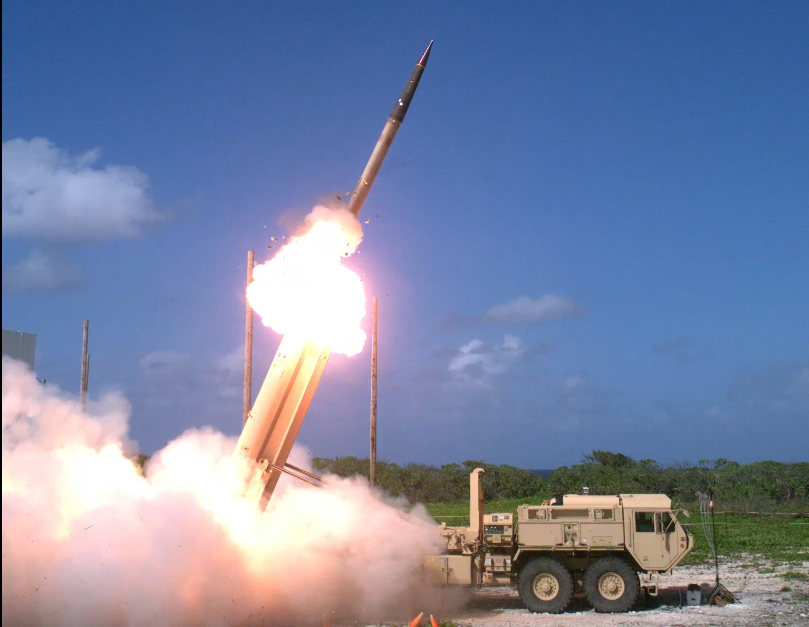
On January 27, 2025, President Trump signed Executive Order 14186 — originally titled "The Iron Dome for America," renamed Golden Dome by May 2025 — ordering the Department of Defense to field a "next generation missile shield" for the U.S. homeland. The comparison to Israel's short-range rocket intercept system is mostly cosmetic. EO 14186 directs active defense against ballistic missiles, hypersonic glide vehicles, advanced cruise missiles, and "other next-generation aerial attacks" — language that explicitly covers the drone swarms already probing U.S. military installations, a dimension the public debate has largely ignored.
Why Now: The Threat Calculus
Prior U.S. policy relied on nuclear deterrence to dissuade peer adversaries from striking the homeland. EO 14186 attempts to add active defense on top of that posture — a significant policy shift. The threat environment cited by the administration explains the logic: North Korea is projected to possess 50 ICBMs by 2035; China holds approximately 460 ICBMs and 300 silos and has demonstrated fractional orbital bombardment, approaching from the south to evade north-facing ground-based radars; Russia deploys 330 ICBMs and 192 submarine-launched ballistic missiles. Against that backdrop, the existing Ground-Based Midcourse Defense — 44 interceptors at Fort Greely and Vandenberg — is a deterrence supplement, not a shield.
Architecture: Layers, Phases, and the SBI Centerpiece
A ballistic missile's flight breaks into three phases: boost (the first three to five minutes of powered ascent), midcourse (the long ballistic arc), and terminal (reentry toward the target). The CBO's notional Golden Dome architecture specifies a layered response across all three: 35 regional terminal sites equipped with THAAD, SM-6, and Patriot; four U.S. sites with SM-3 Block IIA for late-midcourse intercept; three expanded GMD sites with 60 interceptors each; and a Hypersonic and Ballistic Tracking Space Sensor constellation — the HBTSS, operational in initial form since 2024 — estimated at approximately $90 billion for development and maintenance.
All of that is secondary in cost and controversy to the program's centerpiece: space-based interceptors in low Earth orbit, designed to kill missiles during boost phase before they can dispense decoys or maneuvering reentry vehicles. The SBI concept is a modernized descendant of Reagan-era "Brilliant Pebbles" — autonomous kill vehicles networked via peer-to-peer links and AI coordination — now considered feasible given $500/kg launch costs and advanced manufacturing. The physics are not in dispute. Whether the economics work is another matter.
"I firmly believe that the technology that we need to deliver Golden Dome exists today. … I believe we have proven every element of the physics, that we can make it work." … "What we have not proven is, first, can I do it economically, and then second, can I do it at scale?" — Gen. Michael A. Guetlein, Vice Chief of Space Operations and Golden Dome program manager
The $1.2 Trillion Gap and What It Buys
Trump's May 2025 announcement put the price at $175 billion, completable in three years. The Pentagon's internal figure is approximately $185 billion over ten years. The CBO, publishing its formal analysis in May 2026, arrived at $1.2 trillion over 20 years. Todd Harrison of the American Enterprise Institute projects a range of $250 billion to $3.6 trillion depending on architecture choices, with space-based interceptors as the swing variable. "Trump constrained the cost, the schedule and the performance in a way that does not close," Harrison told National Defense Magazine.
The arithmetic is stark. The CBO architecture requires approximately 7,800 SBI satellites at 300–500 km, where atmospheric drag imposes a five-year service life — roughly 1,600 replacements per year, 30,000 units over 20 years. At $22 million each, the SBI layer runs to approximately $743 billion — 70% of acquisition costs. Launch at $500/kg accounts for less than 5% of that; manufacturing volume and on-orbit operations drive the bill. What $743 billion buys is simultaneous intercept of up to 10 ICBMs in boost phase. The CBO notes the constellation "would be overwhelmed by a full-scale attack mounted by a peer or near-peer adversary." Guetlein has acknowledged the constraint: "If boost-phase intercept from space is not affordable and scalable, we will not produce it because we have other options."
Program Status: Contracts, Delays, and the Counter-UAS Gap
The Senate confirmed Guetlein as Golden Dome's direct reporting program manager on July 17, 2025, granting him sweeping budget, acquisition, and architectural authorities from Deputy Secretary Feinberg, with 60 days to develop an objective architecture. Congress provided an initial $24.4 billion through the reconciliation law and the Pentagon has requested $17.9 billion for FY2027.
The industrial base is moving. The Space Force awarded OTA agreements worth up to $3.2 billion to 12 companies — including Anduril, Lockheed Martin, Northrop Grumman, Raytheon, SpaceX, and True Anomaly — for SBI prototype demonstration by 2028. The Missile Defense Agency released a solicitation for SHIELD (Scalable Homeland Innovative Enterprise Layered Defense), a $151 billion 10-year IDIQ. Lockheed Martin is opening a dedicated Next Generation Interceptor production facility, with initial NGI fielding targeted for 2028. The Army separately awarded Lockheed a $9.8 billion contract for 1,970 PAC-3 interceptors.
Despite the contract activity, National Defense Magazine characterized the program as "spinning its wheels" as of April 2026, citing disagreements between OMB and the program office and an industry executive's blunt assessment: "Those agencies that are going to acquire haven't acquired yet." As of mid-December 2025, the reference architecture had not been publicly released. Guetlein's stated first priority is C2: "First and foremost is getting out of the gate on C2."
The counter-UAS dimension of Golden Dome sits in an uncomfortable middle ground. EO 14186 explicitly covers cruise missiles and "other next-generation aerial attacks" — a formulation that includes the low, slow, commercially derived threats that terminal missile defense handles poorly. The Barksdale incident illustrates the gap: multiple waves of 12 to 15 drones with non-commercial signal characteristics, long-range control links, and jamming resistance operated over an Air Force Global Strike Command base for nearly a week in March 2026. A swarm of jam-resistant small UAS at low altitude is a fundamentally different engagement problem from a boost-phase ICBM, one that THAAD and Patriot address only partially and at extreme cost-per-shot.
The strategic paradox is that Golden Dome's costliest component addresses the threat it can least afford to oversell. A $743 billion SBI constellation that defeats 10 missiles simultaneously is a rogue-state deterrent dressed in peer-competitor rhetoric. Cheaper surface-based layers could solve the North Korea problem without orbital ASAT vulnerability. Whether political will outlasts a single administration will determine if $24.4 billion is a down payment or the program's most expensive feasibility study.
Sources
- DefenseScoop — Golden Dome CBO cost estimate missile defense architecture
- Air & Space Forces Magazine — Golden Dome could cost $1.2 trillion over 20 years, CBO says
- The War Zone — 7,800 interceptors in space at core of $1.2 trillion Golden Dome cost estimate
- National Defense Magazine — Pentagon's flagship Golden Dome missile defense program spinning its wheels
- Aerospace America (AIAA) — Golden Dome headlines the year's developments in missile defense
- Atlantic Council — Golden Dome: is the missile defense the U.S. needs?
- Space.com — Space Force's Golden Dome chief says space-based missile interceptors are possible today
- Air & Space Forces Magazine — Guetlein: first priority for Golden Dome is C2
- DefenseScoop — Golden Dome space-based interceptor missile defense contractors
- Army Recognition — U.S. invests $17.9 billion in Golden Dome air and missile defense system
- EveryCRSReport — CRS Defense Primer IF13115: Missile Defense
- Newsweek — Barksdale drones, B-52 nuclear bombers, defense, Golden Dome
- Congressional Research Service — Defense Primer: The Golden Dome for America (IF13115)