
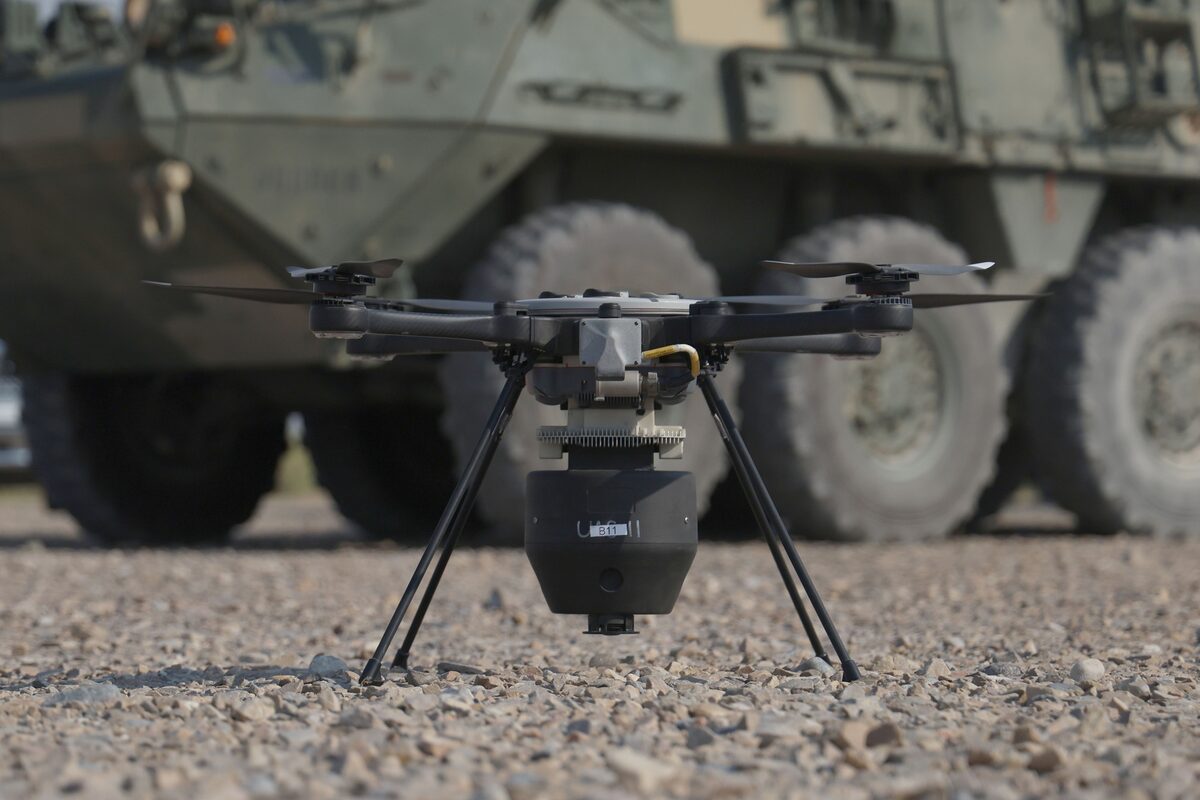
The Federal Communications Commission has cleared the way for a multi-year, nationwide experiment that will put commercial wireless networks to work in the air. In Order DA 26-972, issued and effective September 11, 2026, the Wireless Telecommunications Bureau and the Office of Engineering and Technology temporarily waived aeronautical-mobile restrictions so that participants in the Department of Transportation's Mobile Network Aviation Assessment Program (MNAAP), and the mobile broadband providers serving them, can transmit from airborne devices. MNAAP is a proof-of-concept designed to find out how well commercial networks perform for aircraft, crewed and uncrewed alike.
The order was issued in GN Docket No. 26-74, which carries the heading "Unleashing American Drone Dominance." It is signed by the Chief of the Wireless Telecommunications Bureau and the Chief of the Office of Engineering and Technology, and it grants the waiver on their own motion under 47 CFR 1.3 and 1.925. The waiver runs until October 1, 2029.
Rather than walk through the order in the sequence it was written, here is the practical shape of it as a set of questions.
What is MNAAP, exactly?
According to the order, MNAAP is a DOT testing and proof-of-concept program. Its job is to test whether commercial wireless networks, satellite direct-to-device services and sidelink can support aviation-based safety services: electronic conspicuity, Remote ID, counter-UAS detection and identification, UAS command and control, and autonomous detect-and-avoid. Testing is expected to run through September 30, 2029.
Converge Digest describes the program as measuring wireless signal quality at different locations and altitudes across the contiguous United States. Its technology list matches the order: commercial cellular, satellite direct-to-device and sidelink.
Who and what gets to transmit?
The order sets two participant categories, each with a hard ceiling on simultaneous use.
- General aviation pilots: Up to 2,000 GA pilots at one time, authorized by DOT, can run the "MNAAP App" on standard, commercially available smartphones and other wireless devices.
- UAS: Up to 200 UAS at one time can carry the "MNAAP Module," operated by up to 200 non-federal participants authorized by DOT. The module must be approved under the FCC's equipment authorization process and by the nationwide mobile broadband providers through their equipment certification programs.
Data from both streams goes to a centralized, DOT-managed database. The order also sets operating limits, which DroneLife likewise reports: the app functions only for DOT-authorized participants and may send data no more than once every two seconds. The modules are non-transferable and must be decommissioned when the waiver term ends.
Which spectrum is involved?
The published band lists differ in length. DroneLife names 600 MHz, 700 MHz, FirstNet Band 14, 800 MHz cellular, AWS, PCS and CBRS. Converge Digest's list is broader: 600 MHz, 700 MHz, FirstNet Band 14, 800 MHz cellular, AWS, PCS, WCS, BRS, 3.45 GHz, CBRS, 3.7 GHz and several millimeter-wave bands. The order itself is the controlling document, and its table is the fullest of the three. It lists 18 entries, including AWS-1, AWS-3, the AWS H Block and AWS-4, plus the 24 GHz, 28 GHz, 37 GHz and 47 GHz millimeter-wave bands. The order also notes that the list covers every band on which the app and module may operate, including bands that do not require a waiver.
Operations are confined to the National Airspace System within the contiguous United States, and the order says transmissions may not cause interference to wireless networks. Converge Digest reports the same conditions. That condition matters because the program relies on airborne devices transmitting on spectrum licensed to terrestrial carriers and public-safety users, including FirstNet.
What the waiver does not do
DroneLife quotes the boundary plainly: "The waiver does not authorize general airborne cellular use." The relief covers DOT's program, its approved participants and its authorized equipment, for the period stated. The waiver expires at 12:00 am ET on October 1, 2029.
Why It Matters
The technologies MNAAP will evaluate map directly onto core needs in integrating UAS into the airspace. Remote ID, command and control, and detect-and-avoid all depend on data links. Counter-UAS detection and identification depends on knowing what is flying. Electronic conspicuity, which DOT's white paper describes as being detectable by other aircraft or by air traffic control, ties the manned and unmanned sides together.
The order itself frames the stakes. It cites a November 2024 electronic conspicuity white paper by DOT senior scientist Christopher Nassif, which says unmanned aircraft are set to vastly outnumber manned aircraft, and that the increase could affect aviation safety and security as well as people and property on the ground. If that expectation holds, it is reasonable to ask whether commercial networks, with existing towers, spectrum and handset ecosystems, can help carry the load. That is an inference on our part, not a finding of the order. What the order does say is that MNAAP will gather data on the service quality of commercial networks at various altitudes and locations, and that the data will help inform federal agency evaluations of how critical aviation safety applications may rely on those networks.
There is also a regulatory angle. The order states that the FCC is a participating agency in MNAAP and intends to draw lessons from the program's results to enable greater commercialization and utilization of spectrum for UAS. In other words, the FCC says it plans to use what the program learns, not leave it in a DOT archive. The order does not say which specific rules the results might affect.
The scale is deliberately limited. The order describes the app's 2,000-pilot ceiling as a way to gather data from a wide variety of sources and locations, and finds that a limited number of participants spread across the contiguous United States is unlikely to pose a significant or widespread risk of harmful interference to terrestrial networks. The two-second reporting cap on the app, the equipment authorization requirement on the modules and the decommissioning mandate all point to a controlled experiment, not a soft launch of a service.
What to watch
Three things will determine whether MNAAP delivers useful answers. First is participation: the ceilings are maximums, and how many pilots and UAS operators DOT actually authorizes will shape the coverage map. Second is interference: the order conditions the waiver on not causing interference to wireless networks, and DOT can remotely disable the app for a participant who fails to meet the waiver's conditions. Third is what happens at the end of the window. The waiver expires October 1, 2029, testing is expected to conclude September 30, 2029, and the modules must be decommissioned. The order is a temporary waiver, so any move from measurement to permanent operating rules would require separate FCC action.
The FCC has also published a news page for the order. That page returned an access error when we tried to retrieve it, so the facts in this report come from the order text and the trade coverage listed below, not from the FCC's summary.
Sources
- Order DA 26-972: Waiver of Aeronautical Mobile Restrictions to Enable Mobile Network Aviation Assessment Program (MNAAP) | FCC (Sept. 11, 2026)
- FCC Clears Nationwide Test of Cellular Networks for Drone Safety | DroneLife (Sept. 15, 2026)
- FCC Waives Airborne Cellular Restrictions for Drone Tests | Converge Digest
- FCC Waiver Supports DOT Program to Test Drone Use of Mobile Networks | FCC (news page for the same order)