
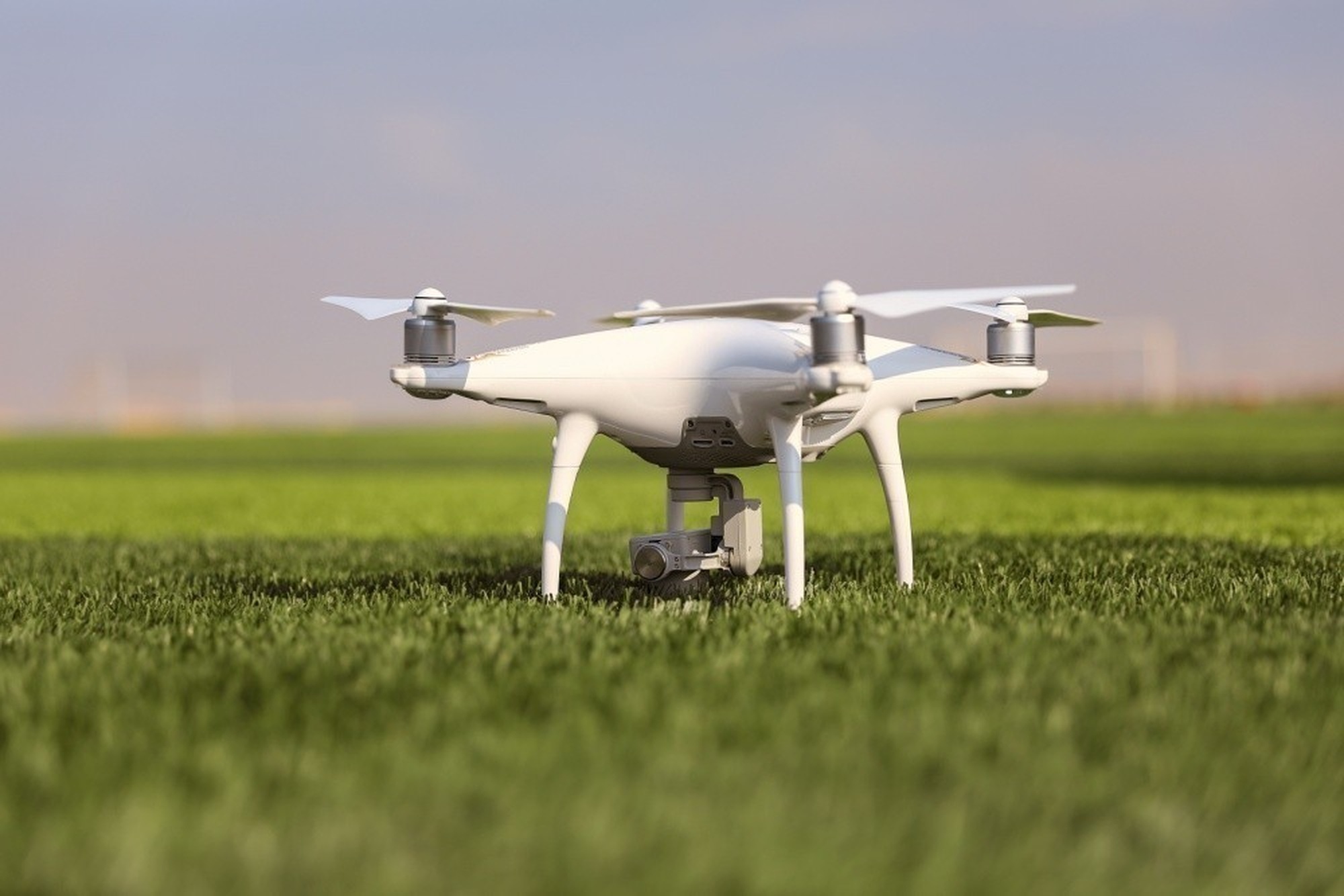
Since March 2024, flying most drones in U.S. airspace without broadcasting Remote ID has been a fully enforceable violation of federal aviation regulations. The rule behind that requirement, formally titled "Remote Identification of Unmanned Aircraft," has been in the works since the FAA's December 2019 proposal, but confusion over what it actually requires — and who it applies to — persists among hobbyists and commercial operators alike. Here is what the rule says, straight from the Federal Register.
The FAA published the final rule in the Federal Register on January 15, 2021 (Vol. 86, No. 10, p. 4390), adding a new 14 CFR Part 89 and amending parts 1, 11, 47, 48, 91, and 107. The rule's stated purpose is direct: "The remote identification of unmanned aircraft in the airspace of the United States will address safety, national security, and law enforcement concerns regarding the further integration of these aircraft into the airspace of the United States."
What Remote ID Actually Is
The FAA describes Remote ID in the rule text as "a digital license plate" for unmanned aircraft systems (UAS). Functionally, it's the capability of a drone in flight to broadcast identification, location, and performance information that people on the ground and other airspace users can receive — without those receivers needing to be connected to the internet or any central network.
That last point matters. The original December 31, 2019 proposal (NPRM) included a network-based Remote ID concept, where identification data would be relayed over the internet to FAA-approved third-party service suppliers. That proposal drew roughly 53,000 public comments, and the FAA said the pushback reflected "public opposition to, and technical challenges with, implementing the network requirements." The agency dropped the network component entirely in the final rule, settling on a broadcast-only architecture: drones (or add-on modules) transmit identification data directly over radio frequency to anyone nearby with a receiver, no internet connection required.
Three Ways to Comply
Part 89 gives operators exactly three paths to compliance, and the rule spells out the required data elements for each in detail.
1. Standard Remote ID unmanned aircraft. The drone itself broadcasts message elements directly, continuously, from takeoff to shutdown. The required elements are: a unique identifier (either a serial number assigned under the ANSI/CTA-2063-A standard, or a session ID as a privacy alternative); the aircraft's latitude, longitude, and geometric altitude; an indication of velocity; the control station's latitude, longitude, and geometric altitude; a time mark; and an emergency status indication.
2. Remote ID Broadcast Module. This is a separate add-on device (or a built-in feature retrofitted to an existing aircraft) for drones that weren't manufactured with standard Remote ID built in. It broadcasts a narrower set of data: the module's own serial number (assigned by its producer), the aircraft's latitude, longitude, geometric altitude, and velocity, the latitude/longitude/altitude of the takeoff location, and a time mark. Notably, a broadcast module reports the takeoff point as a fixed reference rather than tracking the control station's live position.
3. FAA-Recognized Identification Area (FRIA). Operators can also fly a drone with no Remote ID equipment at all inside a designated FRIA, provided they keep the aircraft within visual line of sight at all times. Only FAA-recognized community-based organizations and certain educational institutions — primary and secondary schools, trade schools, colleges, and universities — are eligible to apply for FRIA status. The FAA began accepting FRIA applications on September 16, 2022.
Who Has to Comply
The requirement applies regardless of whether a drone is flown recreationally or commercially, and it applies to any drone that is required to be registered with the FAA. The underlying registration framework traces back to the FAA's 2016 "Operation and Certification of Small Unmanned Aircraft Systems" rule (14 CFR Part 107), which defined "small UAS" as aircraft weighing less than 55 pounds and established registration under Part 48.
There is a narrow carve-out at the very small end of the weight scale: the rule excepts unmanned aircraft weighing 0.55 pounds (250 grams) or less on takeoff from Part 89's design and production requirements (14 CFR 89.501(c)(3)), and the FAA's registration rules similarly exempt aircraft at or under that weight when flown exclusively under the recreational exception in 49 U.S.C. 44809. Because Remote ID applies only to aircraft that are registered or required to be registered, such an aircraft can be flown recreationally without it — though flying the same airframe commercially under Part 107 still requires registration, and therefore Remote ID, regardless of weight.
Key Dates
The rule as a whole took effect March 16, 2021, with one exception: the amendatory instruction adding subpart C to Part 89 became effective September 16, 2022. That created a staggered compliance timeline:
- Producers of Remote ID broadcast modules had to comply with subpart F of Part 89 by March 16, 2021.
- Producers of standard Remote ID unmanned aircraft had to comply by September 16, 2022.
- Operators — the people actually flying — had to comply with the operational rules in subpart B of Part 89 by September 16, 2023.
The rule states plainly: no unmanned aircraft could be produced for operation in U.S. airspace after September 16, 2022, and none could be operated in U.S. airspace after September 16, 2023, without complying through one of the three paths above.
In practice, the FAA gave operators extra runway. In a September 2023 enforcement policy notice, it said it would exercise enforcement discretion for operator non-compliance from the September 16, 2023 deadline through March 16, 2024, citing "unanticipated issues with the available supply and excessive cost" of Remote ID broadcast modules along with delays in approving FRIAs. After March 16, 2024, that discretionary window closed. Non-compliant operators now risk fines and suspension or revocation of their drone pilot certificates, according to FAA statements reported by industry press.
Remote ID vs. a Transponder
Remote ID is often confused with ADS-B, the transponder-based system manned aircraft use. They are not the same thing, and the FAA rule is explicit that they shouldn't be conflated: Part 89 "prohibits use of ADS-B Out and transponders for UAS operations under 14 CFR part 107 unless otherwise authorized by the FAA," a prohibition operators had to comply with as of March 16, 2021. The FAA's rationale is technical — it was concerned that a proliferation of ADS-B Out transmitters on the huge and growing population of small drones could saturate the limited ADS-B frequency spectrum and potentially "blind" ADS-B ground receivers that manned aviation depends on for separation. Remote ID uses different broadcast protocols (such as Bluetooth or Wi-Fi) built for short-range, drone-specific identification rather than the long-range surveillance role ADS-B plays for crewed aircraft.
Why It Matters
Remote ID is the regulatory backbone the FAA is counting on to scale up drone integration in the national airspace without a corresponding explosion in near-miss and security incidents. Before Part 89, a drone operator flying carelessly — or maliciously, near an airport, a stadium, or a wildfire response — was effectively anonymous to anyone on the ground or in the air unless caught in the act. Remote ID changes that calculus: law enforcement and, eventually, other airspace users can identify and locate a broadcasting aircraft in real time, which the FAA frames as foundational to both public safety and any future rulemaking on beyond-visual-line-of-sight operations, package delivery, and shared airspace with air taxis. It's also a compliance line that's easy to cross unknowingly — recreational fliers who bought a drone years ago, before broadcast modules were common, are just as bound by the September 2023 operator deadline as commercial Part 107 operators, and ignorance of the rule is not a defense once discretionary enforcement ended in March 2024. For anyone operating a registered drone today, Remote ID is not optional paperwork; it's an equipment and behavior requirement enforced the same way any other FAA regulation is enforced, with certificate action on the table.
The FAA also estimated the rule would cost far less than originally projected: about $227.1 million in net present value over ten years at a 3% discount rate (roughly $26.6 million annualized), down about 60% from the $582 million estimated at the proposal stage — a reduction largely attributable to dropping the network-based Remote ID requirement in favor of the simpler broadcast-only design.
Sources
- Remote Identification of Unmanned Aircraft — Federal Register Final Rule (86 FR 4390)
- Enforcement Policy Regarding Operator Compliance Deadline for Remote Identification of Unmanned Aircraft Systems — Federal Register
- Remote Identification of Drones — Federal Aviation Administration
- Remote Identification of Drones — Federal Aviation Administration
- US drone operators face suspension if not compliant with FAA Remote ID requirement — Unmanned Airspace
