
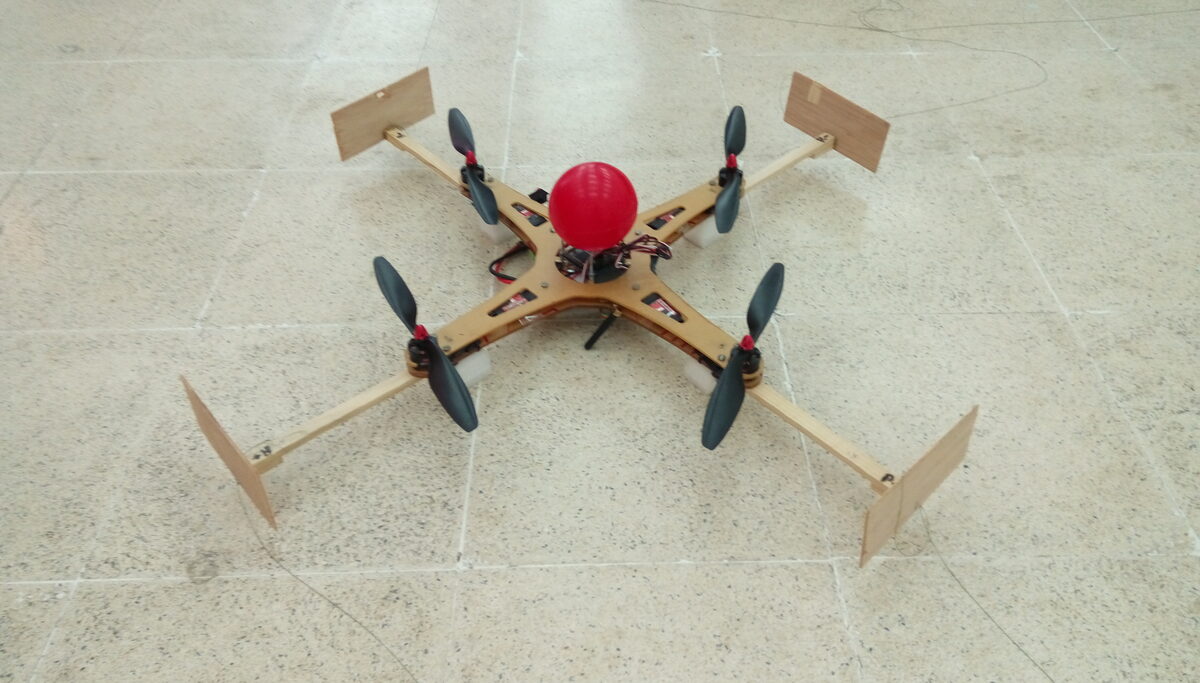
Ten minutes is not long. For a cheap, expendable drone flying into airspace where satellite navigation signals are being jammed or spoofed, though, ten minutes can decide whether the aircraft finishes its job or becomes a stray piece of hardware. That gap is what the European Space Agency is now paying a Norwegian drone maker to close.
On Oct. 27, at a signing ceremony at Spaceport Norway in Oslo, ESA signed three contracts with Norwegian companies under its Navigation Innovation and Support Programme (NAVISP). The work follows a call for projects funded by the Norwegian Space Agency. The three projects cover GNSS interference simulation, resilient maritime navigation, and resilient drone and UAV operations. The drone contract went to Rift Dynamics of Sandnes, Norway, the company behind the Wåsp FPV+.
What Rift Dynamics Is Being Asked to Do
According to ESA's announcement, the project aims at 10 minutes of reliable operation in GNSS-denied conditions for low-cost, expendable UAVs, with a robust recovery when GNSS becomes available again. Comrod is the subcontractor, and the system will go through jamming and spoofing trials in the Arctic. DroneXL's reporting covers the same ground.
Most of what an engineer would want to know is still missing. According to DroneXL, ESA did not say what any of the three contracts are worth, gave no test schedule, and did not describe the navigation method Rift will use or which aircraft will carry it. That matters, because "10 minutes without GPS" could mean very different things in practice. A tactical-grade inertial unit with visual odometry, a terrain-matching scheme and a cheap sensor fused with clever filtering would each cost different amounts and fail in different ways. The cost of the solution also matters a great deal when the drone is meant to be thrown away.
The time-boxed target is still telling. Ten minutes does not promise fully GNSS-independent flight. It reads as a spec for getting through a contested stretch and regaining normal navigation once the signal returns. The scope looks deliberately modest, and that makes it more believable than open-ended claims about navigation that does not depend on GPS.
The Ondas Connection
The Rift contract also matters to a US buyer. Ondas Holdings, through its subsidiary American Robotics, holds exclusive US distribution rights for the Wåsp. In an Oct. 13, 2025 release, Ondas described American Robotics as prime contractor and exclusive US distributor of the Rift Wåsp. It also announced an integrated Nammo warhead to produce what it called a turnkey, NDAA-compliant attritable drone system. The release describes the Norwegian Army as an existing customer in Europe, with other NATO militaries in ongoing evaluations, and it quotes Ondas CEO Eric Brock.
DroneXL notes that Ondas placed an initial order for 500 Wåsp systems on Oct. 2, 2025, before the Nammo announcement on Oct. 13. Neither release mentions GNSS or jamming, and the 2025 Ondas release says nothing about navigation resilience. The ESA work is new capability development.
Ondas is scheduled to report third-quarter results on Nov. 12, per DroneXL.
The Other Two Contracts
The drone project is one of three. ESA's announcement and DroneXL describe the other two:
- Testnor of Tromsø will build a Signal Data Library from recordings made at Jammertest, Norway's annual open-air GNSS interference exercise, which ESA describes as the world's largest event of its kind. Real recorded interference data is hard to come by, and developers of resilient receivers and navigation systems need it to test their designs against real conditions instead of synthetic ones.
- Norse Navigation of Trondheim is developing maritime positioning sensors that use Galileo's Open Service Navigation Message Authentication (OSNMA), along with jamming and spoofing detection, for merchant vessels and professional maritime users.
Together the contracts cover a broad chain: recorded interference data for testing, trusted positioning on ships, and navigation that keeps working on drones once interference starts.
Why It Matters
Norway has a direct reason to invest here. Kristian Svartveit of the Norwegian Space Agency cited a Norwegian government socio-economic analysis that estimated a seven-day loss of satellite-based positioning, navigation and timing (PNT) services could cost the country approximately NOK 3.4 billion, or EUR 320 million. Rafael Lucas Rodriguez, ESA's Head of NAVISP, pointed to Norway's role in hosting Jammertest and key Galileo infrastructure in Svalbard, Troll and Jan Mayen. The country has both the exposure and the test ranges to take the problem seriously.
For the drone sector, the bigger lesson is that resilience to GNSS denial is becoming a requirement for low-cost systems as well as exquisite ones. Expensive platforms can carry expensive inertial navigation. Attritable FPV-class drones are bought as cheap, expendable units and cannot. If Rift can show 10 minutes of usable navigation under jamming at a price that suits an expendable airframe, and if the work ends up in the Wåsp, it would reach a drone that American Robotics distributes in the United States. DroneXL makes the same point, and no source confirms the work is destined for that airframe.
Others are working on the same problem. DroneXL notes that Orqa drones running KEF Robotics navigation software completed two missions under GPS jamming in front of Army Green Berets in Alabama in August. The field is crowded, and demonstrations are piling up. ESA's contract funds the work. It does not yet show that the method works.
Until Rift or ESA says how the system works, what it costs and when the Arctic trials will run, the 10-minute figure is a target and nothing more. It is a specific, testable target, though, and Norway has the ranges to test it.
