
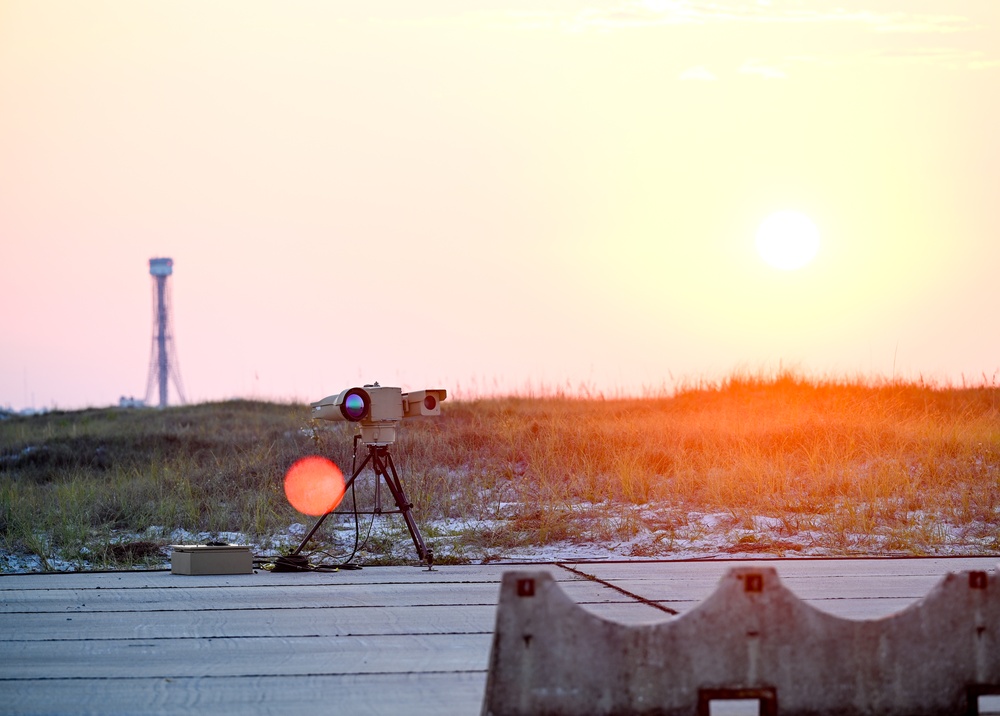
The counter-drone market has a supply problem, and one of its key radar suppliers is spending $40 million to fix it. Echodyne, the Washington-state company whose electronically scanned radars sit inside a growing roster of vehicle-, ship-, and site-mounted counter-UAS systems, is opening a new manufacturing plant near Seattle — expected to come online in July — that is intended to eventually build at least 30,000 counter-UAS radars a year. That figure represents roughly a five-fold increase in the company's production capacity, and the reason for it is blunt: Echodyne cannot make radars fast enough to keep up with the orders coming in.
“Our orders are far exceeding our production capacity, which is why we've launched into this new manufacturing facility,” CEO Eben Frankenberg said, according to a July 2026 Defense One brief on the expansion. It is the kind of statement that would sound like standard corporate optimism in most industries. In the counter-drone sector circa mid-2026, it reads more like a status report on a market that has outrun its own supply chain.
The demand signal
Echodyne has described its counter-UAV radar orders as growing “by multiple factors,” per Janes — the demand driver behind the whole plant decision. That phrasing matters. A company scaling production five-fold does not do so to chase incremental growth; it does so when the order book has fundamentally changed shape. The surge Echodyne is responding to is not a single marquee contract but a broad rise in counter-UAS radar procurement spread across defense customers, and the new facility is the company's answer to it.
The through-line is drones. As small uncrewed aircraft have become cheap, ubiquitous, and — as recent conflicts have shown — genuinely dangerous, the demand for systems that can reliably detect and track them has climbed accordingly. Radar is the detection layer that most counter-drone architectures are built around, because it works at range, in poor visibility, and around the clock in ways that cameras and acoustic sensors cannot match on their own. Echodyne's radars affix to combat vehicles, ships, and other counter-UAS devices, according to Defense One, which is to say they are showing up wherever the drone threat now has to be watched for.
What the radars actually do
The hardware at the center of this expansion is Echodyne's EchoShield and EchoGuard line of electronically scanned array (ESA) radars. Unlike mechanically rotating radars, these steer their beams electronically, which lets a compact, solid-state unit search a wide volume of sky and then dwell on individual tracks — a useful trait when the targets are small, slow, and easily lost in clutter.
The performance numbers give a sense of why these radars have found a home in counter-UAS work. According to specifications reported by The Defense Post, EchoShield can detect a micro-UAS at roughly 1.5 kilometers, a quadcopter at about 3 kilometers, larger multirotor drones out to around 5.3 kilometers, and small fixed-wing aircraft at up to 7.9 kilometers. That graduated detection envelope — shorter ranges for the tiny, hard-to-see quadcopters, longer ranges for larger airframes — maps directly onto the spectrum of threats a counter-drone system is expected to handle, from a hobbyist quadcopter buzzing a base perimeter to a purpose-built fixed-wing attack drone.
The $490M anchor: SUADS
If any single program illustrates why Echodyne's order book is straining against its production capacity, it is the U.S. Air Force's SUADS effort. Echodyne has been named the radar provider for Trust Automation's Small Unmanned Air Defense System (SUADS), delivered under a U.S. Air Force contract valued at up to $490 million, as reported by The Defense Post.
SUADS is not a single box but a family. The Defense Post describes three variants: a rapidly deployable configuration mounted on standard pallets for air transport; a fixed-site version for base protection; and a more compact expeditionary variant for mobile operations with limited logistical support. The system is built to the SOSA (Sensor Open Systems Architecture) standard, an open-architecture approach the Pentagon has pushed to avoid vendor lock-in and to let sensors and effectors be swapped in and out more easily. Echodyne's EchoShield radar serves as the detection-and-tracking backbone across those variants.
A contract with a ceiling of up to $490 million is exactly the kind of commitment that turns a healthy radar business into a capacity-constrained one. And SUADS is one program among many; the broader “multiple factors” growth Echodyne cites suggests the Air Force work is representative of a wider trend rather than an outlier.
Scaling from artisanal to industrial
Building 30,000 radars a year is a different discipline than building a few thousand. Advanced ESA radars have historically been relatively low-volume, high-touch products — closer to precision instruments than to consumer electronics. Echodyne's bet is that counter-drone demand has crossed a threshold where these radars need to be manufactured at something approaching industrial scale, and that the customers placing the orders will still be there when the plant is humming.
The unmanned-airspace trade press has corroborated the core figures. Unmanned Airspace, reporting on the same expansion, confirms the 30,000-radars-per-year plant target and its explicit counter-UAS focus, and situates it within Echodyne's broader role across the counter-drone market. That independent corroboration matters for a claim this large: a five-fold capacity increase is the sort of number that invites skepticism, and multiple outlets converging on the same figures lends it weight.
Why It Matters
Manufacturing capacity has quietly become one of the decisive variables in the counter-drone race. It is one thing to design a radar that can spot a micro-drone at a kilometer and a half; it is another to build tens of thousands of them fast enough to protect the vehicles, ships, and fixed sites that now need protecting. Echodyne's $40 million plant is a wager that the counter-UAS boom is durable enough to justify industrial-scale production — and a tacit acknowledgment that, until now, supply has been the bottleneck, not demand.
For defense planners, a domestic supplier ramping to 30,000 units a year changes the arithmetic of fielding counter-drone systems at scale, potentially easing the lead times that have dogged sensor procurement. For the counter-UAS market as a whole, Echodyne's move is a bellwether: when a key radar supplier five-times its output because orders are “far exceeding” what it can build, it signals that the drone threat has moved from an emerging concern to a sustained, budgeted, at-scale procurement priority. The plant coming online in July will be an early test of whether the supply side can finally catch up to the demand the drone era has created.
Sources
- Defense Business Brief: A radar-maker's answer to the drone boom — Defense One
- Echodyne says C-UAV radar orders growing by multiple factors — Janes
- Echodyne's new manufacturing plant 'to produce 30,000 C-UAS radars a year' — Unmanned Airspace
- Echodyne selected as radar provider for Air Force counter-drone program — UAS Magazine
- Echodyne to Supply Radar for USAF Counter-Drone Platform in $490M Program — The Defense Post