
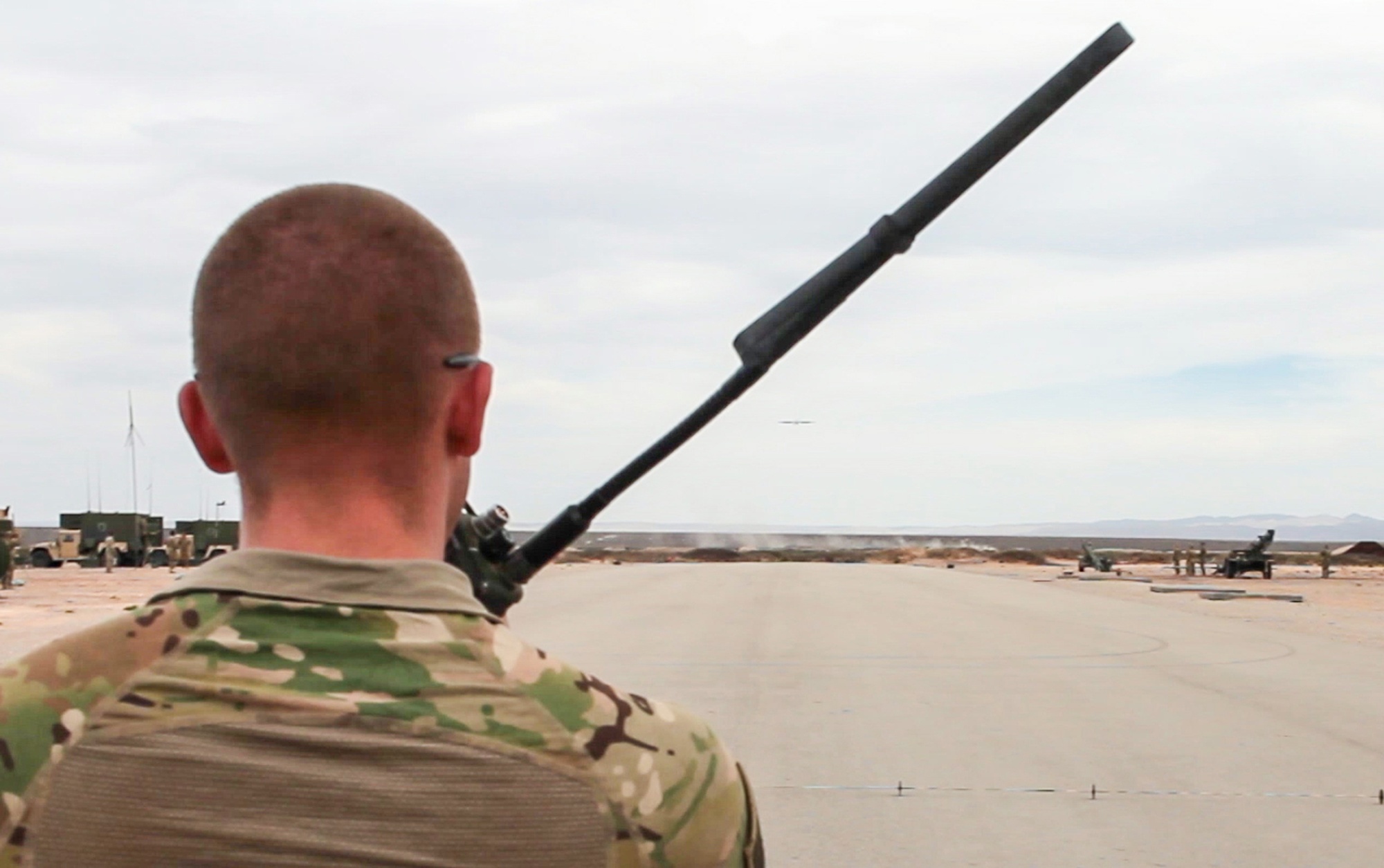
For most of the drone industry's short regulatory history, "human factors" has meant keeping a visual observer within shouting distance of the pilot. That framing is breaking down. As beyond-visual-line-of-sight (BVLOS) operations scale toward one operator supervising multiple aircraft — or fleets of aircraft supervising themselves with a human watching the exceptions — regulators around the world are quietly building out a body of rules that has nothing to do with airspace geometry and everything to do with the person at the console: are they rested, are they overloaded, and are they fit to make a go/no-go call in the next ninety seconds.
A new analysis published by DroneLife on July 28, 2026, lays out just how far that shift has already gone, comparing how the FAA, the European Union Aviation Safety Agency (EASA), the UK Civil Aviation Authority (CAA), Australia's Civil Aviation Safety Authority (CASA), Japan's Ministry of Land, Infrastructure, Transport and Tourism (MLIT), and the International Civil Aviation Organization (ICAO) are each independently arriving at some version of the same conclusion: crew fitness and cognitive load are now flight-safety variables, not HR policy.
Six Regulators, One Underlying Problem
In the United States, the FAA has not written a drone-specific fatigue rule at all; it folds UAS human factors into Part 107's general airman fitness standards, the same baseline that applies to any FAA-certificated pilot. The agency backs that up with research rather than new rulemaking — the ASSURE UAS Center of Excellence's 2025 annual report analyzes operator behavior and workload patterns affecting safety in the National Airspace System, and the FAA's Civil Aerospace Medical Institute (CAMI) applies cognitive-load and aeromedical research methods to remote-pilot fatigue thresholds specifically in extended BVLOS operations.
According to the DroneLife piece, EASA has folded human-factors expectations directly into its SORA 2.5 specific operations risk assessment framework, through its Operational Safety Objectives (OSOs) — which address "Remote Crew Training and Competency" and "Remote Crew Conditions" among the checklist items operators must satisfy to prove a BVLOS operation is adequately mitigated. Rather than a standalone fatigue rule, EASA treats crew performance as one more risk input inside the same specific operations risk assessment methodology that governs containment, detect-and-avoid, and reliability.
The UK CAA has taken a more prescriptive, aviation-borrowed route: it points operators toward the IMSAFE checklist — Illness, Medication, Stress, Alcohol, Fatigue, Eating/Hydration — a self-assessment tool lifted almost verbatim from general aviation pilot training, adapted for remote crews who never leave the ground. CAA guidance is blunt about the stakes, stating plainly that pilots who are fatigued should not operate.
Australia's CASA is working the fatigue problem from the operator's side of the ledger: CASA and New Zealand's Civil Aviation Authority both point drone operators toward the same fatigue guidance developed for manned aviation, applied to multi-day deployments in sectors such as agriculture and infrastructure inspection — settings where shift length and rest periods are harder to police because there's no dispatcher, crew scheduler, or union agreement forcing the issue.
Japan's MLIT is approaching the same territory from a different angle: the ministry continues building out UAS-specific guidance as Level 4 autonomy — flights over populated areas — expands, with DroneLife's analysis noting significant guidance growth expected through 2026–2028. That trajectory arguably points toward a different framing of the fitness question over time — less "is the pilot alert" and more "is the automation trustworthy enough that continuous human supervision isn't required" — though MLIT itself has not yet articulated that shift explicitly.
At the international level, ICAO folds UAS operator fitness into Annex 1 (personnel licensing) and Annex 19 (safety management), including the Fatigue Risk Management Systems (FRMS) concept — the same duty-time framework used to govern airline pilots — but that material remains non-binding guidance rather than hard rules, a reminder that, as with most ICAO material, the annexes function as a template States are expected to adapt into binding domestic regulation rather than a directly enforceable global rulebook.
Underneath all of it, DroneLife's analysis identifies a common thread: regulators are borrowing Crew Resource Management (CRM) principles — the cockpit discipline developed for multi-pilot airline crews after a string of 1970s and 80s accidents traced to communication breakdowns and unchecked authority gradients — and trying to adapt them for BVLOS operations where the "crew" may be a single operator managing several aircraft with no second set of eyes in the loop at all. As the DroneLife piece puts it, the most dangerous assumption in drone operations is that removing the pilot from the aircraft removes the human risk — it doesn't, it relocates it.
The Same Week, Two More Data Points
The DroneLife piece did not land in isolation. On July 9, 2026, ICAO — publishing directly on its .int domain — announced the outcome of a counter-UAS workshop in Krakow, Poland, convened by ICAO's European and North Atlantic Regional Office and hosted by Poland's Civil Aviation Authority. The workshop's focus was different from the fatigue question — it centered on drones as a threat to civil aviation, not on operator wellness — but the institutional signal is the same: ICAO Secretary General Juan Carlos Salazar said effective counter-UAS approaches "require a multi-layered system of equipment, working in concert with sound aviation regulations," and the organization said it will issue Integrated Risk Management guidance for member States within the coming months. Delegates at the workshop specifically recommended improving interoperability between UTM (UAS Traffic Management) systems and national UAS registries — infrastructure work that, longer term, is also what would let a fatigue or duty-time rule actually be enforced across a fleet rather than self-reported by an individual operator. Separately, Polish Deputy Prime Minister and Foreign Minister Radoslaw Sikorski and Infrastructure Minister Dariusz Klimczak held bilateral meetings with Secretary General Salazar in Warsaw around the same trip, underscoring the diplomatic weight Warsaw is putting behind the counter-UAS file.
Then, on July 29, Commercial UAV News previewed the keynote lineup for Commercial UAV Expo 2026, running September 1–3 at Caesars Forum in Las Vegas. The September 3 keynote, titled "Two Skies, One Conversation: Comparing FAA and EASA Approaches to BVLOS Drone Operations," will put FAA and EASA regulatory leaders on the same stage in a moderated panel comparing BVLOS waiver and exemption practices against Europe's risk-based SORA framework — effectively a live, public version of the transatlantic comparison DroneLife just published in analysis form. A separate September 1 keynote will present a pilot and operator sentiment survey compiled by Commercial UAV News with Pilot Institute co-founder Greg Reverdiau — a data point on how the operators actually living under these emerging fatigue and fitness rules feel about them.
Why It Matters
None of these three developments individually changes what an operator has to do tomorrow morning. But together they mark a shift in what "BVLOS safety case" is going to mean over the next regulatory cycle. For years, the industry's compliance conversation has been dominated by hardware and airspace questions — detect-and-avoid sensor performance, C2 link reliability, containment radius, ADS-B and remote ID. Those remain necessary. What DroneLife's survey documents is that regulators on four continents have independently decided hardware reliability is not sufficient, because a well-maintained aircraft flown by a fatigued, overloaded, or under-supported single operator is still a safety-critical failure mode — one that traditional certification testing doesn't catch.
That matters commercially as much as it matters technically. As BVLOS waivers and exemptions scale from one-off demonstrations to routine operations — the exact trend the FAA-EASA keynote in Las Vegas is built around — the operators who can already demonstrate a documented fatigue risk management process, an IMSAFE-style pre-flight self-check, or CRM-informed procedures for single-operator multi-aircraft supervision are the ones positioned to clear the next tier of regulatory approval fastest. Operators still treating human factors as a training-manual afterthought are building a gap they'll have to close under deadline pressure once EASA's OSO-based expectations, CASA's fatigue guidance, or an eventual binding ICAO fatigue standard stops being guidance and starts being a checklist item an inspector actually audits.
The ICAO Krakow workshop adds a second layer: as counter-UAS coordination pushes UTM systems and national registries toward tighter interoperability, the infrastructure needed to actually monitor duty times, flight hours, and operator workload across a fleet — rather than trust a self-reported checklist — is being built for an adjacent reason (airspace security) but will be directly reusable for human-factors enforcement. Regulators converging on the same problem from different starting points, in the same month, is usually the leading edge of harmonization — and harmonization is what turns a patchwork of national guidance into an enforceable global norm.
Sources
- How the World Is Addressing Human Factors in Drone Operations — DroneLife, July 28, 2026
- States unite as drones increasingly threaten civil aviation — ICAO, July 9, 2026
- Commercial UAV Expo 2026 Keynotes Will Tackle Operator Sentiment and Global BVLOS Rules — Commercial UAV News, July 29, 2026
