
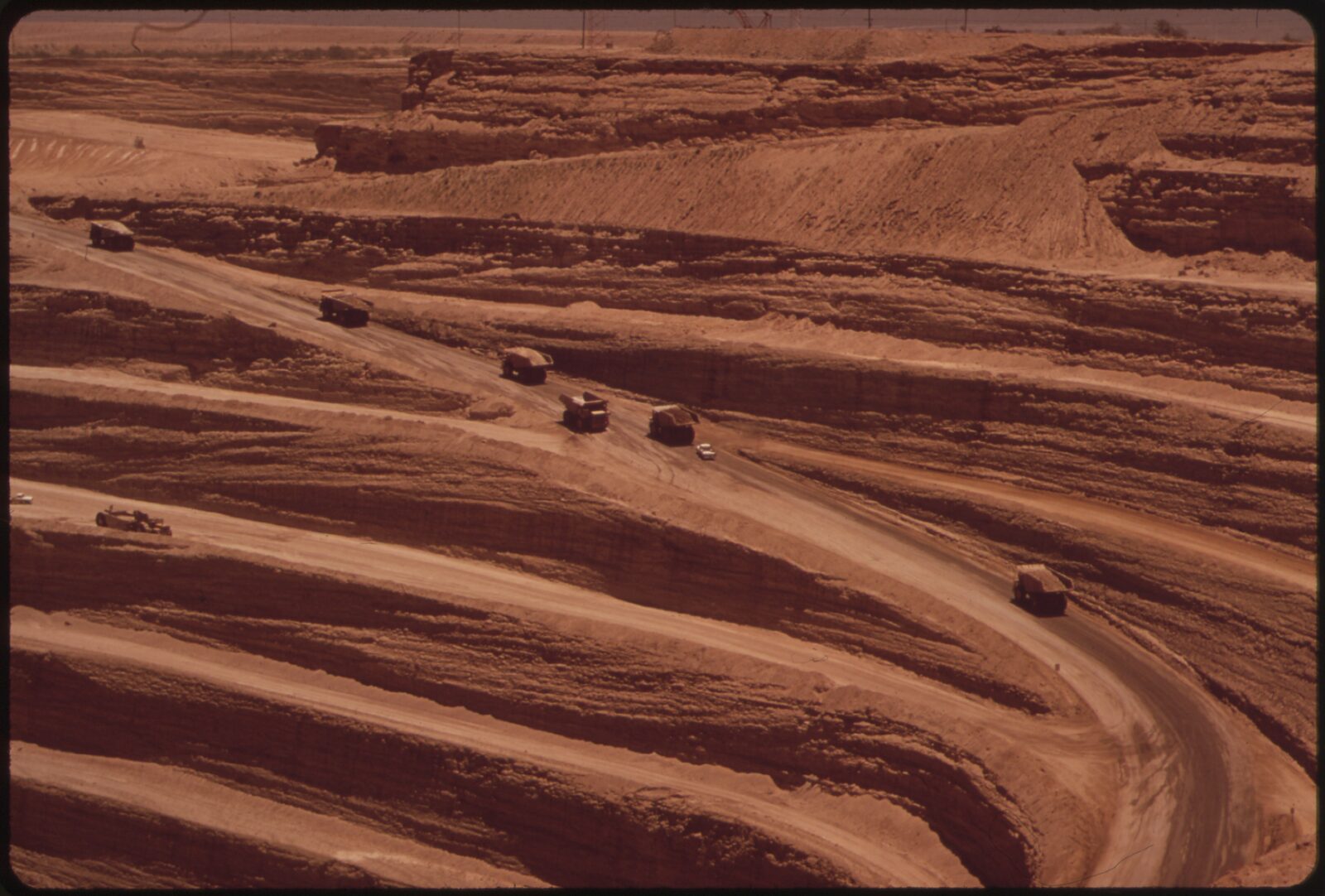
Mining kills at a rate disproportionate to its workforce. According to BMJ Open research cited by Microavia, the sector accounts for 8 percent of global fatal injuries. That figure understates the category because it excludes the long-tail disasters that generate billion-dollar liability rather than counted bodies. In November 2015, the Samarco tailings dam in Brazil collapsed, releasing mine waste into the Doce River. The environmental damage was effectively permanent.
That event accelerated a re-examination of how mines manage risk assessment. The core problem was structural: critical decisions — whether a stope wall will hold, whether a tailings embankment is stable, whether a post-blast muck pile has the fragmentation profile that downstream processing requires — were being made on the basis of incomplete survey data, because gathering better data meant sending humans into situations that no safety protocol could adequately control. Drones removed that constraint. Over the past five years, mine drone adoption has risen from 44 to 74 percent globally, and autonomous technologies in the sector have reduced accidents by as much as 80 percent while simultaneously cutting operating costs.
From Helicopter Day Rates to Weekly Kilometer-Scale Surveys
BHP runs the surface productivity case study that most vendors now benchmark against. The company replaced terrestrial laser scanning and helicopter survey programs with drone operations using DJI M300 and M200/210 platforms, coordinating multiple pilots via altitude separation. Stockpile areas of 1.2 km × 1 km are surveyed on a weekly basis; areas up to 10 square kilometres can be covered in a single flight; and survey data is processed in under 30 minutes. Cost compared to equivalent helicopter coverage is 70 percent lower. High wall inspections that previously consumed four to five days per wall are now completed in a single drone pass. Across operations, drones survey four to ten times more area than ground-based methods in comparable timeframes.
The cascade of improvements extends downstream. At one documented mining company, switching to drone mapping cut survey times by 70 percent. Stockpile measurement programs have reduced material reconciliation variance by 15 percent at another site — a metric that directly affects how much ore gets misclassified and misrouted through the plant.
Post-blast fragmentation analysis — a discipline that historically depended on manual sampling and sieve testing — has become a standard drone workflow. The protocol calls for two flights per blast event: a pre-blast survey establishing baseline topography, followed by a post-blast survey generating fragmentation and material movement data. Particle size distribution results from drone-derived image analysis fall within ±5 to 10 percent of traditional sieve-based benchmarks. The WingtraRAY VTOL can map 250 acres in approximately 10 minutes for blast surveys; the GeoCue TrueView 539 LiDAR achieves 2 to 5 centimetre typical absolute vertical accuracy. Data integrates directly into SHOTPlus, FragTrack, Split-Desktop, DJI Terra, and LP360 Drone for drill-and-blast optimization.
Tailings Monitoring and Dam Safety
Most tailings storage facilities can be drone-monitored in under two hours, with same-day reporting enabling near real-time decision-making. The data stack is substantial: orthomosaics, digital surface models and terrain models, contour maps, point clouds, volumetric reports, and thermal and multispectral mosaics — with centimetre-level accuracy achievable using RTK/PPK correction. That package meets Global Industry Standard on Tailings Management compliance requirements as well as insurer and regulatory reporting needs, with each dataset time-stamped and georeferenced.
The deeper value lies in what standard visual inspection cannot detect. High-risk sites may require weekly drone coverage; standard protocols call for monthly or quarterly flights. The difference between those cadences is not an abstraction: a tailings embankment that looks stable in a quarterly orthomosaic may already be saturating in ways that Samarco's operators wished they had known.
Six Hundred Metres Below Surface
The physics of GPS mean that everything described above — satellite positioning, reliable communications links, standard autopilot modes — disappears the moment a drone enters a tunnel, shaft, or open stope. That constraint created a separate product category, and it produced Emesent.
The company was spun out of CSIRO's Data61 division in late 2018 with $4.5 million in venture capital led by Main Sequence Ventures, which manages the CSIRO Innovation Fund. Within 18 months of launch, the company had grown to nearly 40 employees and produced over 100 Hovermap units. The payload uses simultaneous localization and mapping — SLAM — combined with AI-powered LiDAR to navigate without external positioning infrastructure. Specifications: sensing range of 300 metres, over one million LiDAR points per second, ±10 mm accuracy, IP65 rating, operational from -10°C to 45°C. Deployment modes extend beyond drone-mounted to include handheld, vehicle-mounted, backpack, cage-lowered, and equipment-mounted configurations — the same hardware unit covering stopes too tight for conventional flight and shafts too deep for a pilot to follow.
The operational gains are not incremental. Traditional cavity monitoring systems require approximately three hours to scan a stope. Hovermap completes the same scan in 15 minutes — 75 percent faster. The system has been tested in raisebore shafts 500 metres deep with a 5-metre diameter. Emesent has logged over 3,000 autonomous drone flights. The Hovermap ST-X variant pushes the sensing envelope further, with a 300-metre range and better than one million points per second enabling rapid volumetric capture in the largest excavations.
The business case compresses to a single data point: one documented Emesent deployment produced 10 minutes of survey data that enabled a decision valued at approximately $20 million. Customers now include BHP, Barrick Gold, Anglo American, Glencore, Newcrest, Northern Star Resources, and Rio Tinto's Argyle Diamond Mine — across more than 30 mine sites globally.
"The Hovermap improves mining efficiency in the way that we're not holding up the production team as long. We're just in and out really." — Senior Surveyor, Mount Isa Mines, Glencore
Flyability's Elios addresses the same GPS-denied problem with a collision-tolerant airframe using vision stability sensors. At North American Palladium's Lac des Iles mine near Thunder Bay, Ontario — one of only two pure palladium producers globally — operator UAS Inc. reduced underground stope inspections from a full day or longer to one hour. The financial leverage comes from decision quality, not merely speed.
"In the past, it was a guessing game even at the most modern mines. A very, very expensive guessing game." — Matt MacKinnon, co-founder, UAS Inc.
Jason Carignan, MacKinnon's co-founder at UAS Inc., framed the physical stakes directly: "Ground conditions in a mine are very important. The ground can actually start to give way if there is nothing around it to support it." Potential savings from eliminating unnecessary stope rehabilitation were characterized in terms of "hundreds of thousands, or even millions." MacKinnon put the prior art in sharper relief: "The Elios allows planning and significantly better decision-making — how do you put a price on that?"
Autonomous Coverage and Where the Market Goes Next
Sixty percent of global mining sites are projected to deploy drones for aerial mapping by 2025, and the market is expanding at a 13 percent compound annual growth rate. Drone-in-a-box systems are dissolving the last dependency on on-site personnel for surface monitoring. Platforms like Microavia's enable automatic battery swaps in two minutes and operate from -25°C to +60°C with minimal staffing. The DJI Matrice 400 carries a 6 kg payload with up to 59 minutes of flight endurance; the Zenmuse L2 LiDAR covers 2.5 km² per flight at approximately 4 cm vertical accuracy.
The failure modes these systems catch are not always dramatic. A thermal drone scan at one mining operation discovered an overheating conveyor pulley in time to prevent a multi-day production halt. After a seismic event, a Hovermap-equipped drone mapped structural damage in hours rather than the weeks that cautious manual re-entry would have required. Those examples share a common structure: the risk existed, the traditional inspection cadence was too slow or too dangerous to surface it, and a drone closed the gap before the cost accrued.
The statistics — 80 percent accident reduction from autonomous technologies, 8 percent of global fatal injuries as the pre-drone baseline — describe both the problem scale and the performance bar that drone programs are being measured against. The industry spent decades treating underground and surface hazard assessment as an unavoidable exercise in inference. The survey data now exists to make those inferences into engineering decisions. The guesswork is becoming quantifiable.
Sources
- Emesent — Mining applications overview
- CSIRO — Emesent spin-out and Hovermap research profile
- Emesent — Autonomy technology overview
- Flyability — Underground mine drone case studies
- SPH Engineering (UgCS) — Drones in mining applications
- Advexure — Tailings pond monitoring and dam safety with drones
- Advexure — Drilling and blasting assessment with drones
- Microavia — Drones for mining safety, surveillance, and inspection
- CanDrone — How drones are revolutionizing remote mine site monitoring
- Farmonaut — Mining drone applications and trends 2025
- SafeSight Exploration — AI drones in mining (June 2025)
- CDC NIOSH Mining — Automation and Emerging Technologies Partnership