
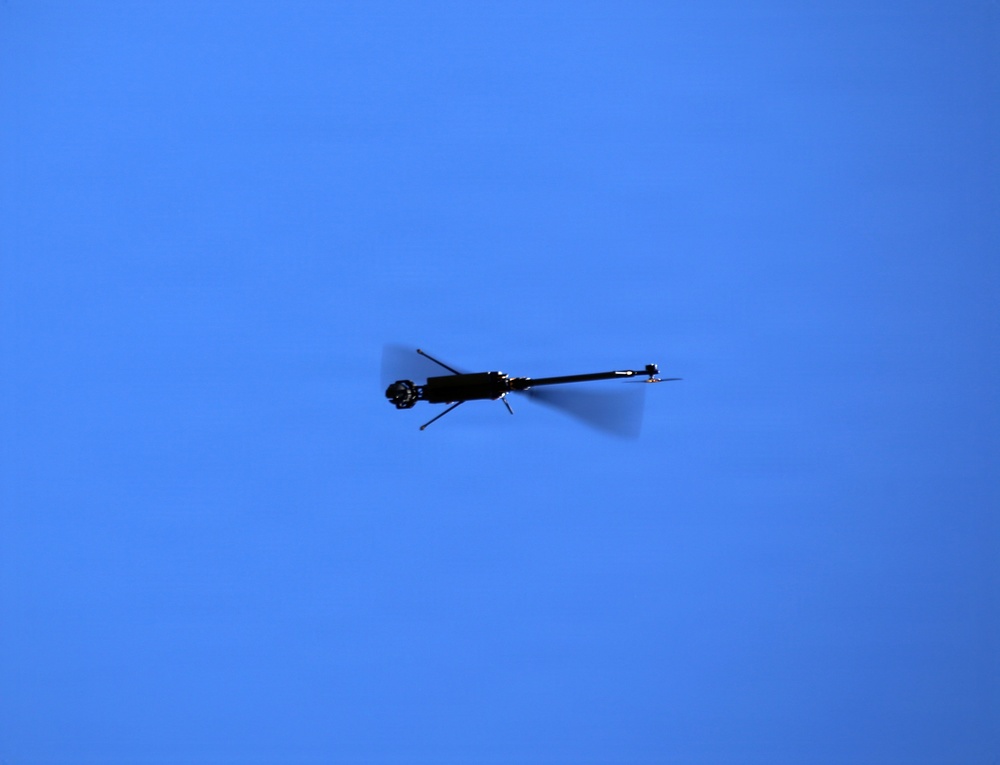
The U.S. Coast Guard has quietly become one of the most consequential counter-drone forces operating inside American borders this summer — and the 2026 FIFA World Cup is its proving ground.
In what the service describes as its first-ever simultaneous domestic multi-city counter-UAS deployment, the Coast Guard is providing aerial security for 13 World Cup matches split between Boston and San Francisco, while concurrently covering the Sail 250 tall-ship celebrations spread across New Orleans, Norfolk, New York City, and Baltimore. The scale and coordination of the operation represent a meaningful shift in how the United States government thinks about drone threats at mass-casualty events — and in who is responsible for stopping them.
How the Coast Guard Got Here
The build-up has been years in the making. The service has spent $150 million on counter-UAS systems acquisition, trained 140 personnel specifically for C-UAS duties, and designated the first 36 personnel trained at its Moyock facility as watch captains — the operators who hold authority over a defended airspace corridor when the mission is live. In August 2025, the Coast Guard stood up a dedicated Robotics and Autonomous Systems Program Executive Office to consolidate that investment under a single command authority. More recently, it opened a counter-drone training and logistics center in Moyock, North Carolina, which has become the institutional backbone of the service's C-UAS competency.
A new occupational specialty — "Robotics Mission Specialist" — has been formally established as a job rating, signaling that counter-UAS is no longer an ad hoc collateral duty but a recognized career path within the enlisted force.
What the Systems Can Do
Lt. James Hockler, the Coast Guard's C-UAS program manager, has been candid about the technical capabilities now in the field. The deployed package includes electro-optical and infrared cameras capable of detecting drones at night, when commercial drones are hardest to track visually and when event-related crowds thin out but security exposure can actually increase.
More significantly, the electronic warfare systems in the Coast Guard's inventory can do more than simply jam a drone and force it down unpredictably. According to Hockler, the EW suite can compel a drone to land at a designated location — presumably a pre-selected safe zone away from crowds — or force it to return to its operator. That return-to-pilot function is operationally significant: it shifts the resolution of a drone incursion from a technical problem (where does a jammed drone fall?) to a law enforcement problem (who is the pilot?), potentially enabling prosecution rather than just neutralization.
The Interagency Architecture
The Coast Guard is not operating alone. The deployments are coordinated through Joint Interagency Task Force 401 (JIATF-401), the Army-run counter-UAS coordination body. Other agencies at the table include the FBI, Secret Service, Federal Air Marshal Service, and Customs and Border Protection. The division of roles among these agencies — which entity has shoot/jam authority in a given airspace, and who holds the law enforcement lead — is not publicly detailed, but the presence of the Secret Service and FAMS alongside the Coast Guard suggests a layered model in which different agencies hold primacy depending on the venue type and the specific threat scenario.
JIATF-401 also has an international dimension that runs parallel to the World Cup deployment. The task force operates a counter-UAS marketplace providing allied nations access to combat-proven systems — including low-collateral interceptors, radars, sensors, EW systems, and passive defense measures. Nations including the United Kingdom, Romania, Australia, Poland, and the Republic of Korea have received access, with the stated goal of expanding the marketplace to 25 allied and partner nations by the end of summer 2026.
That international expansion is worth noting in the context of the World Cup deployment: the same institutional architecture being used to protect American crowds from rogue drones this summer is simultaneously being wired into a broader allied counter-UAS sharing framework that reflects hard-won lessons from conflicts in Ukraine and the Middle East.
Why It Matters
The World Cup deployment is not just a sporting event security story. It is a stress test of an institutional capacity the United States has been trying to build at speed since drone incidents began routinely disrupting airspace over sensitive facilities, prisons, military bases, and large public events.
The Coast Guard's role is telling. The service operates at the intersection of law enforcement and national security in ways that make it a natural fit for domestic C-UAS operations: it has legal authority to operate inside U.S. territorial waters and airspace, it already coordinates closely with the FBI and Secret Service on maritime security events, and its statutory framework sidesteps some of the Posse Comitatus constraints that complicate military involvement in domestic law enforcement. The establishment of a dedicated program office, a new enlisted rating, a training center, and a formal interagency task force structure all suggest this is not a temporary surge capability but a permanent addition to the service's mission portfolio.
The $150 million investment also puts the Coast Guard's C-UAS spending in a different category from the piecemeal, supplemental-funding approach that characterized the early years of federal counter-drone spending. Sustained acquisition at that level, combined with a defined workforce pipeline through the Robotics Mission Specialist rating, points toward a service that expects to be running operations like this — multi-city, multi-agency, extended duration — on a recurring basis.
For the drone industry, the operational details Hockler disclosed are worth tracking. The ability to force a drone to return to its operator rather than simply neutralizing it in place represents a maturation of C-UAS tactics — one that prioritizes post-incident accountability and potentially raises the legal and personal risk for anyone who attempts a deliberate incursion. As C-UAS technology proliferates to local law enforcement and allied militaries through mechanisms like the JIATF-401 marketplace, these tactical preferences are likely to shape procurement and doctrine well beyond this summer's events.
The 2026 FIFA World Cup runs across 16 host cities in the United States, Canada, and Mexico. The Coast Guard's footprint covers two of the U.S. venues. How the broader multi-venue operation performs — and whether any drone incidents occur, attempted or otherwise — will inform C-UAS investment and policy debates for years.
