
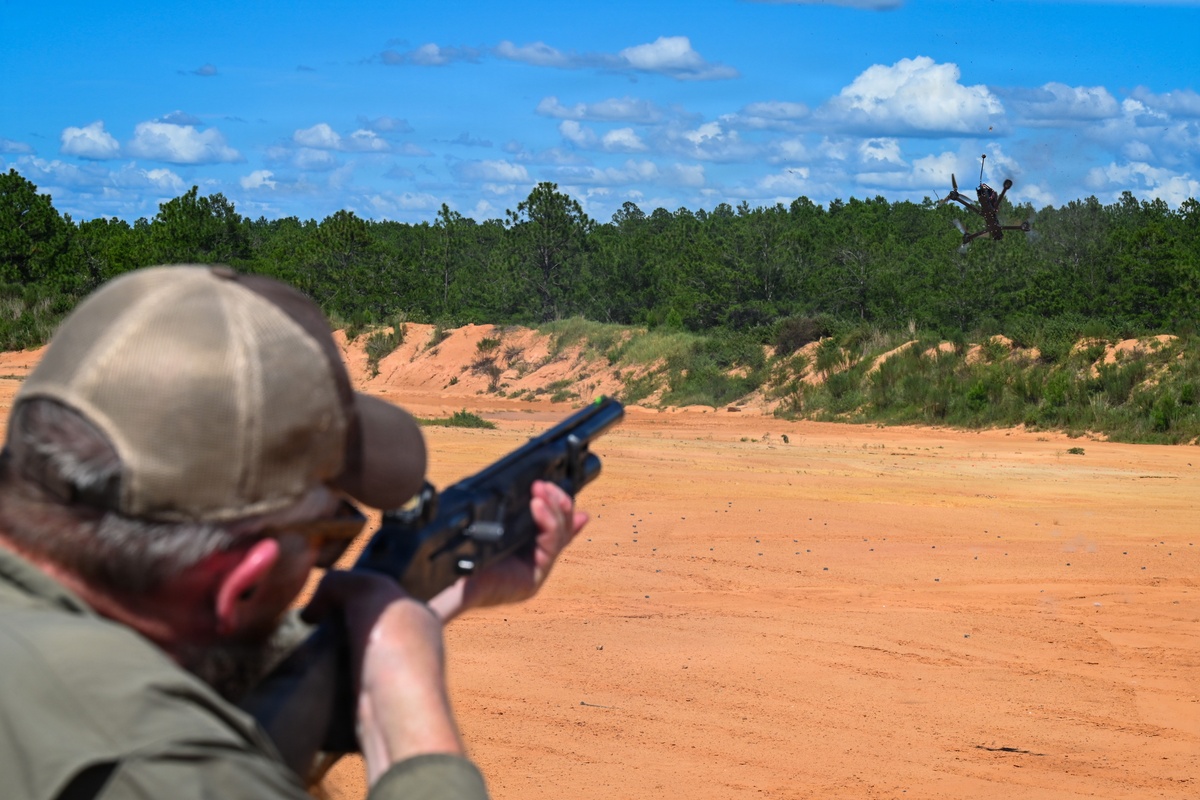
For five days in early August, airmen assigned to Air Force Special Operations Command's 31st Air Task Force traded routine training scenarios for a scripted gauntlet of small drones — first spotting them, then jamming them, and finally, when neither worked, shooting them down. The exercise, which ran August 3-7 across Hurlburt Field, Florida, and Nellis Air Force Base, Nevada, culminated in what the unit called a "final denial": a kinetic, live-fire demonstration meant to prove that a layered counter-drone defense can be built, trained, and executed by a single self-sufficient combat unit rather than assembled ad hoc from outside specialists.
The event was detailed in an account published August 27 by 1st Special Operations Wing Public Affairs, corroborated by outside reporting from Soldier Systems Daily and MilitarySpot. Together they sketch a unit deliberately rehearsing the full kill chain against small unmanned aircraft systems (sUAS) — the same category of low-cost, hard-to-detect drones that have reshaped battlefields from Ukraine to the Middle East and increasingly threaten U.S. installations at home and abroad.
A Three-Tier Defense, Trained in Sequence
According to the account, the 31st ATF structured the week around a "crawl, walk, run" progression — described by the unit's force protection superintendent as building airmen's proficiency layer by layer rather than throwing them straight into a live-fire scenario. That progression tracked a three-tier defense architecture: detection and tracking, electronic-warfare (EW) defeat, and physical interception.
The detection layer leaned on AI-powered systems tasked with distinguishing hostile drones from the ordinary clutter of the sky — planes, birds, and benign small UAS all show up on the same sensors, and separating a threat from the noise is itself a nontrivial technical problem. Col. Clayton Schuety, deputy commander of the 1st Special Operations Wing, credited the mix of "entrepreneurial foresight, AI surveillance, and human-directed targeting" with what he called positive impacts for the warfighter — a framing that keeps a person in the loop on final decisions rather than ceding them to the software. From there, airmen worked through electronic-warfare defeat techniques designed to jam or otherwise disrupt a drone's control link before it reaches a target, with physical interception — the "final denial" — held as the last resort when detection and EW both fail to stop the threat.
MilitarySpot's reporting adds that the 31st ATF trained airmen on counter-drone weapons by teaming with industry partners and using existing Air Force equipment, though the account doesn't specify whether the weapon systems fired at the hostile drones were industry-supplied, Air Force-owned, or some mix of both, and neither outlet names specific vendors or hardware.
Scale of the Force Behind the Drill
The exercise drew on a unit-sized pool of personnel. Per the account, the 31st Air Task Force itself — organized under a command-and-control element and a combat air base squadron — counts up to 2,500 airmen across more than 60 specialty codes, a workforce spanning far beyond pilots and gunners into maintenance, intelligence, communications, and logistics roles that all have to function for a counter-sUAS capability to actually deploy in the field. The breadth of that number underscores a point AFSOC has been making since the 31st ATF's creation: this unit is designed to fight as a whole, not as a collection of attachments.
Built on Bamboo Eagle
The August drill did not appear from nowhere. The 31st ATF first worked counter-sUAS problems during Exercise Bamboo Eagle 26-1, and more specifically during a dedicated field period from February 8-20, 2026, according to a DVIDS record of that exercise. That February work, per the DVIDS account, had specialists from the Air Force Research Laboratory and industry partners train airmen from the 31st Combat Air Base Squadron to set up transportable aerial detection systems — passive sensors that gave the unit organic identify-and-track coverage against small drones with minimal logistical burden. The DVIDS record doesn't describe EW jamming or kinetic-defeat testing during that February period; its account frames the field period primarily around strengthening the 31st ATF's operational command-and-control functions, with the detection work folded into that larger effort.
Read together, the two exercises describe an iterative build: February proved out organic detection and tracking capability under the unit's own command-and-control structure; August added electronic-warfare defeat and a live-fire kinetic intercept, running the fuller sequence — sensors through shooters — against a live threat presentation and closing with the kinetic "final denial" demonstration.
The Unit Behind the Exercise
The 31st Air Task Force is a relatively young formation. AFSOC activated it on July 15, 2025, as the command's second Air Task Force, with Col. Brad M. Dvorak taking charge; he was later quoted in coverage of the August drill describing the unit's mission as enabling "airpower operations, anytime, anywhere." At activation, Maj. Gen. Michael Martin described the unit's design intent directly: "This unit is deliberately integrated, self-sufficient, and ready to bring airpower anywhere in the world." The Air Task Force concept, as AFSOC has articulated it, bundles the functions an expeditionary combat unit needs — aircrew, maintenance, security, sustainment, and now counter-drone defense — into a single deployable package rather than requiring those capabilities to be sourced piecemeal from separate units when a crisis emerges.
The August counter-sUAS drill is consistent with that design philosophy: rather than calling in a specialized counter-drone team from elsewhere in the Air Force, the 31st ATF trained its own airmen, across its own specialty codes, to run the full detect-defeat-destroy sequence internally.
Why It Matters
Small drones have become one of the cheapest, most accessible threats facing military installations, forward operating locations, and even domestic bases — a low-cost commercial quadcopter can carry a camera or a small payload, and a swarm of them can overwhelm defenses built for larger, faster, more expensive threats. The Pentagon has spent the past several years scrambling to field counter-sUAS systems across the services, but hardware alone doesn't close the gap: someone has to operate the sensors, interpret what AI detection tools flag, decide when EW jamming is appropriate versus when a threat requires physical intercept, and do all of that under time pressure with minimal margin for error.
What the 31st ATF's August exercise demonstrates is less about any single piece of technology and more about institutionalizing that judgment inside a deployable unit. Building an organic, trained-up "detect, defeat, destroy" sequence — rather than relying on specialized reach-back support — is the difference between a base that can respond to a drone incursion in real time and one that has to wait for outside help to arrive. The February-to-August arc, from proving out organic detection to running a live-fire capstone, also signals that AFSOC intends this to be a repeatable, generational training pipeline rather than a one-off demonstration — which matters more than any single exercise, given how fast the small-drone threat itself continues to evolve.
Sources
- 'Final Denial': Air Force Leaders Lean in to the Future of Drone Defense — Soldier Systems Daily
- Air Force Leans Into Future of Drone Defense — MilitarySpot
- 31st Air Task Force strengthens operational Command and Control, tests counter-sUAS systems during Exercise Bamboo Eagle — DVIDS
- AFSOC activates 31st Air Task Force — Hurlburt AFB