
At a Sept. 28 candidate forum, Tallahassee City Commissioner Dianne Williams-Cox was asked about Amazon's planned drone deliveries in the city. Her answer, as reported by DroneXL, was direct: "absolutely, it needs to be regulated." A day later, DroneXL reports, she texted the Tallahassee Democrat that her understanding was that the Florida legislature had preempted it. That admission matters, because the state law in question leaves a city very little room to do what she described.
What the Statute Says
Florida Statute 330.41, the Unmanned Aircraft Systems Act, vests authority to regulate UAS operation in the state, except as provided in federal regulations. A political subdivision, which includes a city, may not enact or enforce an ordinance relating to the design, manufacture, testing, maintenance, licensing, registration, certification or operation of a UAS. The prohibition expressly reaches airspace, altitude, flight paths, equipment or technology requirements, the purpose of operations, and pilot, operator or observer qualifications.
The law also addresses where drone delivery can be based. A local government may not withhold a business tax receipt, development permit or other use approval from a drone delivery service, and may not prohibit its operation on the basis of drone-port location. The statute defines a "drone port" as a stand-alone building of no more than 1,500 square feet or 36 feet in height, in a nonresidential area. A "drone delivery service" is a person or entity in the business of delivering goods by drone that is governed by Title 14 of the Code of Federal Regulations.
What a City Can Still Do
The preemption is broad but not total. Under the statute, a city may still enforce generally applicable minimum setback and landscaping rules. The act also does not limit local ordinances on nuisances, voyeurism, harassment, reckless endangerment or property damage, provided those ordinances are not specifically related to UAS use. In practice, that means a city can apply laws that cover everyone, but it cannot single out drones or set rules for how, where or at what height they fly.
The City Attorney Weighs In
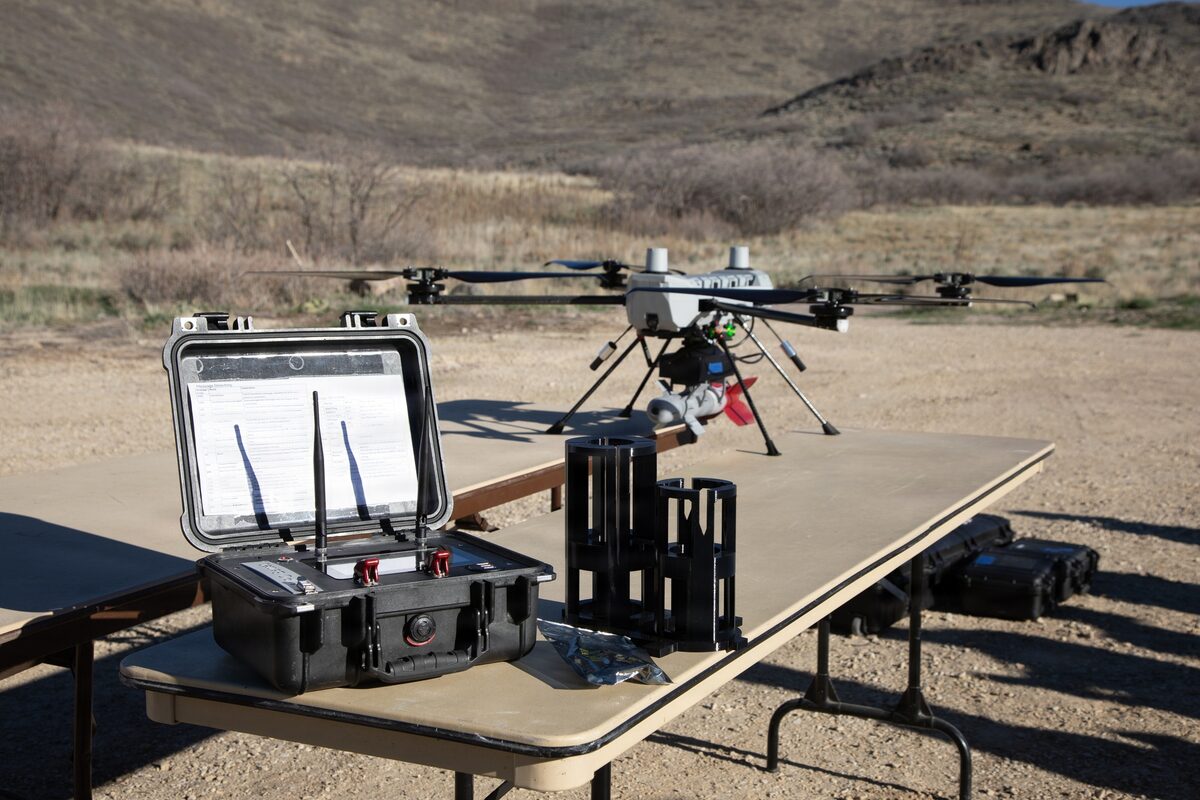
According to DroneXL, City Attorney Amy Toman sent an email on Sept. 23 to Commissioner Jack Porter citing Section 330.41. DroneXL says the email told the commission the city cannot regulate drone deliveries. Commissioner Matlow agrees the city is preempted, DroneXL reports, but he worries that the city's tree canopy will push delivery drones into low flights. DroneXL cites The New York Times for the figure that Amazon's MK30 descends as low as 13 feet during delivery.
Amazon's Footprint in Tallahassee
WCTV reported on Sept. 23 that documents filed Friday show a drone storage unit planned for the front parking lot of the Amazon fulfillment center on Vineyard Drive. The station also reported that Amazon is hiring at least three drone handlers or monitors in Tallahassee. An Amazon spokesperson told WCTV the company is "currently working with local officials and exploring opportunities" to expand drone delivery to Tallahassee. WCTV separately reported that Amazon's goal is to be in almost 500 cities and towns by the end of this year, and DroneXL reports the same nearly-500 figure for the end of 2026.
Amazon has scheduled an MK30 meet-and-greet for Oct. 20, from 4 to 7 p.m., at the Donald L. Tucker Civic Center, per DroneXL.
The Political Backdrop
Williams-Cox's comment came during a campaign. WTXL reports that neither candidate topped 50 percent in the Seat 5 race, sending Williams-Cox and Dot Inman-Johnson to a Nov. 3 runoff. WTXL reported that more than 182,000 voters were registered and over 70,000 ballots were cast in the earlier round.
DroneXL also places the drone question alongside the city's surveillance debate. Tallahassee operates 80 Flock cameras and 75 Vigilant cameras, and Commissioner Matlow's motion to end the Flock contract failed 3-2 in August. DroneXL's point is that the city votes on Flock because it pays for the cameras, while the commission has no comparable vote on Amazon's drones.
Why It Matters
The Tallahassee episode shows the gap between local political expectations and what state law allows. A commissioner told a forum that delivery drones need regulation, while the city's own attorney pointed to a statute that takes flight rules, altitudes, routes and drone-port siting decisions out of city hands. Federal rules and the state framework govern how the aircraft operate, and the city's remaining tools are narrow: setbacks, landscaping, and laws of general application such as nuisance and harassment.
That has practical consequences as Amazon expands toward nearly 500 communities. Residents who raise concerns about low flights, noise or privacy will find that a city council cannot answer them with a drone ordinance. Whether general nuisance law can address a complaint "not specifically related to UAS use" is an untested question in the reporting here. Matlow's worry about tree canopy and low-altitude flight, for example, concerns exactly the subject, altitude, that the statute reserves to the state.
For operators, the statute offers predictability: a drone port that meets the statute's definition, including the size limits and nonresidential location, cannot be denied approval or prohibited on location grounds. For local officials, it means the honest answer to a voter asking for drone rules may be that the city cannot write them.
Sources
- Florida Statutes 330.41, Unmanned Aircraft Systems Act (Florida Senate)
- Tallahassee Commissioner Urged Amazon Drone Rules. Florida Law Says No (DroneXL)
- Amazon drone deliveries could soon take flight in Tallahassee (WCTV)
- Tallahassee Seat 5 city commission race headed to November runoff between Williams-Cox and Inman-Johnson (WTXL)
