
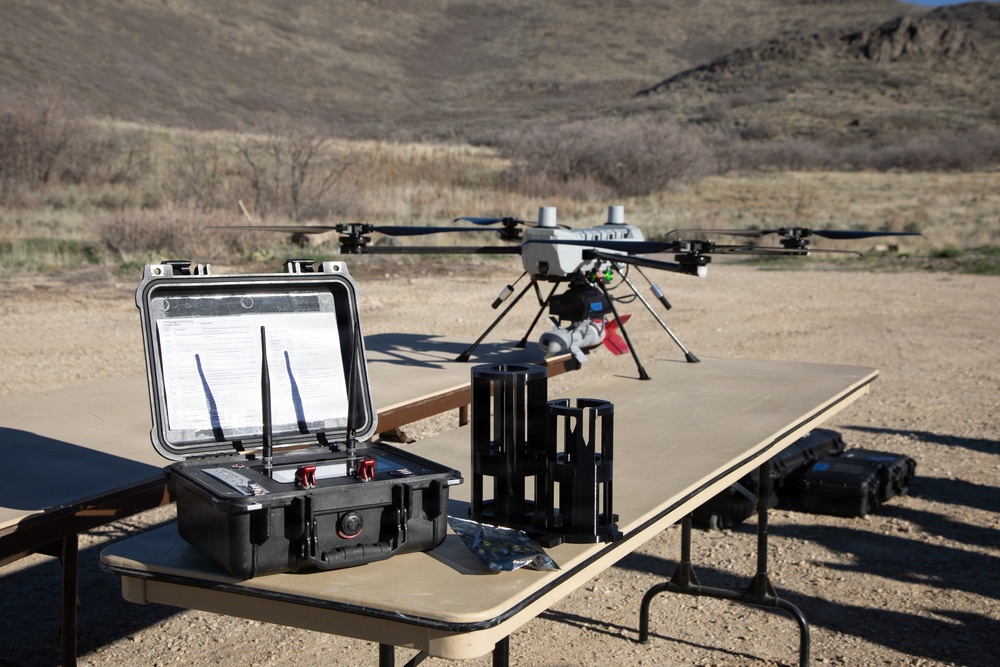
For most of the past decade, congressional drone policy read like a shopping list: buy more, buy faster, buy cheaper. The House Armed Services Committee's Fiscal Year 2027 National Defense Authorization Act — H.R. 8800, advancing through committee in June 2026 — reads differently. Instead of counting airframes, it counts the things that make airframes useful at scale: a shared operating system, ranges to train on, written doctrine, and rules for the software that increasingly sits between an operator and a trigger.
Put bluntly, the House is starting to treat small drones less like prizes and more like plumbing — infrastructure that has to be standardized, maintained, and integrated rather than simply acquired. It is an unglamorous framing, and that is precisely the point.
What the bill actually does
The chairman's mark and accompanying committee report language, hosted on the HASC's official FY27 NDAA resources page, bundle several unmanned-systems provisions that together mark the shift from procurement volume to standards, training, and integration. The headline items:
- A common operating system for small UAS. The bill directs the Department of Defense to establish a common operating system for small unmanned aircraft systems — an explicit move to end the proprietary stovepiping that has left each vendor's drones locked into their own control software, payloads, and data formats. A shared software layer is the difference between a fleet and a pile of incompatible gadgets.
- Dedicated test-and-training corridors. The legislation mandates dedicated corridors for testing and training with sUAS. Realistic, reservable airspace to fly, jam, and recover drones is one of the quieter bottlenecks in fielding them; you cannot build competent operators or validate autonomy without somewhere to do it.
- Formal doctrine for autonomy. The bill requires the Pentagon to develop formal doctrine for unmanned autonomous systems and autonomous formations — the how-we-fight document set that has lagged well behind the hardware.
- A sustainment strategy for attritable Group 4/5 UAS. The measure calls for a sustainment strategy that examines low-cost, attritable Group 4/5 UAS in contested logistics — larger unmanned aircraft treated as expendable enough to lose, cheap enough to keep flowing, in environments where resupply is under fire.
- Attrition-ready counter-drone interceptors. The bill recognizes the need for low-cost, attrition-ready interceptors capable of defeating mass drone attacks on installations — a defensive complement to the offensive fleet, sized for the economics of swarms rather than exquisite one-per-target munitions.
The through-line is integration. None of these provisions buys a single new drone. Each one addresses a reason existing drones don't yet work together, aren't trained on, or can't be defended against at scale.
The AI-in-the-kill-chain amendment
The most consequential provision may be the one that never mentions an airframe. An amendment in the House package requires updated Pentagon policy governing AI-enabled systems that "support, recommend, or materially influence" the employment of force — specifically naming target development, weaponeering, and engagement recommendation.
That language is carefully drawn. It does not restrict itself to systems that pull a trigger autonomously; it reaches software that shapes the human decision earlier in the chain — the model that nominates a target, the algorithm that pairs a weapon to it, the tool that recommends whether to engage. As AI creeps into targeting workflows, the amendment insists there be governing policy for the recommend-and-influence layer, not just the final autonomous-fire question that has dominated the debate.
For a bill otherwise focused on pipes and ranges, it is a notable acknowledgment that the software influencing lethal decisions now needs its own rulebook.
Why It Matters
Militaries that flooded the field with cheap drones over the past few years are discovering that quantity creates its own problems. A thousand drones from a dozen vendors, each with its own control app and data format, is not a capability — it is an integration nightmare, a training gap, and a logistics tail waiting to snap. The House's FY27 NDAA is an attempt to grow the institutional muscle that quantity alone doesn't build.
A common operating system, if DoD delivers one with teeth, would do for military sUAS what standardized rails did for railroads: make interoperability the default instead of a bespoke engineering project per program. Dedicated training corridors turn drone proficiency into a repeatable, scalable skill rather than something learned on deployment. Formal doctrine tells commanders how autonomous formations are supposed to fight before, not after, they field them. And the attritable-logistics and counter-swarm interceptor provisions confront the uncomfortable math of modern air defense — that you cannot trade million-dollar interceptors one-for-one against drones that cost a few thousand.
The AI-employment-of-force amendment matters for a different reason: it is Congress trying to get ahead of a capability curve rather than legislating after an incident. Governing the software that "recommends or materially influences" force — not merely the software that applies it — is a meaningfully broader standard than the autonomous-weapons framing that has driven most prior policy.
Two cautions are worth keeping in view. First, this is committee-stage authorization language, not appropriated money or a signed law; directing DoD to "establish" a common OS or "develop" doctrine is the start of a process, not its guarantee. Second, the House bill still has to be reconciled with the Senate's version, whose own drone provisions — including a separately reported four-star drone-command measure — travel a different track. What emerges from conference is what counts.
The legislative context
The unmanned-systems provisions did not arrive in isolation. As the FY27 NDAA advanced through committee, the markup absorbed a raft of amendments spanning oversight of the A-10, counter-UAS measures, and right-to-repair language — the last a recurring flashpoint over whether the services can maintain their own equipment without going back to the manufacturer. The counter-UAS and interceptor emphasis visible in those markup amendments is the same thread that runs through the full House bill's call for attrition-ready installation defense.
Taken together, the FY27 package tells a coherent story about where House defense authorizers think the drone problem now sits. The hard part is no longer building or buying the drones. It is standardizing them, training on them, writing down how to fight with them, defending against them cheaply, and governing the AI that increasingly helps decide how they are used. Plumbing, in other words — the stuff that only becomes visible when it isn't there.
