
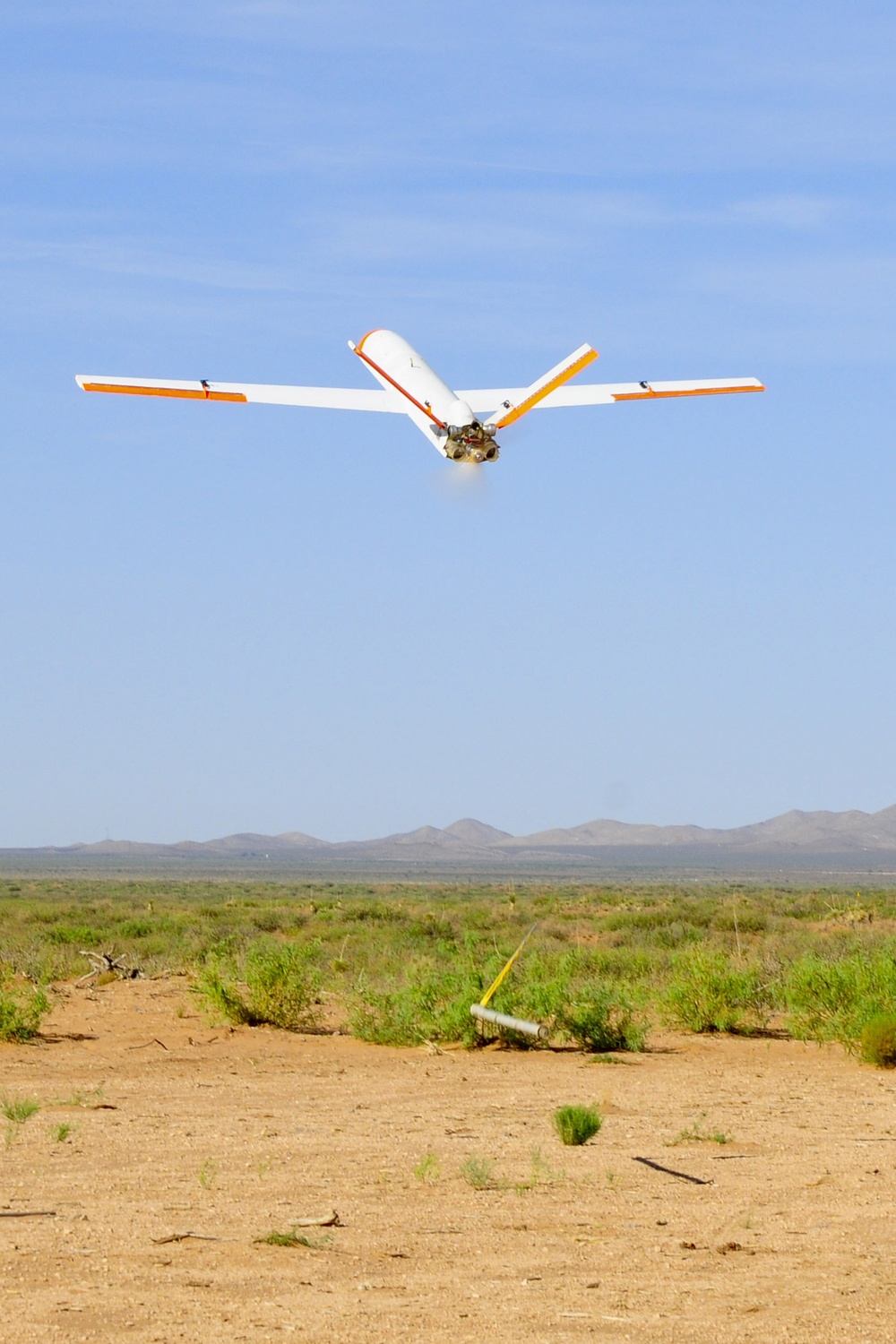
The U.S. Army has once again turned to the only company it appears willing to trust with the job of manufacturing the drones it shoots down for practice. Griffon Aerospace Inc., a small aerospace manufacturer based in Madison, Alabama, has been awarded a $132,978,776 firm-fixed-price indefinite-delivery/indefinite-quantity contract to continue producing its Outlaw family of unmanned aerial target systems, along with the support equipment, field service representatives and training support the Army needs to keep those targets flying.
The award was reported in UAS Weekly's coverage of the Department of War's daily contracts announcements, which identified Army Contracting Command at Redstone Arsenal — a short drive from Griffon's own headquarters — as the contracting activity. The reporting carries a detail that says as much about the state of the aerial-target market as the dollar figure does: only one bid was solicited for the contract, and Griffon submitted the sole bid received. Griffon was, once again, the only company that showed up.
The estimated completion date on the new IDIQ is Dec. 31, 2026, according to UAS Weekly, which also identified Griffon CEO Larry French and traced the Outlaw's lineage — sometimes referred to as the MQM-170A "G1" — back to Griffon's first prime Army contract for the system in 2003.
What the Outlaw Actually Does
The Outlaw isn't a reconnaissance drone or a strike platform. Its job is to be shot at — or, more precisely, to be tracked, engaged and destroyed by soldiers and gunnery crews training to defend against real enemy aircraft and missiles. Aerial target systems like the Outlaw are built to mimic the flight profiles, speeds and radar signatures of hostile threats so that air-defense units can rehearse detection, tracking and engagement without putting a live adversary — or an expensive crewed platform — in the sky.
Under this contract, Griffon isn't just delivering airframes. The award covers the broader ecosystem that keeps a target-drone program running: the ground support equipment needed to launch, recover and maintain the systems, field service representatives who work alongside Army units at training ranges, and training support to make sure the people operating and directing the targets know how to use them. That combination — hardware plus the people and logistics tail that keep it flying — is typical of how the Army structures long-running sustainment contracts for systems that get expended in large numbers over time.
A Two-Decade Sole-Source Relationship
This is not Griffon's first rodeo, and it's not even close. The company's relationship with the Army on aerial targets stretches back to its first prime contract for the Outlaw line in 2003, according to UAS Weekly's reporting. Background compiled by GovCon Wire shows the scale that relationship has reached in recent years: a $401.8 million, four-year IDIQ awarded in 2022 for aerial target production, and a separate $49.9 million contract in 2020 covering the MQM-171 Broadsword and MQM-170 Outlaw target lines.
Against that backdrop, the new $133 million award looks less like a one-off win and more like the latest installment in a contracting relationship the Army has renewed repeatedly for over two decades — almost always, it appears, without meaningful competition. Griffon Aerospace is classified as a small business, and its position in the aerial-target niche has evidently become durable enough that the Army's contracting notices for these programs routinely show a single bidder.
Why It Matters
A one-bid, one-award outcome on a contract worth well over $100 million is not unusual in niche defense-industrial segments, but it is worth pausing on. Aerial target systems occupy a strange corner of the drone industry: they are unmanned aircraft built with the explicit expectation that many of them will be destroyed. That makes the market small, specialized and dependent on a handful of manufacturers who have invested in FAA and range-safety certifications, established manufacturing lines, and — critically — decades of institutional trust with the customer.
Griffon's sole-bidder status across multiple award cycles suggests the Army faces limited competitive alternatives for Outlaw-class targets, a dynamic that can work in the government's favor in terms of continuity and reliability but can also mean less downward pressure on price over time. For the broader UAS industry, the award is a reminder that a meaningful slice of U.S. military drone spending isn't going toward strike, ISR or logistics platforms at all — it's going toward the unglamorous but essential work of giving air-defense crews something realistic to shoot at before they ever have to do it for real. As the Pentagon continues to invest heavily in counter-drone and integrated air-and-missile-defense training, the pipeline of expendable target drones that simulate the threats those systems are meant to stop becomes its own quietly essential procurement category — and Griffon Aerospace, for now, remains its default supplier.
