
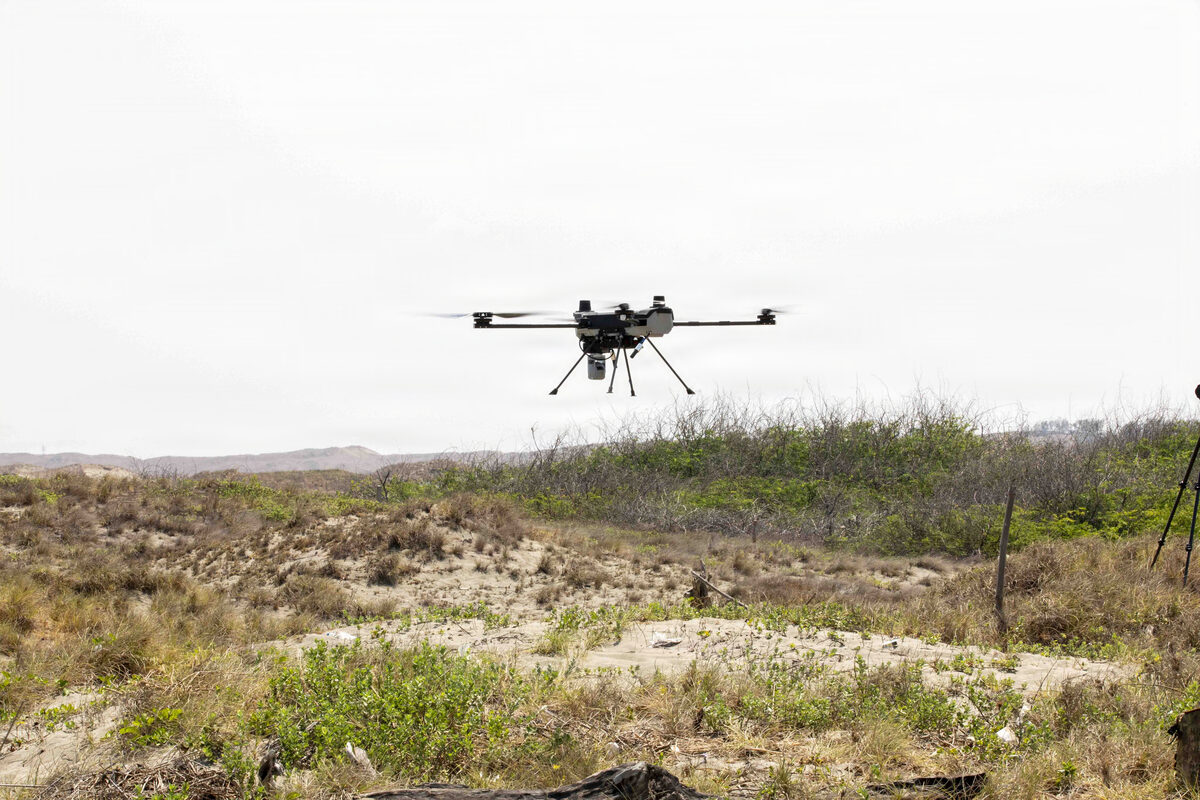
The Federal Communications Commission escalated its campaign against foreign-made drones on July 21, 2026, issuing a public notice that seeks comment on prohibiting the import, marketing, and sale of certain foreign-produced "military-grade" drones that already sit on the agency's Covered List. The notice, docketed as DA-26-758A1, would push the FCC beyond simply denying new equipment authorizations to foreign hardware and into actively barring listed systems from the commercial pipeline that brings them into the United States.
Paired with a companion notice released the same day, and landing alongside the FCC's first-ever move to revoke equipment authorizations already granted to a drone manufacturer accused of falsely claiming U.S. production, the action represents what one trade outlet called the agency's broadest set of drone restrictions to date. Here is what the proposal actually does, what it exempts, and why the timing matters.
What the FCC Is Proposing
The Covered List is the FCC's running roster of communications equipment and services deemed a national-security risk. Once a product lands on it, the agency can refuse new equipment authorizations — the certifications that let a radio-emitting device be legally imported and sold in the U.S. What DA-26-758A1 contemplates is a further step: rather than merely withholding future approvals, the Commission is asking whether it should flatly prohibit the import, marketing, and sale of specific foreign military-grade drones that are already on the list.
The proposal does not sweep in every listed airframe indiscriminately. Instead, it identifies categories of heightened concern. According to the public notice and reporting from DroneLife, those categories include:
- Swarming systems capable of coordinated multi-aircraft operation;
- Defense-article integration platforms designed to carry or interface with military payloads;
- Thermal-imaging models;
- LiDAR-equipped aircraft;
- Aerosol-dispensing variants;
- Docking stations for autonomous or remote operation; and
- Airframes weighing 55 pounds or more.
The comment window runs 30 days from the date the notice is published in the Federal Register — a relatively compressed timeline that signals the Commission wants to move.
The Carve-Outs: Blue UAS and Buy-America Get More Runway
If DA-26-758A1 is the stick, the companion notice — DA-26-761A1 — is the certainty the domestic and allied-manufacturing side has been asking for. It extends two key exemptions to January 1, 2028:
- Products on the Department of War's Blue UAS List, the vetted roster of drones cleared for U.S. government use; and
- Systems that meet a Buy-America content threshold of 65 percent or more U.S. content.
The companion notice also removes the expiration date entirely for systems that hold DoW Conditional Approval — meaning that manufacturers working through that conditional pathway are no longer staring down a ticking clock. Taken together, the two notices draw a sharp line: approved manufacturers get operational certainty stretching into 2028 and beyond, while certain foreign military-grade hardware faces a potential wall at the border and the point of sale.
Same Day, a First-of-Its-Kind Revocation
The proposal did not arrive in isolation. On the same day, the FCC opened its first-ever equipment-authorization revocation proceeding — a distinct and more aggressive tool than declining to grant authorizations in the first place. The target is Odyssey Robot, over allegations that the company made false claims about U.S. domestic manufacturing.
Denying an authorization keeps a product out. Revoking one pulls a product that was already cleared. That distinction is why the Odyssey Robot action is being described as a milestone: it is the agency's first attempt to claw back authorizations it previously issued, and it does so on the grounds that the underlying domestic-production claims were false. For a market in which "Made in America" branding has become both a marketing lever and a compliance shortcut, an enforcement action premised on false manufacturing claims sets a pointed precedent.
Why It Matters
The FCC frames the Covered List campaign as an industrial-policy success as much as a security one. By the agency's own accounting, more than $4 billion has flowed into U.S. drone manufacturing since the Covered List actions began in December 2025. The July 21 proposal is the next lever in that strategy: tighten the market for foreign military-grade hardware, and simultaneously hand vetted domestic and allied builders a multi-year runway of regulatory certainty through the Blue UAS and Buy-America exemptions.
For buyers, integrators, and public-safety agencies, the practical stakes are immediate. A prohibition on import, marketing, and sale — not merely on new authorizations — would affect availability of listed thermal, LiDAR, swarming, and heavy-lift platforms that have wide commercial and industrial use, not just defense applications. The category list is broad enough that it reaches well beyond obvious "military" gear into equipment routinely used for mapping, inspection, agriculture, and emergency response.
For manufacturers, the Odyssey Robot revocation is the sharper signal. It establishes that a U.S. authorization is not a permanent shield, and that misrepresenting where a drone is actually built can trigger the agency's most severe remedy. Combined with the 65-percent Buy-America content threshold now enshrined as an exemption criterion through 2028, the message to the supply chain is that provenance claims will be scrutinized and enforced — not taken at face value.
What Happens Next
The proposal is exactly that — a proposal out for comment, not a final rule. The 30-day window following Federal Register publication opens the door for manufacturers, operators, industry associations, and the public to weigh in on the scope of the prohibition, the category definitions, and the mechanics of enforcement. Expect vigorous comment on where the lines fall: whether a "thermal imaging" or "LiDAR-equipped" designation sweeps in mainstream commercial models, how the 55-pound threshold interacts with existing airframe classes, and how import enforcement would work in practice.
The Odyssey Robot revocation, meanwhile, will proceed on its own track as a contested enforcement matter. Its outcome will shape how much appetite the Commission has to use revocation as a routine tool rather than a one-off — and how carefully manufacturers document, and can prove, their U.S.-content claims going forward.
What is clear from the July 21–22 actions is direction of travel. The FCC is no longer content to gatekeep new foreign drone authorizations at the front door. It is now proposing to bar certain listed systems from sale outright, extending certainty to the domestic side of the ledger, and — for the first time — reaching back to revoke authorizations it has already granted.